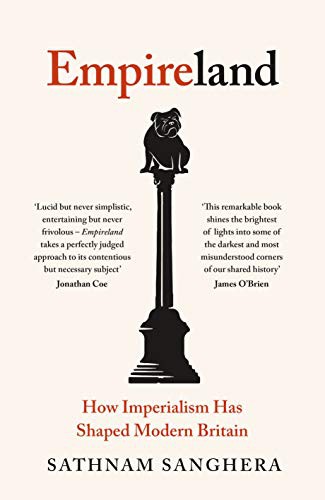
Empireland
EmpirelandSathnam Sanghera
Buy on Amazon

Empireland (2021)

Sathnam Sanghera

Others: Positive

In his brilliantly illuminating new book Sathnam Sanghera demonstrates how so much of what we consider to be modern Britain is actually rooted in our imperial past. In prose that is, at once, both clear-eyed and full of acerbic wit, Sanghera shows how our past is everywhere: from how we live to how we think, from the foundation of the NHS to the nature of our racism, from our distrust of intellectuals in public life to the exceptionalism that imbued the campaign for Brexit and the government's early response to the Covid crisis. And yet empire is a subject, weirdly hidden from view. The British Empire ran for centuries and covered vast swathes of the world. It is, as Sanghera reveals, fundamental to understanding Britain. However, even among those who celebrate the empire there seems to be a desire not to look at it too closely - not to include the subject in our school history books, not to emphasize it too much in our favourite museums. At a time of great division, when we are arguing about what it means to be British, Sanghera's book urges us to address this bewildering contradiction. For, it is only by stepping back and seeing where we really come from, that we can begin to understand who we are, and what unites us. -- Provided by publisher.

ISBN:
9780593316672
Length:
368 pages

Lists: …

Similar books

1 of 6
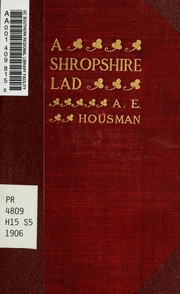
  • A Shropshire lad

    A.E. Housman

    1896 · 95 pages · 1 review

    Others: Positive

    First published in 1896, this is Housman's first and most widely known collection of poems. Dismal and fatalistic, Housman speaks of the cruelty of life. In contrast to the dreary subject matter, the poetry itself is brisk and lively. Considered by many to be among the finest works of modern British poetry.

    Why?

    What made the match, strongest first

    Similar descriptions
    55%
    Books and Things loved both
    45%
    Personalize your recommendations
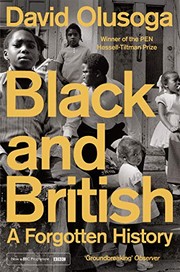
  • Black and British

    David Olusoga

    2016 · 592 pages · 8 reviews

    Others: Overwhelmingly positive

    David Olusoga's A Black History of Britain reaches back to Roman Britain, the medieval imagination and Shakespeare's Othello. Unflinching, confronting taboos and revealing hitherto unknown scandals, Olusoga describes how black and white Britons have been intimately entwined for centuries.

    Why?

    What made the match, strongest first

    Similar descriptions
    54%
    Books and Things loved both
    46%
    Personalize your recommendations
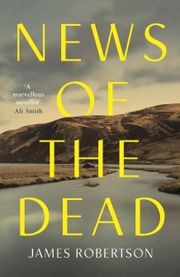
  • News of the Dead

    James Robertson

    2021 · 371 pages · 2 reviews

    Others: Positive

    "'To tell the story of a country or a continent is surely a great and complex undertaking; but the story of a quiet, unnoticed place where there are few people, fewer memories and almost no reliable records - a place such as Glen Conach - may actually be harder to piece together. The hazier everything becomes, the more whatever facts there are become entangled with myth and legend. . .' Hidden in the breath-taking mountains of wild Scotland, Glen Conach is the home of secrets and stories, of fables and facts. Over hundreds of years, three lives are woven together. In ancient Britain, the hermit Saint Conach performs impossible miracles, which survive as legend in 'The Book of Glen Conach'. Generations later in the nineteenth century, the book is rediscovered by charlatan Charles Gibb, who hustles his way into the manor at the heart of the village. In the present-day, young Lachie whispers to Maja of ghosts he has seen in the glen. Reflecting back on her long life, Maja believes him, as she has some ghosts of her own."--Provided by publisher.

    Why?

    What made the match, strongest first

    Books and Things loved both
    54%
    Similar descriptions
    46%
    Personalize your recommendations
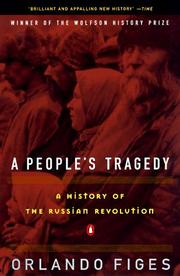
  • A people's tragedy

    Orlando Figes

    1996 · 923 pages · 2 reviews

    Others: Positive

    It is a history on an epic yet human scale. Orlando Figes provides a panorama of Russian society on the eve of the revolution, and then narrates the story of how these social forces were violently suppressed. Within the broad strokes of war and revolution are miniature histories of individuals - pieced together from their private writings - in which Figes follows the main players' fortunes as they saw their hopes die and their world crash into ruins. There is the patriotic general Brusilov, the progressive peasant Semenov, the critical socialist Maxim Gorky...individuals whose lives collapsed under the weight of history. Thus develops a remarkable and unique perspective on what is considered by some to be the century's most important event. Figes depicts the revolution as a tragedy - both for the Russians as a people and for so many individuals whose lives became caught up in the storm. Yet he also shows that the major social forces - the peasantry, the workers, the soldiers, and the subject people of the empire - were not just the victims of the Bolsheviks but also actors in their own complex revolutionary tragedies. Figes argues that the failure of democracy in 1917 was deeply rooted in Russian culture and social history and that what had begun as a people's revolution contained the seeds of its degeneration into violence and dictatorship.

    Why?

    What made the match, strongest first

    Books and Things loved both
    55%
    Similar descriptions
    45%
    Personalize your recommendations
  • The Garden Party and other stories

    Katherine Mansfield

    1922 · 255 pages · 1 review

    Others: Positive

    Very early morning. The sun was not yet risen, and the whole of Crescent Bay was hidden under a white sea-mist. The big bush-covered hills at the back were smothered. You could not see where they ended and the paddocks and bungalows began. The sandy road was gone and the paddocks and bungalows the other side of it; there were no white dunes covered with reddish grass beyond them; there was nothing to mark which was beach and where was the sea.

    Why?

    What made the match, strongest first

    Books and Things loved both
    59%
    Similar descriptions
    41%
    Personalize your recommendations
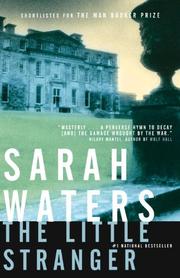
  • The Little Stranger

    Sarah Waters

    2009 · 512 pages · 2 reviews

    Others: Leaning positive

    Abundantly atmospheric and elegantly told, The Little Stranger is Sarah Waterss most thrilling and ambitious novel yet. After her award-winning trilogy of victorian novels, sarah waters turned to the 1940s and wrote the night watch, a tender and tragic novel set against the backdrop of wartime britain shortlisted for both the orange and the man booker, it went straight to number one in the bestseller chart in a dusty post-war summer in rural warwickshire, a doctor is called to a patient at hundreds hall home to the ayres family for over two centuries, the georgian house, once grand and handsome, is now in decline, its masonry crumbling, its gardens choked with weeds, the clock in its stable yard permanently fixed at twenty to nine but are the ayreses haunted by something more sinister than a dying way of life little does dr faraday know how closely, and how terrifyingly, their story is about to become entwined with his prepare yourself from this wonderful writer who continues to astonish us, now comes a chilling ghost story.
    Why?

    What made the match, strongest first

    Books and Things loved both
    61%
    Similar descriptions
    39%
    Personalize your recommendations

Reviews1

Loved it

I also really loved Empire Land by satam singera this is a fantastic non-fiction work kind of a mix of history and journalism I suppose looking at the history of the British Empire and how that history and its Legacy has kind of shaped modern Britain