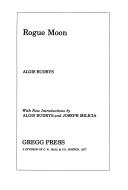
Rogue moon
Rogue moonAlgis Budrys
Buy on Amazon

Rogue moon (1960)

Algis Budrys

Others: Leaning positive

It was there on the dark side of the Moon, waiting for the first human explorers to discover it -- an alien formation, a trap for the unwary, a place into which many men would venture but from which none would return.

ISBN:
9780899683348
Length:
180 pages

Genres: science fiction

Lists: …

Similar books

1 of 6
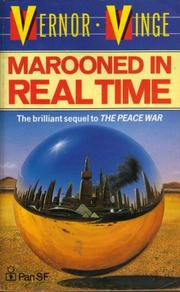
  • Marooned in Realtime

    Vernor Vinge

    1986 · 279 pages · 3 reviews

    Others: Positive

    From the back cover: "In The Peace War Vernor Vinge introduced the technology of bobbles, creating spheres where time stands still while minutes, years, or eons pass by outside. Originally used to counter the nucler threat, then to enforce an oppressive government, they don't really come into their own until the century after the Peace War. What better means for one-way time travel? With the bobble plus longevity treatments, human achievements would seem to have no limits... You can hardly turn the pages fast enough... (Marooned in Realtime) is a winner." -- Locus

    Why?

    What made the match, strongest first

    On 2 of the same lists
    55%
    Also science fiction
    39%
    Bookpilled loved both
    6%
    Personalize your recommendations
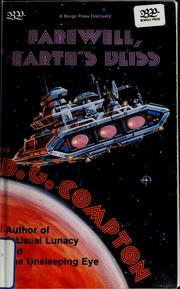
  • Farewell, Earth's Bliss

    D. G. Compton

    1966 · 190 pages · 6 reviews

    Others: Positive

    On board an obsolete ship, nine weeks out from home, the latest batch of colonists arrive at their destination. A grim penal settlement in a wilderness worlds away from the homes they will never see again. TASMANIA? BOTANY BAY? No. For this is tomorrow, not yesterday. The dumping ground for social outcasts and political deportees is Mars, barren, unproductive, but invaluable as a convict settlement. What kind of welcome will the twenty-four deportees receive when the reception party from the Settlement reaches their stranded ship? And how will they survive in a primitive environment, an alien system?

    Why?

    What made the match, strongest first

    On the same reading list
    51%
    Also science fiction
    42%
    Bookpilled loved both
    7%
    Personalize your recommendations
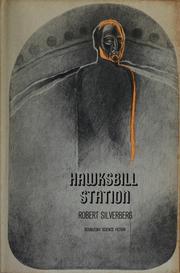
  • Hawksbill Station

    Robert Silverberg

    1968 · 181 pages · 2 reviews

    Others: Positive

    In the mid-21st century, time travel is used to send political prisoners to Hawksbill Station, a prison camp in the late Cambrian Era. When the latest arrival suspiciously deflects questions about his crimes and knowledge of 'Up Front', the inmates decide to find out his secret. (This story was used as the basis of the novel "Hawksbill Station".) Nebula Award(R) Nominee, Hugo Award Nominee

    Why?

    What made the match, strongest first

    On 2 of the same lists
    51%
    Also science fiction
    42%
    Bookpilled loved both
    7%
    Personalize your recommendations
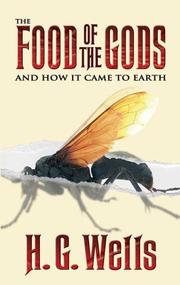
  • Food of the Gods

    H. G. Wells

    1900 · 300 pages · 3 reviews

    Others: Overwhelmingly positive

    The Food of the Gods and How It Came to Earth is a science fiction novel by H. G. Wells that was first published in 1904. Wells called it "a fantasia on the change of scale in human affairs. . . . I had hit upon [the idea] while working out the possibilities of the near future in a book of speculations called Anticipations (1901)". The novel, which has had various B-movie adaptations, is about a group of scientists that invents food that accelerates the growth of children and turns them into giants when they become adults.

    Why?

    What made the match, strongest first

    On 2 of the same lists
    47%
    Also science fiction
    45%
    Bookpilled loved both
    8%
    Personalize your recommendations
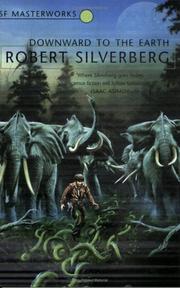
  • Downward to the Earth

    Robert Silverberg

    1970 · 189 pages · 6 reviews

    Others: Overwhelmingly positive

    From the shrouding fogs of its Mist Country to the lunatic tropical fertility of its jungles, the planet Belzagor was alien in the extreme. Before the decolonization movement, it had been part of Earth's Galaxy-wide empire. But the Nildoror and Sulido-ror, Belzagor's two intelligent species, had been given their independence, and once again they ruled themselves. Edmund Gundersen, a former colonial official from Earth, was returning to Belzagor after an eight year absence. Officially, he was a tourist, but in reality he was seeking redemption—redemption for the crimes he had committed against the Nildoror and Sulidoror. Even now, he still found it hard to accept their independence. The Nildoror were great elephant-like beings; and the Sulidoror, husky bipeds covered with dark red hair, had long arms tipped with terrifying claws. How could such creatures, without any technology to speak of, run an entire planet? Yet they did, and they had one thing that had always eluded human understanding—the ceremony of rebirth. Somehow this mysterious rite linked the two species, and the act that weighed most heavily on Gundersen's mind had occurred in connection with it. During an emergency, he had commandeered a group of Nildoror for a labor detail. Using a fusion torch, he had forced them to obey, and on his account they had missed their rebirth. To atone for this deed, Gundersen had decided to journey alone through Belzagor's jungles. When he reached the Mist Country, he would offer himself as a candidate for rebirth—even if it would mean the end of his life as a human!

    Why?

    What made the match, strongest first

    On 2 of the same lists
    50%
    Also science fiction
    46%
    Similar descriptions
    4%
    Personalize your recommendations
  • City

    Clifford D. Simak

    1952 · 254 pages · 5 reviews

    Others: Positive

    Comment by John Clute: We know better now, of course. But they still entrance us, the old page-turners from the glory days of American SF, half a century or so ago, when the world was full of futures we were never going to have. In the mid-1940s, when he began to publish the episodes that would be assembled as City in 1952, Clifford Simak, a Minneapolis-based journalist and author, could still carry us away with the dream that cars and pollution and even the great cities of the world – "Huddling Place", the title of one of these tales, is his own derisory term for them – would soon be brushed off the map by Progress, leaving nothing behind but tasteful exurbs filled with middle-class nuclear families living the good life, with fishing streams and greenswards sheltering each home from the stormy blast. Fortunately, Simak soon gets past this demented vision of a near-future world saved by technological fixes, a dementia common then to SF writers and gurus and politicians alike, and launches into an astonishingly eventful narrative of the next 10,000 years as seen through the eyes of one family and the immortal robot Jenkins, and all told with a weird pastoral serenity that for a kid like me seemed near to godlike. In its course City touches on almost everything dear to 1940s SF, and to me remembering. Robots. Genetic Engineering. Space. Jupiter. Domed cities. Keeps. Hiveminds. Matter transmission. Telepathy. Parallel worlds. Paranormal empathy. Mutants. Supermen. It's all there, and, thanks to Simak's skilled hand at the wheel, it's all in place: suave, sibylline, swift. The whole is framed as a series of legends told by the uplifted Dogs who have replaced the human race, now gone for ever. They have been bred not to kill. At the end, only Jenkins remains to keep them from learning how to repeat history and die. It all seemed immensely sad and wise then, but fun. It still does.

    Why?

    What made the match, strongest first

    On 4 of the same lists
    47%
    Also science fiction
    45%
    Bookpilled loved both
    8%
    Personalize your recommendations

Reviews2

Mixed

Rogue Moon is a meditation on death, on the nature of death, the fear of death, the accepting of the inevitability of it, and the impacts of those left behind and the deathbed regrets of those passing, which is all very well, but damn it, I was expecting a deathdeying ripping yarn about exploring a deadly labyrinth, and that's not what I got. So somewhat grumpily perhaps I give Rogue Moon 6 out of 10 is a nebulous narrative.