
 Not a fan
I read the first chapter of plastic hated it what was that like it put me off this book so hard like I just hated the style of it
Others: Negative In this probing look at how plastic built the modern world-- and the price the world has paid for plastic-- journalist Freinkel points out that we're nearing a crisis point and gives readers the tools needed through lively anecdotes and analysis. Trekking through history, science, and the global economy, Freinkel assesses the impact of plastic on our lives through eight familiar plastic objects: comb, chair, Frisbee, IV bag, disposable lighter, grocery bag, soda bottle, and credit card.
Genres: nonfiction
Lists: …
Stephen Brusatte
2018 · 404 pages · 1 review
 Others: Positive
A sweeping narrative scientific history that tells the epic story of the dinosaurs, examining their origins, their habitats, their extinction, and their living legacy. Print run 75,000.
What made the match, strongest first
Ed Yong
2016 · 361 pages · 4 reviews
 Others: Overwhelmingly positive
Joining the ranks of popular science classics like The Botany of Desire and The Selfish Gene, a groundbreaking, wondrously informative, and vastly entertaining examination of the most significant revolution in biology since Darwin—a “microbe’s-eye view” of the world that reveals a marvelous, radically reconceived picture of life on earth. Every animal, whether human, squid, or wasp, is home to millions of bacteria and other microbes. Ed Yong, whose humor is as evident as his erudition, prompts us to look at ourselves and our animal companions in a new light—less as individuals and more as the interconnected, interdependent multitudes we assuredly are. The microbes in our bodies are part of our immune systems and protect us from disease. In the deep oceans, mysterious creatures without mouths or guts depend on microbes for all their energy. Bacteria provide squid with invisibility cloaks, help beetles to bring down forests, and allow worms to cause diseases that afflict millions of people. Many people think of microbes as germs to be eradicated, but those that live with us—the microbiome—build our bodies, protect our health, shape our identities, and grant us incredible abilities. In this astonishing book, Ed Yong takes us on a grand tour through our microbial partners, and introduces us to the scientists on the front lines of discovery. It will change both our view of nature and our sense of where we belong in it.
What made the match, strongest first
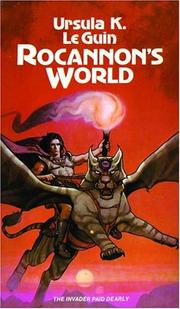
Ursula K. Le Guin
1966 · 136 pages · 1 review
Others: PositiveEarth-scientist Rocannon has been leading an ethnological survey on a remote world populated by three native races: the cavern-dwelling Gdemiar, the elvish Fiia, and the warrior clan, Liuar. But when the technologically primitive planet is suddenly invaded by a fleet of ships from the stars, rebels against the League of All Worlds, Rocannon is the only survey member left alive. Marooned among alien peoples, he leads the battle to free this newly discovered world and finds that legends grow around him as he fights.
What made the match, strongest first
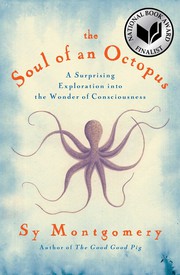
Sy Montgomery
2015 · 261 pages · 8 reviews
Others: Overwhelmingly positiveThis awe striking, almost alien trip, draws us into the otherworldly watery realm of cephalopods --- except they aren't alien. Octopuses (not octopi, as the author informs) may arguably be as intelligent, as highly curious, and absolutely more dexterous than human beings. Sy Montgomery introduces us to these creatures with their fascinating and individual personalities.
What made the match, strongest first
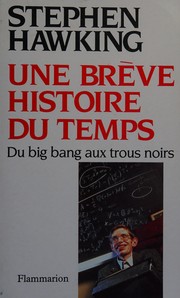
Stephen Hawking
1988 · 208 pages · 2 reviews
 Others: Mixed
Stephen Hawking's ‘A Brief History of Time* has become an international publishing phenomenon. Translated into thirty languages, it has sold over ten million copies worldwide and lives on as a science book that continues to captivate and inspire new readers each year. When it was first published in 1988 the ideas discussed in it were at the cutting edge of what was then known about the universe. In the intervening twenty years there have been extraordinary advances in the technology of observing both the micro- and macro-cosmic world. Indeed, during that time cosmology and the theoretical sciences have entered a new golden age . Professor Hawking is one of the major scientists and thinkers to have contributed to this renaissance.
What made the match, strongest first
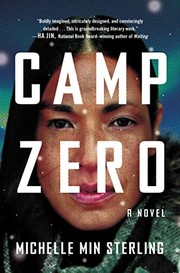
Michelle Sterling
2023 · 304 pages · 3 reviews
Others: NegativeIn a near-future northern settlement, a handful of climate change survivors find their fates intertwined in this mesmerizing and transportive novel in the vein of Station Eleven and The Power.In the far north of Canada sits Camp Zero, an American building project hiding many secrets. Desperate to help her climate-displaced Korean immigrant mother, Rose agrees to travel to Camp Zero and spy on its architect in exchange for housing. She arrives at the same time as another newcomer, a college professor named Grant who is determined to flee his wealthy family’s dark legacy. Gradually, they realize that there is more to the architect than previously thought, and a disturbing mystery lurks beneath the surface of the camp. At the same time, rumors abound of an elite group of women soldiers living and working at a nearby Cold War-era climate research station. What are they doing there? And who is leading them? An electrifying page-turner where nothing is as it seems, Camp Zero cleverly explores how the intersection of gender, class, and migration will impact who and what will survive in a warming world.
What made the match, strongest first
Not a fanI read the first chapter of plastic hated it what was that like it put me off this book so hard like I just hated the style of it