

 Loved it
I thought this was really powerful really interesting and actually incredibly accessible even if you're not an expert in Antiquity to begin with so this is absolutely brilliant
Review 1 of 2
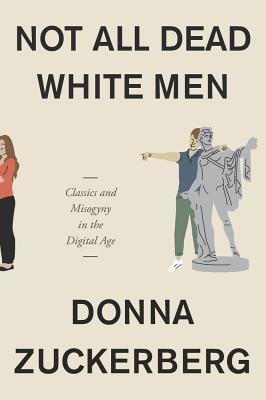
Others: Positive A disturbing exposé of how today's alt-right men's groups use ancient sources to promote a new brand of toxic masculinity online. A virulent strain of antifeminism is thriving online that treats women's empowerment as a mortal threat to men and to the integrity of Western civilization. Its proponents cite ancient Greek and Latin texts to support their claims--arguing that they articulate a model of masculinity that sustained generations but is now under siege. Donna Zuckerberg dives deep into the virtual communities of the far right, where men lament their loss of power and privilege, and strategize about how to reclaim them. She finds, mixed in with weightlifting tips and misogynistic vitriol, the words of the Stoics deployed to support an ideal vision of masculine life. On other sites, pickup artists quote Ovid's Ars Amatoria to justify ignoring women's boundaries. By appropriating the Classics, these men lend a veneer of intellectual authority and ancient wisdom to their project of patriarchal white supremacy. In defense or retaliation, feminists have also taken up the Classics online, to counter the sanctioning of violence against women. Not All Dead White Men reveals that some of the most controversial and consequential debates about the legacy of the ancients are raging not in universities but online.
Genres: classics, nonfiction
Lists: …
Emily Hauser
2025 · 320 pages · 4 reviews
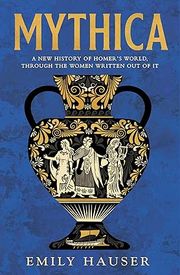
Others: PositiveDid you love Madeline Miller’s Circe? Pat Barker’s The Silence of the Girls? Jennifer Saint's Elektra? Natalie Haynes’ A Thousand Ships? But did you ever wonder who the real women behind the myths of the Trojan War were? Now award-winning classicist and historian Emily Hauser takes readers on an epic journey to uncover the astonishing true story of the real women behind ancient Greece’s greatest legends – and the real heroes of those ancient epics, Homer's Iliad and Odyssey.Because, contrary to perceptions built up over three millennia, ancient history is not all about men – and it's not only men's stories that deserve to be told . . .In Mythica Emily Hauser tells, for the first time, the extraordinary stories of the real women behind some of the western world’s greatest legends. Following in their footsteps, digging into the history behind Homer’s epic poems, piecing together evidence from the original texts, recent astonishing archaeological finds and the latest DNA studies, she reveals who these women – queens, mothers, warriors, slaves – were, how they lived, and how history has (or has not – until now) remembered them.A riveting new history of the Bronze Age Aegean and a journey through Homer’s epics charted entirely by women – from Helen of Troy, Briseis, Cassandra and Aphrodite to Circe, Athena, Hera, Calypso and Penelope – Mythica is a ground-breaking reassessment of the reality behind the often-mythologized women of Greece’s greatest epics, and of the ancient world itself as we learn ever more about it.
What made the match, strongest first
S. B. Pomeroy
1998 · 1 review
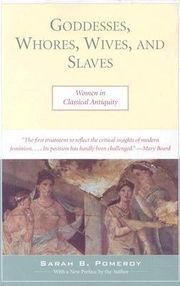
Others: Positive"The first general treatment of women in the ancient world to reflect the critical insights of modern feminism. Though much debated, its position as the basic textbook on women's history in Greece and Rome has hardly been challenged."--Mary Beard, Times Literary Supplement. Illustrations.
What made the match, strongest first
Sarah B. Pomeroy
1975 · 265 pages · 1 review
Others: Positive"The first general treatment of women in the ancient world to reflect the critical insights of modern feminism. Though much debated, its position as the basic textbook on women's history in Greece and Rome has hardly been challenged."--Mary Beard, Times Literary Supplement. Illustrations.
What made the match, strongest first
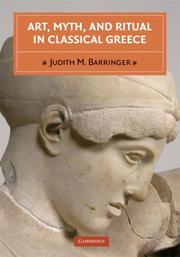
Judith M. Barringer
2008 · 300 pages · 1 review
Others: Positive"What do Greek myths mean, and how was their meaning created for the ancient viewer? In Art, Myth, and Ritual in Classical Greece, Judith Barringer considers the use of myth on monuments at several key sites - Olympia, Athens, Delphi, and Trysa - showing that myth was neither randomly selected nor purely decorative. The mythic scenes on these monuments had meaning, the interpretation of which depended on context. Barringer explains how the same myth can possess different meanings and how, in a monumental context, the mythological image relates to the site and often to other monuments surrounding it, which redouble, resonate, or create variations on a theme. The architectural sculpture examined here is discussed in a series of five case studies, which are chronologically arranged and offer a range of physical settings, historical and social circumstances, and interpretive problems. Providing new interpretations of familiar monuments, this volume also offers a comprehensive way of seeing and understanding Greek art and culture as an integrated whole."--Jacket.
What made the match, strongest first
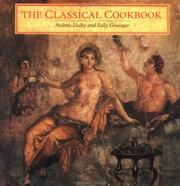
Andrew Dalby
1996 · 144 pages · 1 review
Others: PositiveThe daily life of classical Greece and Rome, although separated from us by 2000 years, can be recreated in almost photographic detail. The Classical Cookbook is the first book of its kind, exploring the daily culture of the Mediterranean through the center of its social life--food and drink.Combining narrative texts and recipes, authors Dalby and Grainger draw on a mass of fascinating resources to describe household life for different social groups and occasions. Each chapter provides a historical outline, with translations of the original recipes followed by versions for the moderncook. The book is illustrated throughout with delightful scenes of food, hunters, and revelers from wall paintings, mosaics, and Greek vases. And the array of delicacies, from Sweet Wine Scones to Chicken Stuffed with Olives to Honey Nut Cake, is sure to tempt any connoisseur.
What made the match, strongest first
Lowell Edmunds
1990 · 480 pages · 1 review
Others: PositiveSince the first edition of Approaches to Greek Myth as published in 1990, interest in Greek mythology has surged. There was no simple agreement on the subject of "myth" in classical antiquity, and there remains none today. Is myth a narrative or a performance? Can myth be separated from its context? What did myths mean to ancient Greeks and what do they mean today? Here, Lowell Edmunds brings together practitioners of eight of the most important contemporary approaches to the subject. Whether exploring myth from a historical, comparative, or theoretical perspective, each contributor lucidly describes a particular approach, applies it to one or more myths, and reflects on what the approach yields that others do not. Edmunds's new general and chapter-level introductions recontextualize these essays and also touch on recent developments in scholarship in the interpretation of Greek myth. -- from back cover.
What made the match, strongest first
Loved itI thought this was really powerful really interesting and actually incredibly accessible even if you're not an expert in Antiquity to begin with so this is absolutely brilliant