

 Loved it
So, this is a book that has followed me throughout my career. I was first introduced to it at university during my undergraduate, and I continued to refer to it during my master's and my PhD. So, yeah, this is a phenomenal, phenomenal book.
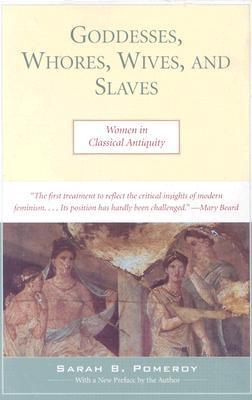
Others: Positive "The first general treatment of women in the ancient world to reflect the critical insights of modern feminism. Though much debated, its position as the basic textbook on women's history in Greece and Rome has hardly been challenged."--Mary Beard, Times Literary Supplement. Illustrations.
Genres: classics, nonfiction
Lists: …
Sarah B. Pomeroy
1975 · 265 pages · 1 review
Others: Positive"The first general treatment of women in the ancient world to reflect the critical insights of modern feminism. Though much debated, its position as the basic textbook on women's history in Greece and Rome has hardly been challenged."--Mary Beard, Times Literary Supplement. Illustrations.
What made the match, strongest first
David Graeber
2018 · 333 pages · 1 review
Others: PositiveBullshit Jobs: A Theory is a 2018 book by anthropologist David Graeber that argues the existence and societal harm of meaningless jobs. He contends that over half of societal work is pointless, which becomes psychologically destructive when paired with a work ethic that associates work with self-worth. Graeber describes five types of bullshit jobs, in which workers pretend their role isn't as pointless or harmful as they know it to be: flunkies, goons, duct tapers, box tickers, and taskmasters. He argues that the association of labor with virtuous suffering is recent in human history, and proposes universal basic income as a potential solution.
What made the match, strongest first
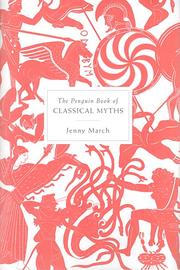
Jennifer R. March
2008 · 590 pages · 1 review
Others: PositiveWith illustrations and maps of legendary Greece and of the constellations, this text is a vivid and colourful guide to the world's most unforgettable myths and legends.
What made the match, strongest first
Emily Hauser
2025 · 320 pages · 4 reviews
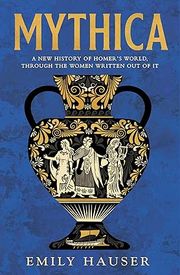
Others: PositiveDid you love Madeline Miller’s Circe? Pat Barker’s The Silence of the Girls? Jennifer Saint's Elektra? Natalie Haynes’ A Thousand Ships? But did you ever wonder who the real women behind the myths of the Trojan War were? Now award-winning classicist and historian Emily Hauser takes readers on an epic journey to uncover the astonishing true story of the real women behind ancient Greece’s greatest legends – and the real heroes of those ancient epics, Homer's Iliad and Odyssey.Because, contrary to perceptions built up over three millennia, ancient history is not all about men – and it's not only men's stories that deserve to be told . . .In Mythica Emily Hauser tells, for the first time, the extraordinary stories of the real women behind some of the western world’s greatest legends. Following in their footsteps, digging into the history behind Homer’s epic poems, piecing together evidence from the original texts, recent astonishing archaeological finds and the latest DNA studies, she reveals who these women – queens, mothers, warriors, slaves – were, how they lived, and how history has (or has not – until now) remembered them.A riveting new history of the Bronze Age Aegean and a journey through Homer’s epics charted entirely by women – from Helen of Troy, Briseis, Cassandra and Aphrodite to Circe, Athena, Hera, Calypso and Penelope – Mythica is a ground-breaking reassessment of the reality behind the often-mythologized women of Greece’s greatest epics, and of the ancient world itself as we learn ever more about it.
What made the match, strongest first
Andrew Dalby
1996 · 144 pages · 1 review
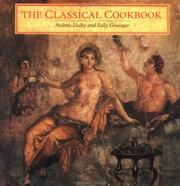
Others: PositiveThe daily life of classical Greece and Rome, although separated from us by 2000 years, can be recreated in almost photographic detail. The Classical Cookbook is the first book of its kind, exploring the daily culture of the Mediterranean through the center of its social life--food and drink.Combining narrative texts and recipes, authors Dalby and Grainger draw on a mass of fascinating resources to describe household life for different social groups and occasions. Each chapter provides a historical outline, with translations of the original recipes followed by versions for the moderncook. The book is illustrated throughout with delightful scenes of food, hunters, and revelers from wall paintings, mosaics, and Greek vases. And the array of delicacies, from Sweet Wine Scones to Chicken Stuffed with Olives to Honey Nut Cake, is sure to tempt any connoisseur.
What made the match, strongest first
Lloyd Llewellyn-Jones
2003 · 358 pages · 1 review
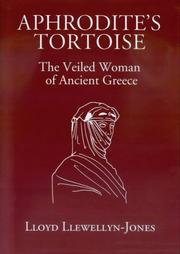
Others: PositiveGreek women routinely wore the veil. That is the unexpected finding of this major study. The Greeks, rightly credited with the invention of civic openness, are revealed as also part of a more eastern tradition of seclusion. Llewellyn-Jones' work proceeds from literary and, notably, from iconographic evidence. In sculpture and vase painting it demonstrates the presence of the veil, often covering the head, but also more unobtrusively folded back onto the shoulders. This discreet fashion not only gave a priviledged view of the face to the ancient art consumer, but also, incidentally, allowed the veil to escape the notice of traditional modern scholarship.
What made the match, strongest first
Loved itSo, this is a book that has followed me throughout my career. I was first introduced to it at university during my undergraduate, and I continued to refer to it during my master's and my PhD. So, yeah, this is a phenomenal, phenomenal book.