
 Loved it
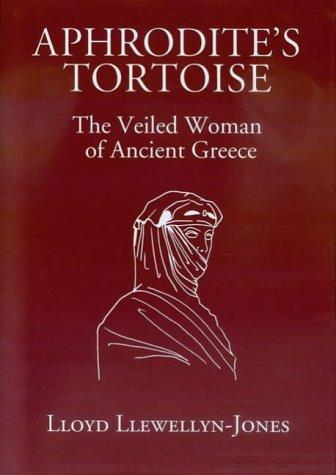
And if you'd like to learn more on this topic, there's a fantastic book called Aphrodite's Tortoise on this subject.
Others: Positive Greek women routinely wore the veil. That is the unexpected finding of this major study. The Greeks, rightly credited with the invention of civic openness, are revealed as also part of a more eastern tradition of seclusion. Llewellyn-Jones' work proceeds from literary and, notably, from iconographic evidence. In sculpture and vase painting it demonstrates the presence of the veil, often covering the head, but also more unobtrusively folded back onto the shoulders. This discreet fashion not only gave a priviledged view of the face to the ancient art consumer, but also, incidentally, allowed the veil to escape the notice of traditional modern scholarship.
Genres: classics, nonfiction
Lists: …
Lowell Edmunds
1990 · 480 pages · 1 review
Others: PositiveSince the first edition of Approaches to Greek Myth as published in 1990, interest in Greek mythology has surged. There was no simple agreement on the subject of "myth" in classical antiquity, and there remains none today. Is myth a narrative or a performance? Can myth be separated from its context? What did myths mean to ancient Greeks and what do they mean today? Here, Lowell Edmunds brings together practitioners of eight of the most important contemporary approaches to the subject. Whether exploring myth from a historical, comparative, or theoretical perspective, each contributor lucidly describes a particular approach, applies it to one or more myths, and reflects on what the approach yields that others do not. Edmunds's new general and chapter-level introductions recontextualize these essays and also touch on recent developments in scholarship in the interpretation of Greek myth. -- from back cover.
What made the match, strongest first
Judith M. Barringer
2008 · 300 pages · 1 review
Others: Positive"What do Greek myths mean, and how was their meaning created for the ancient viewer? In Art, Myth, and Ritual in Classical Greece, Judith Barringer considers the use of myth on monuments at several key sites - Olympia, Athens, Delphi, and Trysa - showing that myth was neither randomly selected nor purely decorative. The mythic scenes on these monuments had meaning, the interpretation of which depended on context. Barringer explains how the same myth can possess different meanings and how, in a monumental context, the mythological image relates to the site and often to other monuments surrounding it, which redouble, resonate, or create variations on a theme. The architectural sculpture examined here is discussed in a series of five case studies, which are chronologically arranged and offer a range of physical settings, historical and social circumstances, and interpretive problems. Providing new interpretations of familiar monuments, this volume also offers a comprehensive way of seeing and understanding Greek art and culture as an integrated whole."--Jacket.
What made the match, strongest first
Miranda Aldhouse-Green
2023 · 2 reviews
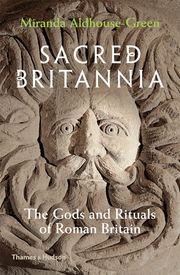
Others: PositiveA compelling new account of religion in Roman Britain, weaving together the latest archaeological research and a new analysis of ancient literature to illuminate parallels between past and present Two thousand years ago, the Romans sought to absorb into their empire what they regarded as a remote, almost mythical island on the very edge of the known world―Britain. The expeditions of Julius Caesar and the Claudian invasion of 43 CE, up to the traditional end of Roman Britain in the fifth century CE, brought fundamental and lasting changes to the island. Not least among these was a pantheon of new classical deities and religious systems, along with a clutch of exotic eastern cults, including Christianity. But what homegrown deities, cults, and cosmologies did the Romans encounter in Britain, and how did the British react to the changes? Under Roman rule, the old gods and their adherents were challenged, adopted, adapted, absorbed, and reconfigured. Miranda Aldhouse- Green balances literary, archaeological, and iconographic evidence (and scrutinizes the shortcomings of each) to illuminate the complexity of religion and belief in Roman Britain. She examines the two-way traffic of cultural exchange and the interplay between imported and indigenous factions to reveal how this period on the cusp between prehistory and history knew many of the same tensions, ideologies, and issues of identity still relevant today. 110 illustrations
What made the match, strongest first
S. B. Pomeroy
1998 · 1 review
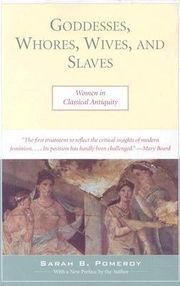
Others: Positive"The first general treatment of women in the ancient world to reflect the critical insights of modern feminism. Though much debated, its position as the basic textbook on women's history in Greece and Rome has hardly been challenged."--Mary Beard, Times Literary Supplement. Illustrations.
What made the match, strongest first
Sarah B. Pomeroy
1975 · 265 pages · 1 review
Others: Positive"The first general treatment of women in the ancient world to reflect the critical insights of modern feminism. Though much debated, its position as the basic textbook on women's history in Greece and Rome has hardly been challenged."--Mary Beard, Times Literary Supplement. Illustrations.
What made the match, strongest first
Emily Hauser
2025 · 320 pages · 4 reviews
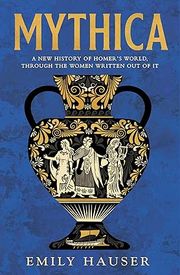
Others: PositiveDid you love Madeline Miller’s Circe? Pat Barker’s The Silence of the Girls? Jennifer Saint's Elektra? Natalie Haynes’ A Thousand Ships? But did you ever wonder who the real women behind the myths of the Trojan War were? Now award-winning classicist and historian Emily Hauser takes readers on an epic journey to uncover the astonishing true story of the real women behind ancient Greece’s greatest legends – and the real heroes of those ancient epics, Homer's Iliad and Odyssey.Because, contrary to perceptions built up over three millennia, ancient history is not all about men – and it's not only men's stories that deserve to be told . . .In Mythica Emily Hauser tells, for the first time, the extraordinary stories of the real women behind some of the western world’s greatest legends. Following in their footsteps, digging into the history behind Homer’s epic poems, piecing together evidence from the original texts, recent astonishing archaeological finds and the latest DNA studies, she reveals who these women – queens, mothers, warriors, slaves – were, how they lived, and how history has (or has not – until now) remembered them.A riveting new history of the Bronze Age Aegean and a journey through Homer’s epics charted entirely by women – from Helen of Troy, Briseis, Cassandra and Aphrodite to Circe, Athena, Hera, Calypso and Penelope – Mythica is a ground-breaking reassessment of the reality behind the often-mythologized women of Greece’s greatest epics, and of the ancient world itself as we learn ever more about it.
What made the match, strongest first
Loved itAnd if you'd like to learn more on this topic, there's a fantastic book called Aphrodite's Tortoise on this subject.