
 Loved it
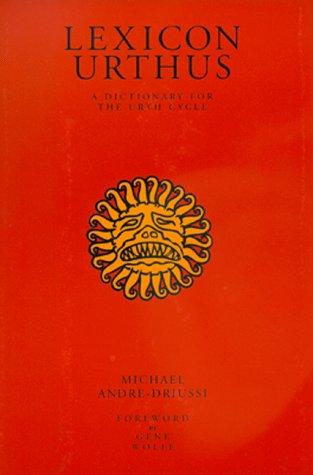
it's an A to Z of character profile a glossery of names and terms Maps synopsis and so much more meticulously researched and essential for any wouldbe book of the new Sun connoisseur
Others: Positive Lexicon Urthus (second edition) is an alphabetical dictionary for the complete Urth Cycle by Gene The Shadow of the Torturer; The Claw of the Conciliator; The Sword of the Lictor; The Citadel of the Autarch; the sequel Urth of the New Sun; the novella Empires of Foliage and Flower; the short stories "The Cat," "The Map," and "The Old Woman Whose Rolling Pin Is the Sun"; and Gene Wolfe's own commentaries in The Castle of the Otter. The first edition was nominated for a World Fantasy Award. This second edition, available for the first time in paperback, includes 300 new entries. When the first edition was published, Science Fiction Age "Lexicon Urthus makes a perfect gift for any fan of [Wolfe's] work, and from the way his words sell, it appears that there are many deserving readers out there waiting." Gary K. Wolfe, in Locus, "A convenient and well researched glossary of names and terms. . . . It provides enough of a gloss on the novels that it almost evokes Wolfe's distant future all by itself. . . . It can provide both a useful reference and a good deal of fun." Donald Keller said, in the New York Review of Science "A fruitful product of obsession, this is a thorough . . . dictionary of the Urth Cycle. . . . Andre-Driussi's research has been exhaustive, and he has discovered many fascinating things . . . [it is] head-spinning to confront a myriad of small and large details, some merely interesting, others jawdropping."
Genres: science fiction
Lists: …
Gene Wolfe
1982 · 317 pages · 2 reviews
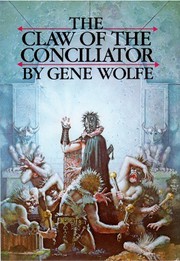
Others: PositiveSeverian the Torturer, possessor of the miracle-producing gem, the Claw of the Conciliator, experiences strange adventures as he journeys across the savage land of Urth
What made the match, strongest first
Gene Wolfe
1981 · 303 pages · 2 reviews
Others: PositiveSeverian is in possession of a gem considered to be "The Claw of the Conciliator", a powerful relic of the Master of Power, a legendary figure of mythic proportions. Armed with his sword, Terminus Est, and the Claw, Severian continues his journey to Thrax, the city of his exile. Bizarre apes, strange cannibalistic rituals, and the foreigner named Jonas all lie in his future.
What made the match, strongest first
Philip K. Dick
1970 · 298 pages · 1 review
Others: PositiveDr. Bloodmoney, or How We Got Along After the Bomb is a 1965 science fiction novel by American writer Philip K. Dick. It was nominated for the Nebula Award for Best Novel in 1965.[1] Dick wrote the novel in 1963 with working titles In Earth's Diurnal Course and A Terran Odyssey. Ace editor Donald Wollheim however suggested the final title which references the film Dr. Strangelove or: How I Learned to Stop Worrying and Love the Bomb (1964).[2]
What made the match, strongest first
Philip K. Dick
1965 · 233 pages · 6 reviews
 Others: Overwhelmingly positive
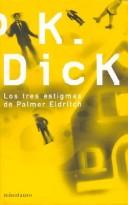
The Three Stigmata of Palmer Eldritch is a 1965 science fiction novel by Philip K. Dick. It was nominated for the Nebula Award for Best Novel in 1965.[1] The novel takes place in 2016. Under United Nations authority, humankind has colonized every habitable planet and moon in the Solar System. Like many of Dick's novels, it utilizes an array of science fiction concepts, features several layers of reality and unreality and philosophical ideas. It is one of Dick's first works to explore religious themes.
What made the match, strongest first
Orson Scott Card
1985 · 324 pages · 17 reviews
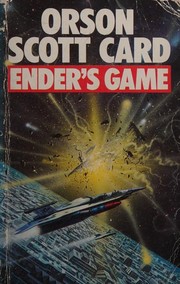
Others: Overwhelmingly positiveEnder's Game is a 1985 military science fiction novel by American author Orson Scott Card. Set at an unspecified date in Earth's future, the novel presents an imperiled humankind after two conflicts with the Formics, an insectoid alien species they dub the "buggers". In preparation for an anticipated third invasion, children, including the novel's protagonist, Andrew "Ender" Wiggin, are trained from a very young age by putting them through increasingly difficult games, including some in zero gravity, where Ender's tactical genius is revealed. The book originated as a short story of the same name, published in the August 1977 issue of Analog Science Fiction and Fact. The novel was published on January 15, 1985. Later, by elaborating on characters and plotlines depicted in the novel, Card was able to write additional books in the Ender's Game series. Card also released an updated version of Ender's Game in 1991, changing some political facts to reflect the times more accurately (e.g., to include the recent collapse of the Soviet Union and the end of the Cold War). The novel has been translated into 34 languages. Reception of the book has been mostly positive. It has become suggested reading for many military organizations, including the United States Marine Corps. Ender's Game was recognized as "best novel" by the 1985 Nebula Award[3] and the 1986 Hugo Award[4] in the genres of science fiction and fantasy. Its four sequels—Speaker for the Dead (1986), Xenocide (1991), Children of the Mind (1996), and Ender in Exile (2008)—follow Ender's subsequent travels to many different worlds in the galaxy. In addition, the later novella A War of Gifts (2007) and novel Ender's Shadow (1999), plus other novels in the Shadow saga, take place during the same time period as the original.
What made the match, strongest first
Arthur C. Clarke
1968 · 228 pages · 5 reviews
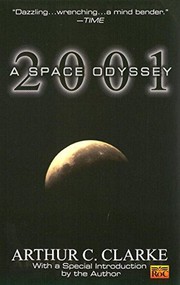
Others: Overwhelmingly positiveA novel that proposes an idea about how the human race might have begun and where it might be headed...given a little help from out there. A colaboration of ideas with director Stanley Kubrick in the late 1960's it begins at "the dawn of man" and then leaps to the year 2001 where a mission to Saturn (Jupiter in the film) is mounted to try and answer questions raised by the discovery of an ancient artifact dug up on the moon. Though not particularly fast paced, the science is good, and there are a few hair raising events. There are also interesting speculations about the future, such as the space shuttle, and a device eerily similar to an iPad. Leaving plenty of room for contemplation and the appreciation for the inevitable trials of space travel, this is one of the truly landmark pieces of hard science fiction.
What made the match, strongest first
Loved itit's an A to Z of character profile a glossery of names and terms Maps synopsis and so much more meticulously researched and essential for any wouldbe book of the new Sun connoisseur