 Loved it
Just to wrap up this easier part of the review, I really loved the premise, the setup, the writing, and the feel of the book. And I enjoyed the majority of the story and the characters, and the pacing.
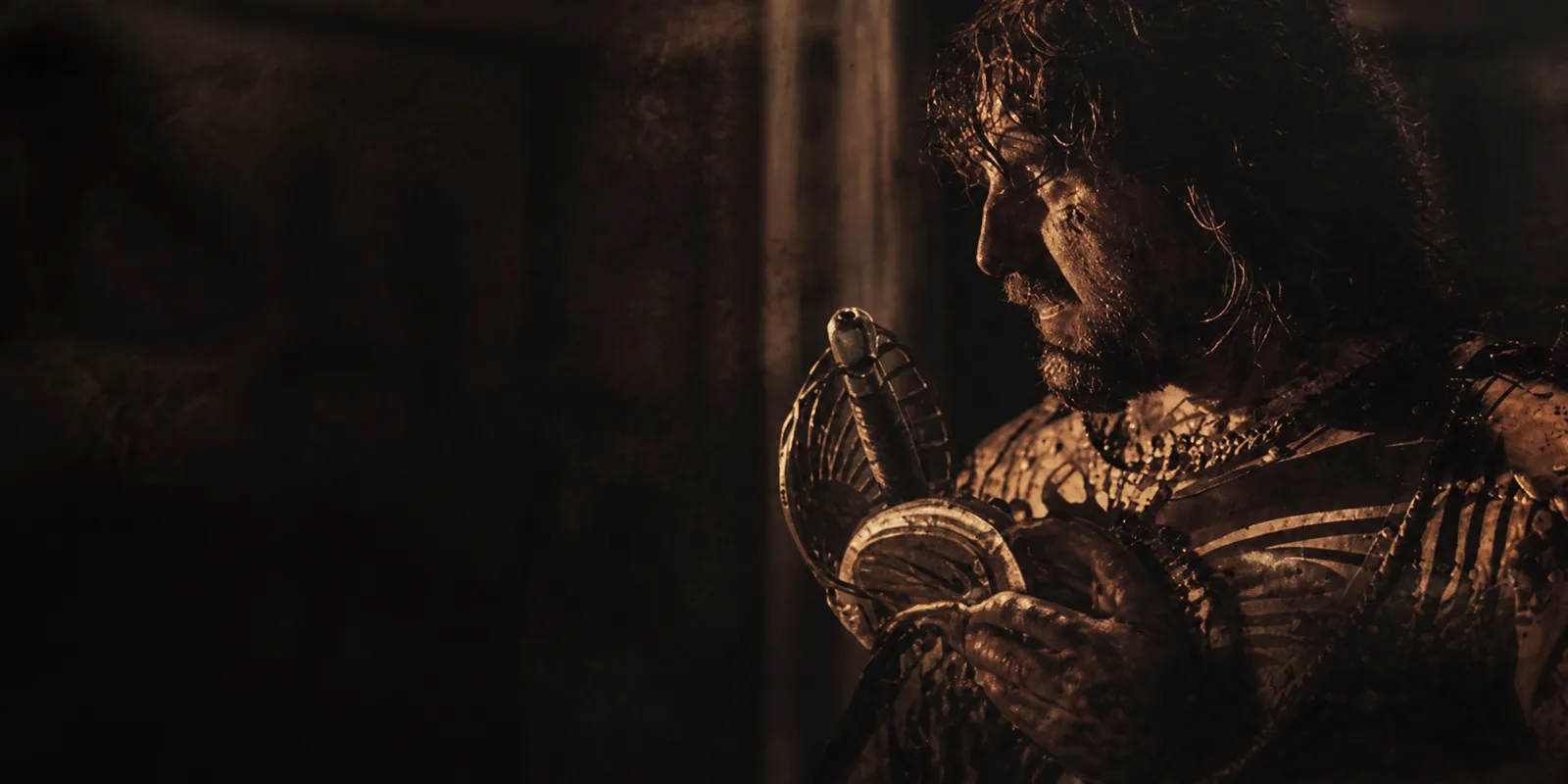
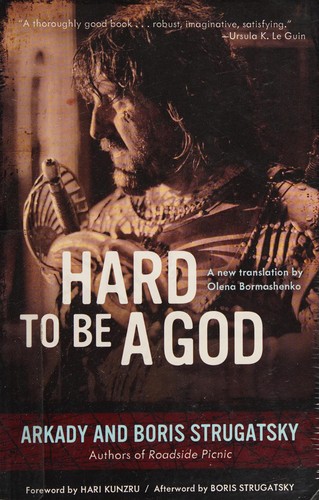
Others: Leaning positive The novel follows Anton, an undercover operative from the future planet Earth, in his mission on an alien planet, that is populated by human beings, whose society has not advanced beyond the Middle Ages. The novel's core idea is that human progress throughout the centuries is often cruel and bloody, and that religion and blind faith can be an effective tool of oppression, working to destroy the emerging scientific disciplines and enlightenment. - Don Rumata has been sent from Earth to the medieval kingdom of Arkanar with instructions to observe and to save what he can. Masquerading as an arrogant nobleman, a dueler, and a brawler, he is never defeated, but yet he can never kill. With his doubt and compassion, and his deep love for a local girl named Kira, Rumata wants to save the kingdom from the machinations of Don Reba, the first minister to the king. But given his orders, what role can he play? This long overdue translation will reintroduce one of the most profound Soviet-era novels to an eager audience. Arkady and Boris Strugatsky are widely known as the greatest Russian writers of science fiction, and their 1964 novel Hard to Be a God is considered one of the greatest of their works. Yet until now the only English version (unavailable for over thirty years) was based on a German translation, and was full of errors, infelicities, and misunderstandings. Now, in a new translation by Olena Bormashenko, whose translation of the authors’ Roadside Picnic has received widespread acclaim, here is the definitive edition of this brilliant work.
Genres: fantasy, science fiction, classics
Lists: …
Arkady Natanovich Strugatsky
2016 · 416 pages · 2 reviews
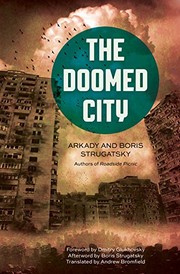
Others: PositiveArkady and Boris Strugatsky are widely considered the greatest of Russian science fiction masters, and their most famous work, Roadside Picnic, has enjoyed great popularity worldwide. Yet the novel they worked hardest on, the novel that was their own favorite, the novel that readers worldwide have acclaimed as their magnum opus, has never before been published in English. The Doomed City was so politically risky that the Strugatsky brothers kept its existence a complete secret even from their best friends for sixteen years after its completion in 1972. It was only published in Russia during perestroika in the late 1980s, the last of their works to see publication. It was translated into a host of major European languages, and now appears in English in a major new translation by acclaimed translator Andrew Bromfield. The Doomed City is set in an experimental city whose sun gets switched on in the morning and switched off at night, bordered by an abyss on one side and an impossibly high wall on the other. Its sole inhabitants are people who were plucked from twentieth-century history at various times and places and left to govern themselves under conditions established by Mentors whose purpose seems inscrutable. Andrei Voronin, a young astronomer plucked from Leningrad in the 1950s, is a diehard believer in the Experiment, even though his first job in the city is as a garbage collector. And as increasingly nightmarish scenarios begin to affect the city, he rises through the political hierarchy, with devastating effect. Boris Strugatsky wrote that the task of writing The Doomed City “was genuinely delightful and fascinating work.” Readers will doubtless say the same of the experience of reading it.
What made the match, strongest first
Boris Natanovich Strugatsky
1980 · 243 pages · 2 reviews
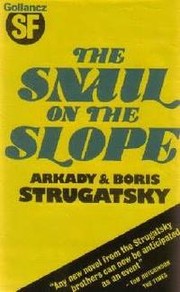
Others: PositiveThe Snail on the Slope takes place in two worlds. One is the Administration, an institution run by a surreal, Kafkaesque bureaucracy whose aim is to govern the forest below. The other is the Forest, a place of fear, weird creatures, primitive people and violence. Peretz, who works at the Administration, wants to visit the Forest. Candide crashed in the Forest years ago and wants to return to the Administration. Their journeys are surprising and strange, and readers are left to puzzle out the mysteries of these foreign environments. The Strugatskys themselves called The Snail on the Slope “the most perfect and the most valuable of our works.”
What made the match, strongest first
Robert Silverberg
1972 · 256 pages · 5 reviews
 Others: Overwhelmingly positive
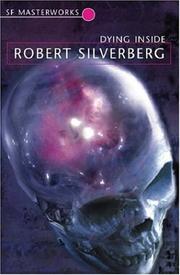
From the back cover: David Selig is outwardly unimpressive. His early promise as a student and scholar is unrealised. He has no proper job, he has no girlfriend. But, inside, Selig has the power of a god, for he can probe other people's minds and read their thoughts and feelings. This extraordinary faculty defines his sense of self -- his power is him. But with the onset of middle age, Selig's capacity to read minds is failing fast, and he must struggle to come to terms with that loss -- to accept that he is dying inside...
What made the match, strongest first
Arthur C. Clarke
1975 · 296 pages · 1 review
Others: PositiveDuncan Makenzie is the latest generation of the 'first family' of Titan, a colonised moon of Saturn. Originally settled by his grandfather Malcolm Makenzie in the early 23rd century, Titan's economy has flourished based on the harvest and sale of hydrogen mined from the atmosphere, which is used to fuel the fusion engines of interplanetary spacecraft. As the plot opens in 2276, a number of factors are combining to make a diplomatic visit to the 'mother world' of Earth a necessity. Firstly, the forthcoming 500th anniversary of US Independence, which is bringing in colonists from the entire Solar System, obviously needs a suitable representative from Titan. Secondly, the Makenzie family carry a fatal damaged gene that means any normal continuation of the family line is impossible—so both Duncan and his "father" Colin are clones of his "grandfather" Malcolm. Human cloning is a mature technology but is even at this time ethically controversial. And thirdly, technological advances in spacecraft drive systems — specifically the 'asymptotic drive' which improves the specific impulse and thrust by orders of magnitude — means that Titan's whole economy is under threat as the demand for hydrogen is about to collapse. The human aspects of the tale center mainly on the intense infatuation (largely unrequited but not unconsummated) that the two main male characters, Duncan and Karl Helmer, develop for the vividly characterized Catherine Linden Ellerman (Calindy), a visitor to Titan from Earth in their youth, and its lifelong consequences. A number of other sub-plots suggest some sort of greater mystery, but remain unexplored. The book ends with him returning home with his new "child" Malcolm (who is a clone of his dead friend Karl), leaving the other plot threads dangling. The book is the first work of science fiction to feature a starship powered by a black hole
What made the match, strongest first
Arkady Natanovich Strugatsky
1978 · 160 pages · 11 reviews
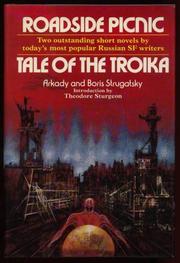
Others: Overwhelmingly positiveComment by Hari Kunru in The Guardian: Soviet-era Russian science fiction deserves a wider audience in English. The Strugatsky brothers collaborated on numerous novels and stories, the best known of which is this, partly because it was filmed by Andrei Tarkovsky as Stalker, in 1977. The novel takes place 10 years after a mysterious alien visitation, which seems to have no rational explanation. No one saw the visitors. Their presence caused disease and blindness in the areas where they landed. Now, in the six "Zones", the laws of physics (and, seemingly, of reality) are disturbed by anomalies, and littered with inexplicable, deadly wreckage. Only a few brave "stalkers" risk their lives to enter the zones to gather alien artefacts for sale. Some of these artefacts offer the promise of extraordinary powers. Unlike Tarkovsky's film, which concentrates on the hallucinatory, vacated landscape of the zones, the novels portray a society adapting to an inexplicable, terrifying event, an eruption of the unknown. Though written in 1971 and published in English in 1977, the novel was heavily bowdlerised by Soviet censors, and an authoritative text wasn't available in Russian until 2000. It's a book with an extraordinary atmosphere – and a demonstration of how science fiction, by using a single bold central metaphor, can open up the possibilities of the novel. Original Title: Пикник на обочине
What made the match, strongest first
Ursula K. Le Guin
1969 · 304 pages · 13 reviews
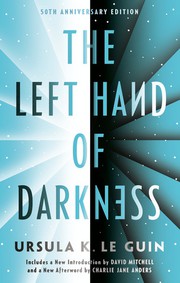
Others: Mostly positiveComment by Kim Stanley Robinson, on The Guardian's website: The Left Hand of Darkness by Ursula K Le Guin (1969) One of my favorite novels is The Left Hand of Darkness, by Ursula K Le Guin. For more than 40 years I've been recommending this book to people who want to try science fiction for the first time, and it still serves very well for that. One of the things I like about it is how clearly it demonstrates that science fiction can have not only the usual virtues and pleasures of the novel, but also the startling and transformative power of the thought experiment. In this case, the thought experiment is quickly revealed: "The king was pregnant," the book tells us early on, and after that we learn more and more about this planet named Winter, stuck in an ice age, where the humans are most of the time neither male nor female, but with the potential to become either. The man from Earth investigating this situation has a lot to learn, and so do we; and we learn it in the course of a thrilling adventure story, including a great "crossing of the ice". Le Guin's language is clear and clean, and has within it both the anthropological mindset of her father Alfred Kroeber, and the poetry of stories as magical things that her mother Theodora Kroeber found in native American tales. This worldly wisdom applied to the romance of other planets, and to human nature at its deepest, is Le Guin's particular gift to us, and something science fiction will always be proud of. Try it and see – you will never think about people in quite the same way again.
What made the match, strongest first
Loved itJust to wrap up this easier part of the review, I really loved the premise, the setup, the writing, and the feel of the book. And I enjoyed the majority of the story and the characters, and the pacing.
 Mixed
I didn't like this as much as Roadside Picnic, but I did like it. it puts you in what kind of feels like a medieval world, but there's sort of like a sci-fi connection. And I did like the way that it used that to explore certain themes.
Loved itI picked it up at a bookshop in Thailand while I was traveling and read it. And this book is great, by the way.
 Not a fan
I dnf this at about the halfway mark I just found it really dull and a bit stilted that might have been partly at least due to the translation