
 Loved it
this is the most challenging technically science fiction book I ever read... even though it was so frustrating and Challen or maybe because it was so frustrating and challenging I found it a very rewarding reading experience
Review 1 of 2
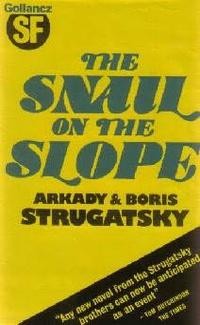
Others: Positive The Snail on the Slope takes place in two worlds. One is the Administration, an institution run by a surreal, Kafkaesque bureaucracy whose aim is to govern the forest below. The other is the Forest, a place of fear, weird creatures, primitive people and violence. Peretz, who works at the Administration, wants to visit the Forest. Candide crashed in the Forest years ago and wants to return to the Administration. Their journeys are surprising and strange, and readers are left to puzzle out the mysteries of these foreign environments. The Strugatskys themselves called The Snail on the Slope “the most perfect and the most valuable of our works.”
Genres: fantasy, science fiction, classics
Lists: …
Robert Silverberg
1972 · 200 pages · 4 reviews
 Others: Overwhelmingly positive
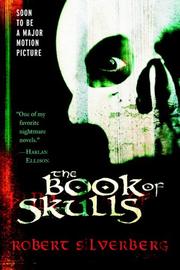
Seeking the immortality promised in an ancient manuscript, The Book of Skulls, four friends, college roommates, go on a spring break trip to Eli, the scholar, who found and translated the book; Timothy, scion of an American dynasty, born and bred to lead; Ned, poet and cynic; and Oliver, the brilliant farm boy obsessed with death. Somewhere in the desert lies the House of Skulls, where a mystic brotherhood guards the secret of eternal life. There, the four aspirants will present themselves–and a horrific price will be demanded. For immortality requires sacrifice. Two victims to balance two survivors. One by suicide, one by murder. Now, beneath the gaze of grinning skulls, the terror begins. . . .
What made the match, strongest first
D. G. Compton
2012 · 256 pages · 3 reviews
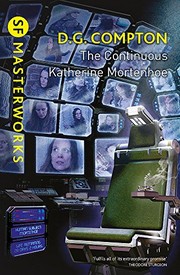
Others: PositiveA few years in the future, medical science has advanced to the point where it is practically unheard of for people to die of any cause except old-age. The few exceptions provide the fodder for a new kind of television show for avid audiences who lap up the experience of watching someone else's dying weeks. So when Katherine Mortenhoe is told that she has about four weeks to live she knows it's not just her life she's about to lose, but her privacy as well.
What made the match, strongest first
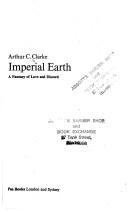
Arthur C. Clarke
1975 · 296 pages · 1 review
Others: PositiveDuncan Makenzie is the latest generation of the 'first family' of Titan, a colonised moon of Saturn. Originally settled by his grandfather Malcolm Makenzie in the early 23rd century, Titan's economy has flourished based on the harvest and sale of hydrogen mined from the atmosphere, which is used to fuel the fusion engines of interplanetary spacecraft. As the plot opens in 2276, a number of factors are combining to make a diplomatic visit to the 'mother world' of Earth a necessity. Firstly, the forthcoming 500th anniversary of US Independence, which is bringing in colonists from the entire Solar System, obviously needs a suitable representative from Titan. Secondly, the Makenzie family carry a fatal damaged gene that means any normal continuation of the family line is impossible—so both Duncan and his "father" Colin are clones of his "grandfather" Malcolm. Human cloning is a mature technology but is even at this time ethically controversial. And thirdly, technological advances in spacecraft drive systems — specifically the 'asymptotic drive' which improves the specific impulse and thrust by orders of magnitude — means that Titan's whole economy is under threat as the demand for hydrogen is about to collapse. The human aspects of the tale center mainly on the intense infatuation (largely unrequited but not unconsummated) that the two main male characters, Duncan and Karl Helmer, develop for the vividly characterized Catherine Linden Ellerman (Calindy), a visitor to Titan from Earth in their youth, and its lifelong consequences. A number of other sub-plots suggest some sort of greater mystery, but remain unexplored. The book ends with him returning home with his new "child" Malcolm (who is a clone of his dead friend Karl), leaving the other plot threads dangling. The book is the first work of science fiction to feature a starship powered by a black hole
What made the match, strongest first
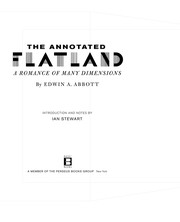
Edwin Abbott Abbott
1884 · 113 pages · 1 review
Others: PositiveFlatland: A Romance of Many Dimensions, though written in 1884, is still considered useful in thinking about multiple dimensions. It is also seen as a satirical depiction of Victorian society and its hierarchies. A square, who is a resident of the two-dimensional Flatland, dreams of the one-dimensional Lineland. He attempts to convince the monarch of Lineland of the possibility of another dimension, but the monarch cannot see outside the line. The square is then visited himself by a Sphere from three-dimensional Spaceland, who must show the square Spaceland before he can conceive it. As more dimensions enter the scene, the story's discussion of fixed thought and the kind of inhuman action which accompanies it intensifies.
What made the match, strongest first
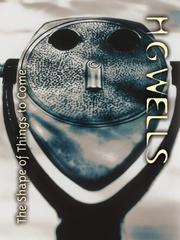
H. G. Wells
1933 · 431 pages · 1 review
 Others: Mixed
A futuristic novel in which Wells predicts, along with the Second World War, an eventual rise of a World State run by a benevolent dictatorship. This state promotes science over religion and enforces English as a global language and finally paves the way for a true Utopian State. The version below called "Things to Come" is not the book by Wells; it is a description of the film made much later.
What made the match, strongest first
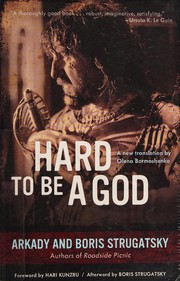
Arkady Natanovich Strugatsky
2014 · 246 pages · 5 reviews
Others: Leaning positiveThe novel follows Anton, an undercover operative from the future planet Earth, in his mission on an alien planet, that is populated by human beings, whose society has not advanced beyond the Middle Ages. The novel's core idea is that human progress throughout the centuries is often cruel and bloody, and that religion and blind faith can be an effective tool of oppression, working to destroy the emerging scientific disciplines and enlightenment. - Don Rumata has been sent from Earth to the medieval kingdom of Arkanar with instructions to observe and to save what he can. Masquerading as an arrogant nobleman, a dueler, and a brawler, he is never defeated, but yet he can never kill. With his doubt and compassion, and his deep love for a local girl named Kira, Rumata wants to save the kingdom from the machinations of Don Reba, the first minister to the king. But given his orders, what role can he play? This long overdue translation will reintroduce one of the most profound Soviet-era novels to an eager audience. Arkady and Boris Strugatsky are widely known as the greatest Russian writers of science fiction, and their 1964 novel Hard to Be a God is considered one of the greatest of their works. Yet until now the only English version (unavailable for over thirty years) was based on a German translation, and was full of errors, infelicities, and misunderstandings. Now, in a new translation by Olena Bormashenko, whose translation of the authors’ Roadside Picnic has received widespread acclaim, here is the definitive edition of this brilliant work.
What made the match, strongest first
Loved itthis is the most challenging technically science fiction book I ever read... even though it was so frustrating and Challen or maybe because it was so frustrating and challenging I found it a very rewarding reading experience