
 Loved it
I think that vagar would have been the coolest guest at any dinner party he ever attended
 Others: Overwhelmingly positive
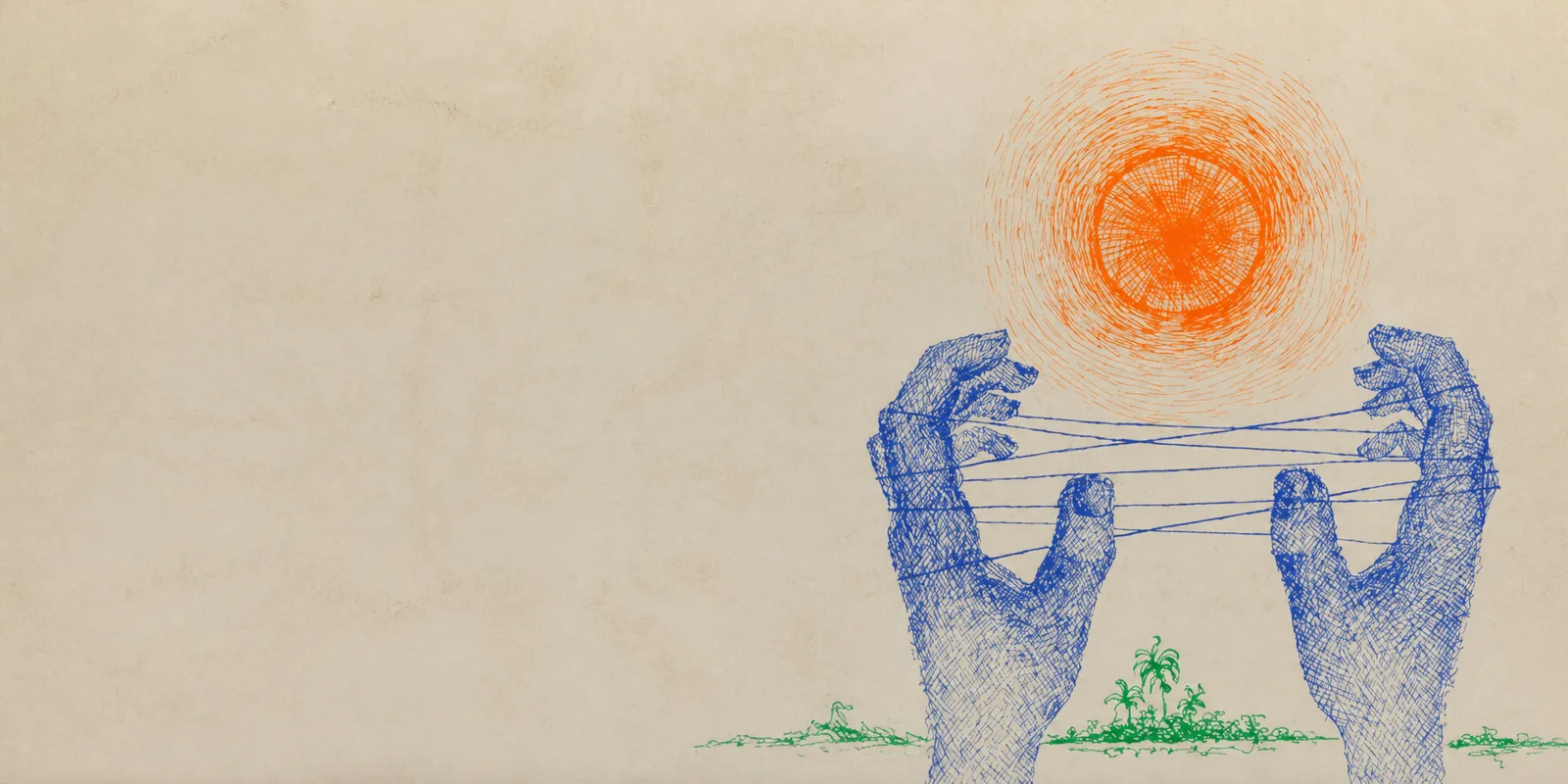
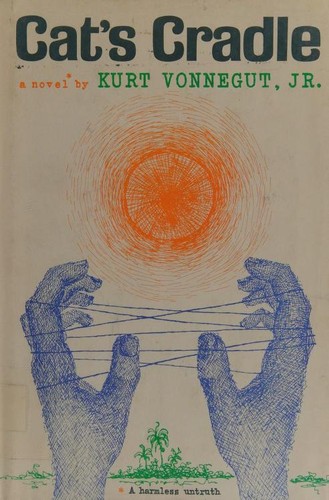
Cat's Cradle is Kurt Vonnegut's satirical commentary on modern man and his madness. An apocalyptic tale of this planet's ultimate fate, it features a midget as the protagonist, a complete, original theology created by a calypso singer, and a vision of the future that is at once blackly fatalistic and hilariously funny. A book that left an indelible mark on an entire generation of readers, Cat's Cradle is one of the twentieth century's most important works -- and Vonnegut at his very best.
Genres: fantasy, science fiction, classics
Lists: …
Kurt Vonnegut
1956 · 192 pages · 15 reviews
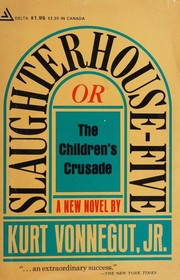
Others: Overwhelmingly positiveSlaughterhouse-Five is one of the world's great anti-war books. Centering on the infamous fire-bombing of Dresden, Billy Pilgrim's odyssey through time reflects the mythic journey of our own fractured lives as we search for meaning in what we are afraid to know.
What made the match, strongest first
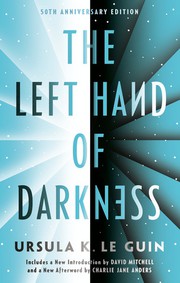
Ursula K. Le Guin
1969 · 304 pages · 13 reviews
Others: Mostly positiveComment by Kim Stanley Robinson, on The Guardian's website: The Left Hand of Darkness by Ursula K Le Guin (1969) One of my favorite novels is The Left Hand of Darkness, by Ursula K Le Guin. For more than 40 years I've been recommending this book to people who want to try science fiction for the first time, and it still serves very well for that. One of the things I like about it is how clearly it demonstrates that science fiction can have not only the usual virtues and pleasures of the novel, but also the startling and transformative power of the thought experiment. In this case, the thought experiment is quickly revealed: "The king was pregnant," the book tells us early on, and after that we learn more and more about this planet named Winter, stuck in an ice age, where the humans are most of the time neither male nor female, but with the potential to become either. The man from Earth investigating this situation has a lot to learn, and so do we; and we learn it in the course of a thrilling adventure story, including a great "crossing of the ice". Le Guin's language is clear and clean, and has within it both the anthropological mindset of her father Alfred Kroeber, and the poetry of stories as magical things that her mother Theodora Kroeber found in native American tales. This worldly wisdom applied to the romance of other planets, and to human nature at its deepest, is Le Guin's particular gift to us, and something science fiction will always be proud of. Try it and see – you will never think about people in quite the same way again.
What made the match, strongest first
George Orwell
1949 · 314 pages · 12 reviews
Others: Mostly positiveNineteen Eighty-Four: A Novel, often referred to as 1984, is a dystopian social science fiction novel by the English novelist George Orwell (the pen name of Eric Arthur Blair). It was published on 8 June 1949 by Secker & Warburg as Orwell's ninth and final book completed in his lifetime. Thematically, Nineteen Eighty-Four centres on the consequences of totalitarianism, mass surveillance, and repressive regimentation of persons and behaviours within society. Orwell, himself a democratic socialist, modelled the authoritarian government in the novel after Stalinist Russia. More broadly, the novel examines the role of truth and facts within politics and the ways in which they are manipulated.
What made the match, strongest first
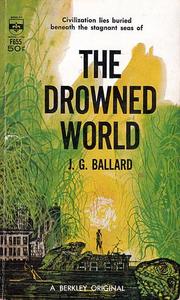
J. G. Ballard
1962 · 175 pages · 4 reviews
Others: PositiveFluctuations in solar radiation have melted the ice caps, sending the planet into a new Triassic Age of unendurable heat. London is a swamp; lush tropical vegetation grows up the walls of the Ritz and primeval reptiles are sighted, swimming through the newly-formed lagoons. Some flee the capital; others remain to pursue reckless schemes, either in the name of science or profit. While the submerged streets of London are drained in search of treasure, Dr Robert Kerans - part of a group of intrepid scientists - comes to accept this submarine city and finds himself strangely resistant to the idea of saving it. (via 2014 Fourth Estate edition)
What made the match, strongest first
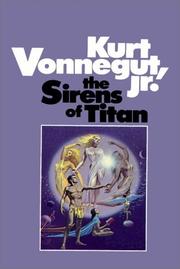
Kurt Vonnegut
1959 · 319 pages · 6 reviews
Others: Leaning positive"His best book," Esquire wrote of Kurt Vonnegut's 1959 novel The Sirens of Titan, adding, "he dares not only to ask the ultimate question about the meaning of life, but to answer it." This novel fits into that aspect of the Vonnegut canon that might be classified as science fiction, a quality that once led Time to describe Vonnegut as "George Orwell, Dr. Caligari and Flash Gordon compounded into one writer ... a zany but moral mad scientist." The Sirens of Titan was perhaps the novel that began the Vonnegut phenomenon with readers. The story is a fabulous trip, spinning madly through space and time in pursuit of nothing less than a fundamental understanding of the meaning of life. It takes place at a time in the future, when "only the human soul remained terra incognita ... the Nightmare Ages, falling roughly, give or take a few years, between the Second World War and the Third Great Depression." The villainous and super rich Malachi Constant is offered a chance to journey into the far reaches of outer space, to eventually live on the planet Titan surrounded by three beautiful sirens. There is the proverbial "small print" with this incredible offer, which Constant turns down, setting in motion a fantastic chain of events that only Vonnegut could imagine. The result is an uproarious, freewheeling inquiry into the very reason we exist and about how we participate and matter in the scheme of the universe. The Sirens of Titan is essential, fundamental Vonnegut, as entertaining as it is questing in search of answers to the mysteries of life. As a work of fiction, it is a sure leap, in terms of craft, over his first novel, Player Piano. His writing here is pared down, more concentrated and graceful, richly in the service of his remarkable ideas. Vonnegut summons greatness for the first time in The Sirens of Titan, where the search for the meaning of existence looks and sounds like a kaleidoscopic dream but leaves the reader with a clear and challenging answer.
What made the match, strongest first
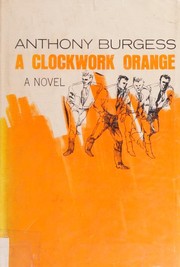
Anthony Burgess
1962 · 188 pages · 8 reviews
Others: Overwhelmingly positiveA Clockwork Orange is a dystopian satirical black comedy novel by English writer Anthony Burgess, published in 1962. It is set in a near-future society that has a youth subculture of extreme violence. The teenage protagonist, Alex, narrates his violent exploits and his experiences with state authorities intent on reforming him. The book is partially written in a Russian-influenced argot called "Nadsat", which takes its name from the Russian suffix that is equivalent to '-teen' in English. According to Burgess, it was a jeu d'esprit written in just three weeks. In 2005, A Clockwork Orange was included on Time magazine's list of the 100 best English-language novels written since 1923, and it was named by Modern Library and its readers as one of the 100 best English-language novels of the 20th century. The original manuscript of the book has been kept at McMaster University's William Ready Division of Archives and Research Collections in Hamilton, Ontario, Canada since the institution purchased the documents in 1971. It is considered one of the most influential dystopian books.
What made the match, strongest first
Loved itI think that vagar would have been the coolest guest at any dinner party he ever attended
Loved itI remember finishing Cap's cradle and thinking this is the best book I've ever read and it remained my favorite for the next 10 years
Loved itthen there's the wonderful cat's cradle I say wonderful