
 Mixed
I think I liked this book. The humor is dark and cryptic. I felt really smart every time I got one of Vonagut's jokes. And even though it's wonderfully weird and quite hard to pin down, it's actually very easy to read.
 Others: Leaning positive
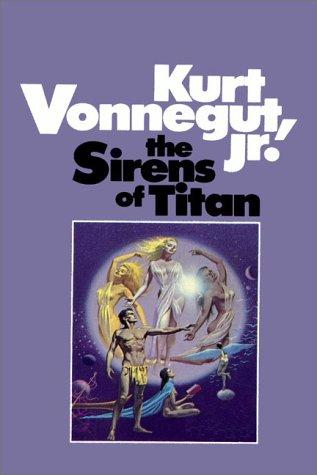
"His best book," Esquire wrote of Kurt Vonnegut's 1959 novel The Sirens of Titan, adding, "he dares not only to ask the ultimate question about the meaning of life, but to answer it." This novel fits into that aspect of the Vonnegut canon that might be classified as science fiction, a quality that once led Time to describe Vonnegut as "George Orwell, Dr. Caligari and Flash Gordon compounded into one writer ... a zany but moral mad scientist." The Sirens of Titan was perhaps the novel that began the Vonnegut phenomenon with readers. The story is a fabulous trip, spinning madly through space and time in pursuit of nothing less than a fundamental understanding of the meaning of life. It takes place at a time in the future, when "only the human soul remained terra incognita ... the Nightmare Ages, falling roughly, give or take a few years, between the Second World War and the Third Great Depression." The villainous and super rich Malachi Constant is offered a chance to journey into the far reaches of outer space, to eventually live on the planet Titan surrounded by three beautiful sirens. There is the proverbial "small print" with this incredible offer, which Constant turns down, setting in motion a fantastic chain of events that only Vonnegut could imagine. The result is an uproarious, freewheeling inquiry into the very reason we exist and about how we participate and matter in the scheme of the universe. The Sirens of Titan is essential, fundamental Vonnegut, as entertaining as it is questing in search of answers to the mysteries of life. As a work of fiction, it is a sure leap, in terms of craft, over his first novel, Player Piano. His writing here is pared down, more concentrated and graceful, richly in the service of his remarkable ideas. Vonnegut summons greatness for the first time in The Sirens of Titan, where the search for the meaning of existence looks and sounds like a kaleidoscopic dream but leaves the reader with a clear and challenging answer.
Genres: science fiction, mystery, classics
Lists: …
Arthur C. Clarke
1952 · 220 pages · 9 reviews
Others: Leaning positiveChildhood's End is a 1953 science fiction novel by British author Arthur C. Clarke. The story follows the peaceful alien invasion of Earth by the mysterious Overlords, whose arrival ends all war, helps form a world government, and turns the planet into a near-utopia. Many questions are asked about the origins and mission of the aliens, but they avoid answering, preferring to remain in their ships, governing through indirect rule. Decades later, the Overlords eventually show themselves, and their impact on human culture leads to a Golden Age. However, the last generation of children on Earth begin to display powerful psychic abilities, heralding their evolution into a group mind, a transcendent form of life.
What made the match, strongest first
Isaac Asimov
1955 · 192 pages · 2 reviews
Others: MixedThe story of temporal engineers who meta-regulate the history of humanity through the centuries, eliminating risk, adventure, and space travel in the process. One man rebels in order to save the existence of someone he loves, and in the end the time bureaucracy is destroyed for the sake of individuality and human achievement. The theme is the opposite of the Foundation stories, where the central planners and manipulators of humanity always dominate.
What made the match, strongest first
Roger Zelazny
1967 · 259 pages · 6 reviews
 Others: Leaning negative
A colony of humankind is subjugated by the First Colonists, the crew of the starship that brought them to their new home 1000 years before. They have taken control of ancient technologies and enhanced themselves with godlike psychic powers and virtual immortality. Adopting the panoply of the venerable Hindu religion, they live lives as its Gods, surrounded by advanced technology within the trappings of a primitive civilization. Our hero Sam, unready to battle the tyrannical forces of the Celestial City allied with his former wife, now the rapturous Kali, Goddess of Destruction. A story of the classic drama of power, love, honor, pride, and fantasy erupting in an epic war of the Gods and ultimate transcendence.
What made the match, strongest first
Clifford D. Simak
1952 · 254 pages · 5 reviews
Others: PositiveComment by John Clute: We know better now, of course. But they still entrance us, the old page-turners from the glory days of American SF, half a century or so ago, when the world was full of futures we were never going to have. In the mid-1940s, when he began to publish the episodes that would be assembled as City in 1952, Clifford Simak, a Minneapolis-based journalist and author, could still carry us away with the dream that cars and pollution and even the great cities of the world – "Huddling Place", the title of one of these tales, is his own derisory term for them – would soon be brushed off the map by Progress, leaving nothing behind but tasteful exurbs filled with middle-class nuclear families living the good life, with fishing streams and greenswards sheltering each home from the stormy blast. Fortunately, Simak soon gets past this demented vision of a near-future world saved by technological fixes, a dementia common then to SF writers and gurus and politicians alike, and launches into an astonishingly eventful narrative of the next 10,000 years as seen through the eyes of one family and the immortal robot Jenkins, and all told with a weird pastoral serenity that for a kid like me seemed near to godlike. In its course City touches on almost everything dear to 1940s SF, and to me remembering. Robots. Genetic Engineering. Space. Jupiter. Domed cities. Keeps. Hiveminds. Matter transmission. Telepathy. Parallel worlds. Paranormal empathy. Mutants. Supermen. It's all there, and, thanks to Simak's skilled hand at the wheel, it's all in place: suave, sibylline, swift. The whole is framed as a series of legends told by the uplifted Dogs who have replaced the human race, now gone for ever. They have been bred not to kill. At the end, only Jenkins remains to keep them from learning how to repeat history and die. It all seemed immensely sad and wise then, but fun. It still does.
What made the match, strongest first
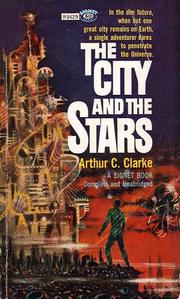
Arthur C. Clarke
1956 · 254 pages · 6 reviews
Others: Mostly negativeOmnibus
What made the match, strongest first
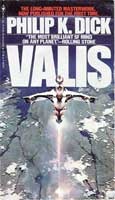
Philip K. Dick
1981 · 249 pages · 6 reviews
Others: MixedVALIS is the first book in Philip K. Dick's incomparable final trio of novels (the others being The Divine Invasion and The Transmigration of Timothy Archer). This disorienting and bleakly funny work is about a schizophrenic hero named Horselover Fat; the hidden mysteries of Gnostic Christianity; and reality as revealed through a pink laser. VALIS is a theological detective story, in which God is both a missing person and the perpetrator of the ultimate crime.
What made the match, strongest first
MixedI think I liked this book. The humor is dark and cryptic. I felt really smart every time I got one of Vonagut's jokes. And even though it's wonderfully weird and quite hard to pin down, it's actually very easy to read.
Not a fanThe first being Sirens of Titan, which is, you know, many people think a classic science fiction, but mine was not a happy experience. It was just too absurd for me. And I didn't get on with Vonagut's humor, at least as it was as it appeared in The Sirens of Titan.
Loved itThe science of Titan made me laugh but it also had a huge emotional impact on me there's a chapter that describes an alien species called harmoniums and is one of my favorite things that I've ever read for me this is an A+ work
Loved itthe sounds of Titan has a massive influence over things like The Hitchhiker's Guide the Galaxy
Loved itwhich is a book I liked a lot for some parts I like the epic scope of the novel I liked Diaz space opera feel