Bruges-la-Morte
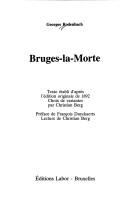
Bruges-la-MorteGeorges Rodenbach
Buy on Amazon

Bruges-la-Morte (1892)

Georges Rodenbach

Others: Mixed

Hugues Viane is a widower who has turned to the melancholy, decaying city of Bruges as the ideal location in which to mourn his wife and as a backdrop for the narcissistic wanderings of his disturbed spirit. He becomes obsessed with a young dancer whom he believes is the double of his beloved wife, leading him to psychological torment and humiliation, culminating in a deranged murder. This 1892 work is a poet's novel, dense, visionary, and haunting. Bruges, the 'dead city', becomes a metaphor for Hugues' dead wife as he follows its mournful labyrinth of streets and canals in a cyclical promenade of reflection and allusion--the ultimate evocation of Rodenbach's lifelong love affair with the enduring mystery and mortuary atmosphere of Bruges.

ISBN:
9780947757588
Length:
102 pages

Genres: classics

Lists: …

Similar books

1 of 6
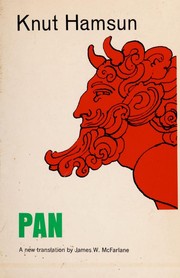
  • Pan

    Knut Hamsun

    1900 · 158 pages · 1 review

    Others: Positive

    A hunter escapes the pressures of modern civilization to ramble through northern Norway’s forests. Thomas Glahn’s only friend is his dog, Aesop, until he meets Edvarda, a woman that breaks through his isolated existence. Hamsun explores the wild beauty of the landscape and forces us to look into the shadowy alcoves of the human mind. Written in the form of a diary, Pan is the novel that launched Hamsun’s legendary literary career.

    Why?

    What made the match, strongest first

    On the same reading list
    63%
    Also classics
    37%
    Personalize your recommendations
  • Against Nature

    Joris-Karl Huysmans

    1884 · 134 pages · 3 reviews

    Others: Overwhelmingly positive

    À rebours (French pronunciation: [a ʁ(ə).buʁ]; translated Against Nature or Against the Grain) is an 1884 novel by the French writer Joris-Karl Huysmans. The narrative centers on a single character: Jean des Esseintes, an eccentric, reclusive, ailing aesthete. The last scion of an aristocratic family, Des Esseintes loathes nineteenth-century bourgeois society and tries to retreat into an ideal artistic world of his own creation. The narrative is almost entirely a catalogue of the neurotic Des Esseintes's aesthetic tastes, musings on literature, painting, and religion, and hyperaesthetic sensory experiences. À rebours contains many themes that became associated with the Symbolist aesthetic. In doing so, it broke from Naturalism and became the ultimate example of "Decadent" literature, inspiring works such as Oscar Wilde's The Picture of Dorian Gray (1890). In his preface for the 1903 publication of the novel, Huysmans wrote that he had the idea to portray a man "soaring upwards into dream, seeking refuge in illusions of extravagant fantasy, living alone, far from his century, among memories of more congenial times, of less base surroundings ... each chapter became the sublimate of a specialism, the refinement of a different art; it became condensed into an essence of jewellery, perfumes, religious and secular literature, of profane music and plain-chant." (Wikipedia)

    Why?

    What made the match, strongest first

    On the same reading list
    61%
    Also classics
    35%
    Similar descriptions
    4%
    Personalize your recommendations
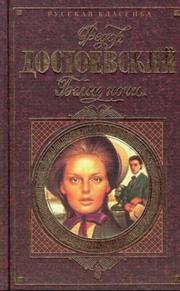
  • White Nights

    Fiódor Dostoievski

    1848 · 294 pages · 2 reviews

    Others: Positive

    White Nights is a short story by Fyodor Dostoevsky that was published in 1848. Set in St. Petersburg, it is the story of a young man fighting his inner restlessness. A light and tender narrative, it delves into the torment and guilt of unrequited love. Both protagonists suffer from a deep sense of alienation that initially brings them together. A blend of romanticism and realism, the story appeals gently to the senses and feelings.

    Why?

    What made the match, strongest first

    On the same reading list
    50%
    Also classics
    43%
    Similar descriptions
    7%
    Personalize your recommendations
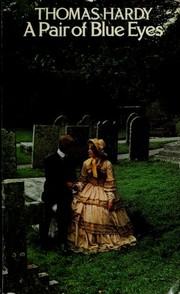
  • A Pair of Blue Eyes

    Thomas Hardy

    1800 · 433 pages · 1 review

    Others: Positive

    Elfride Swancourt is the daughter of the Rector of Endelstow, a remote sea-swept parish in Corwall based on St Juliot, where Hardy began A Pair of Blue Eyes during the beginning of his courtship of his first wife, Emma. Blue-eyed and high-spirited, Elfride has little experience of the world beyond, and becomes entangled with two men: the boyish architect, Stephen Smith, and the older literary man, Henry Knight. The former friends become rivals, and Elfride faces an agonizing choice.

    Why?

    What made the match, strongest first

    Also classics
    92%
    Similar descriptions
    8%
    Personalize your recommendations
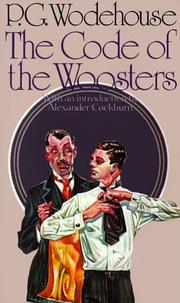
  • The Code of the Woosters

    P.G. Wodehouse

    1938 · 238 pages · 1 review

    Others: Positive

    Nothing but trouble can ensue when Bertie Wooster's Aunt Dahlia instructs him to steal a silver jug from Totleigh Towers, home of magistrate and hell-hound, Sir Watkyn Bassett. First he must face the peril of Sir Watkyn's droopy daughter, Madeline, and then the terrors of would-be Dictator, Roderick Spode and his gang of Black Shorts. But when duty calls, Bertram answers, and so there follows what he himself calls the "sinister affair of Gussie Fink-Nottle, Madeline Bassett, old Pop Bassett, Stiffy Byng, the Rev. H.P. ('Stinker') Pinker, the eighteenth-century cow-creamer and the small, brown, leather-covered notebook." In a plot with more twists than an English country lane, it takes all the ingenuity of Jeeves to extract his master from the soup again. - Jacket.

    Why?

    What made the match, strongest first

    Also classics
    95%
    Similar descriptions
    5%
    Personalize your recommendations
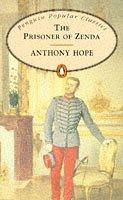
  • The Prisoner of Zenda

    Anthony Hope

    1800 · 201 pages · 0 reviews

    An adventure novel, originally published in 1894, set in the fictitious European Kingdom of Ruritania. An English tourist is persuaded to impersonate the new king after he is abducted before he can be crowned. This act draws upon him the wrath of the Prince who has had the king abducted and his partner in crime the villainous Rupert of Hentzau.

    Why?

    What made the match, strongest first

    On the same reading list
    68%
    Also classics
    32%
    Personalize your recommendations

Reviews1

Mixed

For me, the strongest part of the book is actually not the plot regarding the wife and her replacement. Compelling as it is. It's Ug's relationship with the city of Bruge, his identification with its morbid atmosphere. I haven't read a book that captures that strange influence a city has on a character so well.