
 Loved it
and I really, really enjoyed rereading all of them except maybe Under the Greenwood Tree, which is not Hardy's best in my opinion.
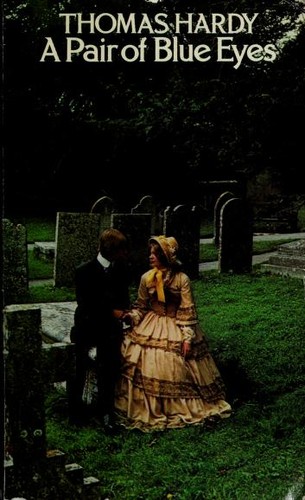
Others: Positive Elfride Swancourt is the daughter of the Rector of Endelstow, a remote sea-swept parish in Corwall based on St Juliot, where Hardy began A Pair of Blue Eyes during the beginning of his courtship of his first wife, Emma. Blue-eyed and high-spirited, Elfride has little experience of the world beyond, and becomes entangled with two men: the boyish architect, Stephen Smith, and the older literary man, Henry Knight. The former friends become rivals, and Elfride faces an agonizing choice.
Genres: classics
Lists: …
Thomas Hardy
1800 · 450 pages · 4 reviews
Others: PositiveFrom the book:In the long and intricately inwrought chain of circumstance which renders worthy of record some experiences of Cytherea Graye, Edward Springrove, and others, the first event directly influencing the issue was a Christmas visit. In the above-mentioned year, 1835, Ambrose Graye, a young architect who had just begun the practice of his profession in the midland town of Hocbridge, to the north of Christminster, went to London to spend the Christmas holidays with a friend who lived in Bloomsbury.
What made the match, strongest first
George Eliot
1800 · 642 pages · 1 review
Others: PositiveAs Daniel Deronda opens, Gwendolen Harleth is poised at the roulette-table, prepared to throw away her family fortune. She is observed by Daniel Deronda, a young man groomed in the finest tradition of the English upper-classes. And while Gwendolen loses everything and becomes trapped in an oppressive marriage, Deronda's fortunes take a different turn. After a dramatic encounter with the young Jewish woman Mirah, he becomes involved in a search for her lost family and finds himself drawn into ever-deeper sympathies with Jewish aspirations and identity. 'I meant everything in the book to be related to everything else', wrote George Eliot of her last and most ambitious novel, and in weaving her plot strands together she created a bold and richly textured picture of British society and the Jewish experience within it.
What made the match, strongest first
Nella Larsen
1929 · 189 pages · 6 reviews
 Others: Overwhelmingly positive
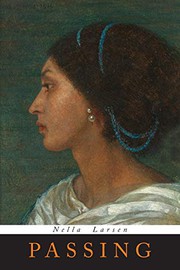
First published to critical acclaim in 1929, Passing firmly established Nella Larsen's prominence among women writers of the Harlem Renaissance. Irene Redfield, the novel's protagonist, is a woman with an enviable life. She and her husband, Brian, a prominent physician, share a comfortable Harlem town house with their sons. Her work arranging charity balls that gather Harlem's elite creates a sense of purpose and respectability for Irene. But her hold on this world begins to slip the day she encounters Clare Kendry, a childhood friend with whom she had lost touch. Clare—light-skinned, beautiful, and charming—tells Irene how, after her father's death, she left behind the black neighborhood of her adolescence and began passing for white, hiding her true identity from everyone, including her racist husband. As Clare begins inserting herself into Irene's life, Irene is thrown into a panic, terrified of the consequences of Clare's dangerous behavior. And when Clare witnesses the vibrancy and energy of the community she left behind, her burning desire to come back threatens to shatter her careful deception.
What made the match, strongest first
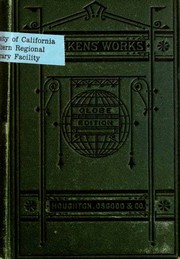
Charles Dickens
1800 · 798 pages · 11 reviews
Others: PositiveDombey and Son is both a firm and a family and the ambiguous connection between public and private life lies at the heart of Dickens' novel. Paul Dombey is a man who runs his domestic affairs as he runs his business: calculatingly, callously, coldly and commercially. Through his dysfunctional relationships with his son, his two wives, and his neglected daughter Florence, Dickens paints a vivid picture of the limitations of a society dominated by commercial values and the drive for profit andexplores the possibility of moral and emotional redemption through familial love.
What made the match, strongest first
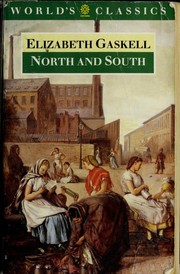
Elizabeth Gaskell
1855 · 450 pages · 15 reviews
Others: Overwhelmingly positiveWhen her father leaves the Church in a crisis of conscience, Margaret Hale is uprooted from her comfortable home in Hampshire to move with her family to the north of England. Initially repulsed by the ugliness of her new surroundings in the industrial town of Milton, Margaret becomes aware of the poverty and suffering of the local mill workers and develops a passionate sense of social justice. This is intensified by her tempestuous relationship with the mill-owner and self-made man, John Thornton, as their fierce opposition over his treatment of his employees masks a deeper attraction. In North and South, Elizabeth Gaskell skillfully fuses individual feeling with social concern, and in Margaret Hale creates one of the most original heroines of Victorian literature.
What made the match, strongest first
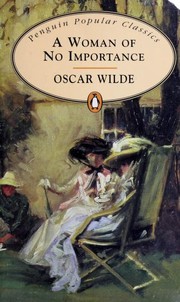
Oscar Wilde
1893 · 94 pages · 2 reviews
Others: PositiveOscar Wilde's audacious drama of social scandal centres around the revelation of Mrs Arbuthnot's long-concealed secret. A house party is in full swing at Lady Hunstanton's country home, when it is announced that Gerald Arbuthnot has been appointed secretary to the sophisticated, witty Lord Illingworth. Gerald's mother stands in the way of his appointment, but fears to tell him why, for who will believe Lord Illingworth to be a man of no importance?
What made the match, strongest first
Loved itand I really, really enjoyed rereading all of them except maybe Under the Greenwood Tree, which is not Hardy's best in my opinion.