

 Loved it
excellent book of essays about art appreciation.
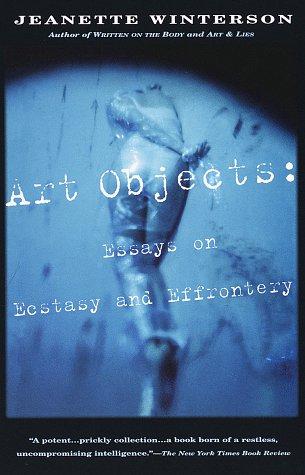
Others: Positive "Jeanette Winterson argues in this collection for the importance of art in all our lives. In ten intertwined essays, the acclaimed author of such recent novels as Written on the Body and Art & Lies proposes art as an active force in the world - neither elitist nor remote, available to those who want it and affecting even those who don't." "An act of courage and effrontery, a uniquely human endeavor that defies time and differences, art offers new realities, emotions and worlds to anyone prepared to meet the demands it places on us. Art objects to the lie that life is small, fragmented and mean. Art objects to the myth of inevitable decay. Winterson's eloquent vision of objecting, transforming, exuberant art is presented in pieces on painting, autobiography, style and the future of fiction. She also declares her admiration for Modernism and examines the writing of Virginia Woolf, T. S. Eliot and Gertrude Stein. More personally, she confronts the current fascination with the writer's life or sexuality instead of the work itself, and describes her relationship to her own fiction."--BOOK JACKET.
Genres: nonfiction
Lists: …
Chris Hedges
2009 · 232 pages · 1 review
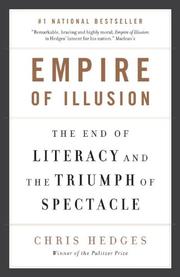
Others: PositivePulitzer prize–winner Chris Hedges charts the dramatic and disturbing rise of a post-literate society that craves fantasy, ecstasy and illusion. Chris Hedges argues that we now live in two societies: One, the minority, functions in a print-based, literate world, that can cope with complexity and can separate illusion from truth. The other, a growing majority, is retreating from a reality-based world into one of false certainty and magic. In this "other society," serious film and theatre, as well as newspapers and books, are being pushed to the margins. In the tradition of Christopher Lasch's The Culture of Narcissism and Neil Postman's Amusing Ourselves to Death, Hedges navigates this culture — attending WWF contests as well as Ivy League graduation ceremonies — exposing an age of terrifying decline and heightened self-delusion. --This text refers to an out of print or unavailable edition of this title
What made the match, strongest first
David Graeber
2018 · 333 pages · 1 review
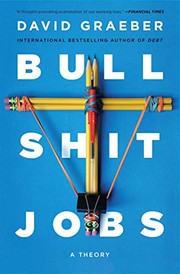
Others: PositiveBullshit Jobs: A Theory is a 2018 book by anthropologist David Graeber that argues the existence and societal harm of meaningless jobs. He contends that over half of societal work is pointless, which becomes psychologically destructive when paired with a work ethic that associates work with self-worth. Graeber describes five types of bullshit jobs, in which workers pretend their role isn't as pointless or harmful as they know it to be: flunkies, goons, duct tapers, box tickers, and taskmasters. He argues that the association of labor with virtuous suffering is recent in human history, and proposes universal basic income as a potential solution.
What made the match, strongest first
Jack W. Parsons
2001 · 96 pages · 1 review
 Others: Mixed
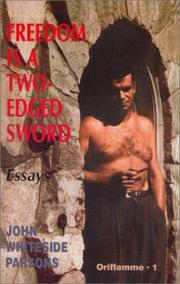
Written around 1950, these essays are now, decades later, still strikingly prophetic. His introductory essays on Magick and Witchcraft are classics of lucidity. This volume makes available for the first time all of Parsons' surviving essays, edited by his wife and student, Cameron, in collaboration with Frater Superior Hymenaeus Beta, the head of the O.T.O.
What made the match, strongest first
Jack Lowery
2022 · 448 pages · 1 review
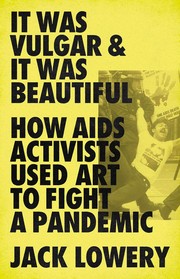
Others: Positive"By the late 1980s, the AIDS pandemic was deeply impacting gay and lesbian communities in America, and disinformation about the disease was running rampant. Out of the activist group ACT UP (AIDS Coalition to Unleash Power), an art collective that called itself Gran Fury was formed, to create graphics and media that campaigned against corporate greed, government inaction, and public indifference to AIDS. In It Was Vulgar and It Was Beautiful, writer Jack Lowery examines Gran Fury's art and activism, from the iconic images like the SILENCE = DEATH graphic and the Kissing Doesn't Kill poster, to the act of dropping thousands of fake bills onto the trading floor of the New York Stock Exchange. Lowery offers a complex, moving portrait of a group that expressed through art the profound trauma of surviving the AIDS crisis and formed essential solidarities between gays and lesbians in the activist community. Gran Fury and ACT UP's strategies are today employed by a variety of activist groups, including survivors of school shootings, harm reduction organizers, and activists for universal healthcare. Their belief in the power of art to create social change and drive political movements is illuminating in this era when violence and unending structural racism continue to target the most vulnerable"--
What made the match, strongest first
Sabrina Strings
2019 · 304 pages · 2 reviews
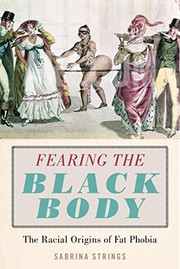
Others: PositiveThere is an obesity epidemic in this country and poor black women are particularly stigmatized as “diseased” and a burden on the public health care system. This is only the most recent incarnation of the fear of fat black women, which Sabrina Strings shows took root more than two hundred years ago. Strings weaves together an eye-opening historical narrative ranging from the Renaissance to the current moment, analyzing important works of art, newspaper and magazine articles, and scientific literature and medical journals―where fat bodies were once praised―showing that fat phobia, as it relates to black women, did not originate with medical findings, but with the Enlightenment era belief that fatness was evidence of “savagery” and racial inferiority. The author argues that the contemporary ideal of slenderness is, at its very core, racialized and racist. Indeed, it was not until the early twentieth century, when racialized attitudes against fatness were already entrenched in the culture, that the medical establishment began its crusade against obesity. An important and original work, Fearing the Black Body argues convincingly that fat phobia isn’t about health at all, but rather a means of using the body to validate race, class, and gender prejudice.
What made the match, strongest first
Legacy Russell
2020 · 192 pages · 1 review
Others: MixedA new manifesto in cyberfeminism: finding liberation in the glitch between body, gender and technology. The divide between the digital and the real world no longer exists: we are connected all the time. How do we find out who we are within this digital era? Where do we create the space to explore our identity? How can we come together and create solidarity? The glitch is often dismissed as an error, a faulty overlaying, but, as Legacy Russell shows, liberation can be found within the fissures between gender, technology and the body that it creates. The glitch offers the opportunity for us to perform and transform ourselves in an infinite variety of identities. In Glitch Feminism, Russell makes a series of radical demands through memoir, art and critical theory, and the work of contemporary artists who have travelled through the glitch in their work. Timely and provocative, Glitch Feminism shows how the error can be a revolution.
What made the match, strongest first
Loved itexcellent book of essays about art appreciation.