
 Loved it
It is hilarious. I was laughing so much while reading this book.
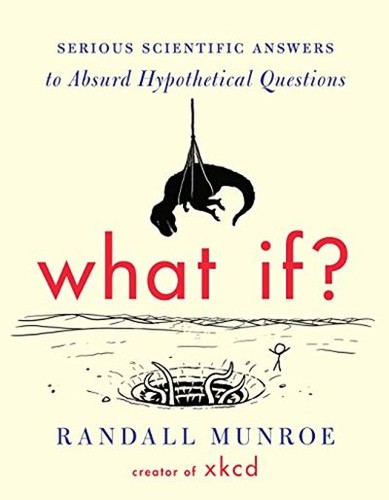
Others: Positive Millions of people visit xkcd.com each week to read Randall Munroe's iconic webcomic. His stick-figure drawings about science, technology, language, and love have a large and passionate following. Fans of xkcd ask Munroe a lot of strange questions. What if you tried to hit a baseball pitched at 90 percent the speed of light? How fast can you hit a speed bump while driving and live? If there was a robot apocalypse, how long would humanity last? In pursuit of answers, Munroe runs computer simulations, pores over stacks of declassified military research memos, solves differential equations, and consults with nuclear reactor operators. His responses are masterpieces of clarity and hilarity, complemented by signature xkcd comics. They often predict the complete annihilation of humankind, or at least a really big explosion. The book features new and never-before-answered questions, along with updated and expanded versions of the most popular answers from the xkcd website.
Lists: …
Becky Chambers
2021 · 160 pages · 30 reviews
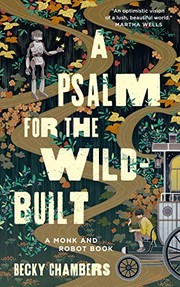
Others: Mostly positiveIt's been centuries since the robots of Panga gained self-awareness and laid down their tools; centuries since they wandered, en masse, into the wilderness, never to be seen again; centuries since they faded into myth and urban legend. One day, the life of a tea monk is upended by the arrival of a robot, there to honor the old promise of checking in. The robot cannot go back until the question of "what do people need?" is answered. But the answer to that question depends on who you ask, and how. They're going to need to ask it a lot. Becky Chambers's new series asks: in a world where people have what they want, does having more matter?
What made the match, strongest first
Martha Wells
2018 · 158 pages · 3 reviews
 Others: Mixed
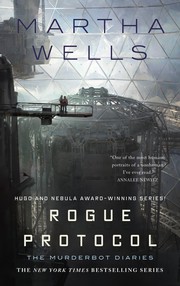
"Sci-Fi's favorite antisocial AI is back on a mission. The case against the too-big-to-fail GrayChris Corporation is floundering, and more importantly, authorities are beginning to ask more questions about where Dr. Mensah's SecUnit is. And Murderbot would rather those questions went away. For good."
What made the match, strongest first
Orson Scott Card
1985 · 324 pages · 17 reviews
 Others: Overwhelmingly positive
Ender's Game is a 1985 military science fiction novel by American author Orson Scott Card. Set at an unspecified date in Earth's future, the novel presents an imperiled humankind after two conflicts with the Formics, an insectoid alien species they dub the "buggers". In preparation for an anticipated third invasion, children, including the novel's protagonist, Andrew "Ender" Wiggin, are trained from a very young age by putting them through increasingly difficult games, including some in zero gravity, where Ender's tactical genius is revealed. The book originated as a short story of the same name, published in the August 1977 issue of Analog Science Fiction and Fact. The novel was published on January 15, 1985. Later, by elaborating on characters and plotlines depicted in the novel, Card was able to write additional books in the Ender's Game series. Card also released an updated version of Ender's Game in 1991, changing some political facts to reflect the times more accurately (e.g., to include the recent collapse of the Soviet Union and the end of the Cold War). The novel has been translated into 34 languages. Reception of the book has been mostly positive. It has become suggested reading for many military organizations, including the United States Marine Corps. Ender's Game was recognized as "best novel" by the 1985 Nebula Award[3] and the 1986 Hugo Award[4] in the genres of science fiction and fantasy. Its four sequels—Speaker for the Dead (1986), Xenocide (1991), Children of the Mind (1996), and Ender in Exile (2008)—follow Ender's subsequent travels to many different worlds in the galaxy. In addition, the later novella A War of Gifts (2007) and novel Ender's Shadow (1999), plus other novels in the Shadow saga, take place during the same time period as the original.
What made the match, strongest first
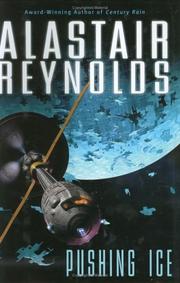
Alastair Reynolds
2005 · 521 pages · 4 reviews
Others: Overwhelmingly positiveIn 2057, Bella Lind and the crew of the Rockhopper mine comets for their ice, but when Janus, one of Saturn's ice moons, inexplicably leaves its orbit and heads out of the solar system at high speed, Bella is assigned to follow it.
What made the match, strongest first
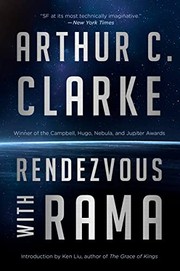
Arthur C. Clarke
1953 · 274 pages · 8 reviews
Others: Mostly positiveWritten in 1973, a massive 50 kilometre long alien cylinder begins to pass through the solar system provoking a hurried effort to intercept it. The closest available ship rushes to rendezvous so as to have a quick study before it gets too close to the sun. Able to enter via an airlock on one end of the ship, the crew explores the huge world found inside, a world full of wonder and mystery. As usual, the science is spot on. This is the best novel of Clarke's since 2001 and Childhood's End and is a truly grand adventure full of puzzles and ideas that lead you asking more questions than are answered. Enough questions in fact to lead to numerous inferior sequels, but enough answers to leave you satisfied. Don't pass up this gem of hard science fiction.
What made the match, strongest first
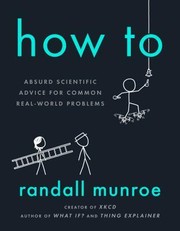
Randall Munroe
2019 · 306 pages · 1 review
Others: PositiveFor any task you might want to do, there's a right way, a wrong way, and a way so monumentally complex, excessive, and inadvisable that no one would ever try it. How To is a guide to the third kind of approach. It's full of highly impractical advice for everything from landing a plane to digging a hole. Bestselling author and cartoonist Randall Munroe explains how to predict the weather by analyzing the pixels of your Facebook photos. He teaches you how to tell if you're a baby boomer or a 90's kid by measuring the radioactivity of your teeth. He offers tips for taking a selfie with a telescope, crossing a river by boiling it, and powering your house by destroying the fabric of space-time. And if you want to get rid of the book once you're done with it, he walks you through your options for proper disposal, including dissolving it in the ocean, converting it to a vapor, using tectonic plates to subduct it into the Earth's mantle, or launching it into the Sun. By exploring the most complicated ways to do simple tasks, Munroe doesn't just make things difficult for himself and his readers. As he did so brilliantly in What If?, Munroe invites us to explore the most absurd reaches of the possible. Full of clever infographics and fun illustrations, How To is a delightfully mind-bending way to better understand the science and technology underlying the things we do every day.
Loved itIt is hilarious. I was laughing so much while reading this book.