
 Loved it
this little book is a laugh on every page it's relatable and funny and silly and just fantastic
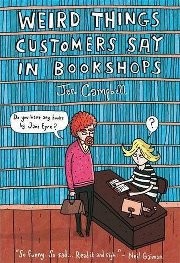
Others: Positive Customer: Have you read every single book in here? Bookseller: No, I can't say I have. Customer: Well, you're not very good at your job, are you? A simple Twitter question posed by John Cleese-"What is your pet peeve?" -inspired Jen Campbell to start a blog collecting all the ridiculous conversations overheard in her bookstore, everything from "Did Beatrix Potter ever write a book about dinosaurs?" to the hunt for a paperback which could forecast the next year’s weather; from "I've forgotten my glasses, please read me the first chapter" to "Excuse me ... is this book edible?"; and from "Can books conduct electricity?" to "My children are just climbing your bookshelves: that's ok... isn't it?" If we didn't know it already, this irresistible book is proof positive that booksellers are heroes, the world over.
Genres: nonfiction, graphic novel
Lists: …
Evan Friss
2024 · 416 pages · 1 review
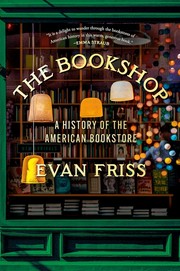
Others: PositiveAn affectionate and engaging history of the American bookstore and its central place in American cultural life, from department stores to indies, from highbrow dealers trading in first editions to sidewalk vendors, and from chains to special-interest community destinations Bookstores have always been unlike any other kind of store, shaping readers and writers, and influencing our tastes, thoughts, and politics. They nurture local communities while creating new ones of their own. Bookshops are powerful spaces, but they are also endangered ones. In The Bookshop, we see those stakes: what has been, and what might be lost. Evan Friss’s history of the bookshop draws on oral histories, archival collections, municipal records, diaries, letters, and interviews with leading booksellers to offer a fascinating look at this institution beloved by so many. The story begins with Benjamin Franklin’s first bookstore in Philadelphia and takes us to a range of booksellers including The Strand, Chicago’s Marshall Field & Company, Gotham Book Mart, specialty stores like Oscar Wilde and Drum and Spear, sidewalk sellers of used books, Barnes & Noble, Amazon Books, and Parnassus. The Bookshop is also a history of the leading figures in American bookselling, often impassioned eccentrics, and a history of how books have been marketed and sold over more than two centuries—including, for example, a 3,000-pound elephant who appeared to sign books at Marshall Field’s in 1944. The Bookshop is a love letter to bookstores, a charming chronicle for anyone who cherishes these sanctuaries of literature, and essential reading to understand how these vital institutions have shaped American life—and why we still need them.
What made the match, strongest first
Baird Searles
1979 · 256 pages · 1 review
 Others: Mixed
From A to Z (Akers and Asimov to Zebrowski and Zelazny), from the first astounding magazine to DUNE, A READER"S GUIDE TO SCIENCE FICTION is an invaluable reference work, chronicling where science fiction has been, and where you-the reader-can travel next in the most exciting literature of the cosmos.
What made the match, strongest first
Rebecca Romney
2025 · 464 pages · 7 reviews
 Others: Overwhelmingly positive
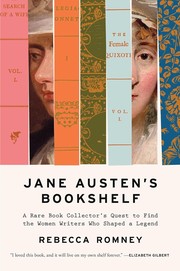
From rare book dealer and guest star of the hit show Pawn Stars, a page-turning literary adventure that introduces readers to the women writers who inspired Jane Austen—and investigates why their books have disappeared from our shelves.Long before she was a rare book dealer, Rebecca Romney was a devoted reader of Jane Austen. She loved that Austen’s books took the lives of women seriously, explored relationships with wit and confidence, and always, allowed for the possibility of a happy ending. She read and reread them, often wishing Austen wrote just one more. But Austen wasn’t a lone genius. She wrote at a time of great experimentation for women writers—and clues about those women, and the exceptional books they wrote, are sprinkled like breadcrumbs throughout Austen’s work. Every character in Northanger Abbey who isn’t a boor sings the praises of Ann Radcliffe. The play that causes such a stir in Mansfield Park is a real one by the playwright Elizabeth Inchbald. In fact, the phrase “pride and prejudice” came from Frances Burney’s second novel Cecilia. The women that populated Jane Austen’s bookshelf profoundly influenced her work; Austen looked up to them, passionately discussed their books with her friends, and used an appreciation of their books as a litmus test for whether someone had good taste. So where had these women gone? Why hadn’t Romney—despite her training—ever read them? Or, in some cases, even heard of them? And why were they no longer embraced as part of the wider literary canon? Jane Austen’s Bookshelf investigates the disappearance of Austen’s heroes—women writers who were erased from the Western canon—to reveal who they were, what they meant to Austen, and how they were forgotten. Each chapter profiles a different writer including Frances Burney, Ann Radcliffe, Charlotte Lennox, Charlotte Smith, Hannah More, Elizabeth Inchbald, Hester Lynch Thrale Piozzi, and Maria Edgeworth—and recounts Romney’s experience reading them, finding rare copies of their works, and drawing on connections between their words and Austen’s. Romney collects the once-famed works of these forgotten writers, physically recreating Austen’s bookshelf and making a convincing case for why these books should be placed back on the to-be-read pile of all book lovers today. Jane Austen’s Bookshelf will encourage you to look beyond assigned reading lists, question who decides what belongs there, and build your very own collection of favorite novels.
What made the match, strongest first
Randall Munroe
2019 · 306 pages · 1 review
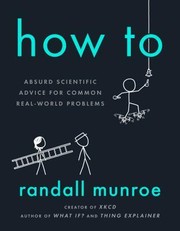
Others: PositiveFor any task you might want to do, there's a right way, a wrong way, and a way so monumentally complex, excessive, and inadvisable that no one would ever try it. How To is a guide to the third kind of approach. It's full of highly impractical advice for everything from landing a plane to digging a hole. Bestselling author and cartoonist Randall Munroe explains how to predict the weather by analyzing the pixels of your Facebook photos. He teaches you how to tell if you're a baby boomer or a 90's kid by measuring the radioactivity of your teeth. He offers tips for taking a selfie with a telescope, crossing a river by boiling it, and powering your house by destroying the fabric of space-time. And if you want to get rid of the book once you're done with it, he walks you through your options for proper disposal, including dissolving it in the ocean, converting it to a vapor, using tectonic plates to subduct it into the Earth's mantle, or launching it into the Sun. By exploring the most complicated ways to do simple tasks, Munroe doesn't just make things difficult for himself and his readers. As he did so brilliantly in What If?, Munroe invites us to explore the most absurd reaches of the possible. Full of clever infographics and fun illustrations, How To is a delightfully mind-bending way to better understand the science and technology underlying the things we do every day.
What made the match, strongest first
Irene Smit
2017 · 400 pages · 1 review
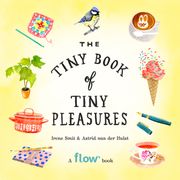
Others: PositiveA perfect gift book filled with whimsical, colorful illustrations, short lists, cheerful prompts, recipes, and fun facts, The Tiny Book of Tiny Pleasures is the sweetest reminder imaginable that it’s the little things in life that make us happy. Little things like sharing tea with a friend. An ice cream cone with sprinkles. Finding a forgotten item of clothing in the closet. The smell in the air right after a summer rain. Created by the editors of Flow magazine, The Tiny Book of Tiny Pleasures is a celebration of slowing down and appreciating the simple moments of life—all you have to do is take notice.
What made the match, strongest first
Grant Snider
2020 · 128 pages · 1 review
Others: PositiveWhat made the match, strongest first
Loved itthis little book is a laugh on every page it's relatable and funny and silly and just fantastic