
 Mixed
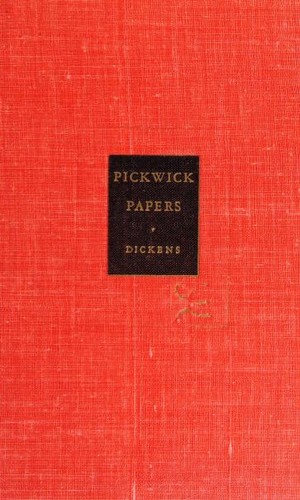
I really like the pickle papers but it's not my absolute favorite in terms of the main plot paper papers doesn't really have a plot
Review 1 of 2
Others: Mixed Dickens’ first novel was originally written and published as a serial. It is a comedy relating the misadventures of the members of The Pickwick Club, whose main purpose is to discover and relate quaint and curious phenomena of social life and customs throughout England. This quest takes the members to all parts of the country, travelling by coach and sampling the comforts or otherwise of various coaching inns.
Genres: historical fiction, classics
Lists: …
Anthony Trollope
1872 · 312 pages · 1 review
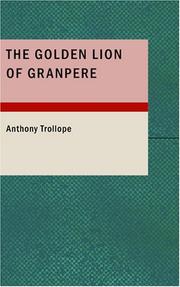
Others: MixedUp among the Vosges mountains in Lorraine, but just outside the old half-de province of Alsace, about thirty miles distant from the new and thoroughly fr baths of Plombières, there lies the village of Granpere. Whatever may be said or thought here in England of the late imperial rule in France, it must at any rate be admitted that good roads were made under the Empire. Alsace, which twenty years ago seems to have been somewhat behindhand in this respect, received her full share of Napoleon's attention, and Granpere is now placed on an excellent road which runs from the town of Remiremont on one line of railway, to Colmar on another.
What made the match, strongest first
Hermann Hesse
1922 · 139 pages · 2 reviews
 Others: Overwhelmingly positive
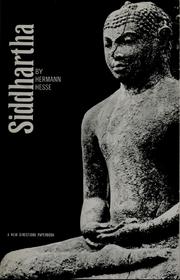
Hermann Hesse wrote Siddhartha after he traveled to India in the 1910s. It tells the story of a young boy who travels the country in a quest for spiritual enlightenment in the time of Guatama Buddha. It is a compact, lyrical work, which reads like an allegory about the finding of wisdom.
What made the match, strongest first
Fyodor Dostoevsky
1864 · 144 pages · 0 reviews
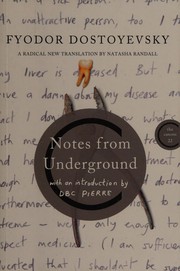
Its nameless hero is a profoundly alienated individual in whose brooding self-analysis there is a search for the true and the good in a world of relative values and few absolutes. Moreover, the novel introduces themes — moral, religious, political and social — that dominated Dostoyevsky's later works.
What made the match, strongest first
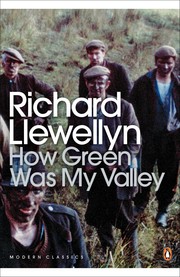
Richard Llewellyn
1939 · 495 pages · 1 review
 Others: Positive
This is a story set in a south Wales coal mining valley and tells of a family striving to improve their lives through hard work, education and their non-conformist faith. The main character is the youngest son, Huw Morgan and his life's journey through the difficulties associated with the mining industry and the awful risks involved in deep coal mining in the mid nineteenth century. The narrative traces the dignity and fortitude of hard working Welsh miners and their ambitions and hopes for their futures. The location of the story is usually considered to be in a village called Gilfach Goch in the Rhondda Valley. The collieries are long gone but their scars are still evident, returning to the green of the book's title.
What made the match, strongest first
E. M. Forster
1920 · 148 pages · 0 reviews
Where Angels Fear to Tread (1905) follows two women to Italy: the widowed Lilia Herriton and her traveling companion Caroline Abbott. Lilia falls passionately in love with the country, and also with a young Italian man. Her decision to remain in Italy enrages her dead husband's family, who send her brother-in-law to fetch her back.
What made the match, strongest first
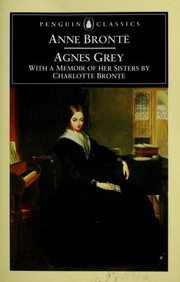
Anne Brontë
1847 · 186 pages · 2 reviews
Others: MixedIn her Introduction to an edition of "Agnes Grey," Barbara A. Suess writes "Bronte provides a portrait of the governess that is as sympathetic as her fictional indictment of the shallow, selfish moneyed class is biting." Anne Bronte relies on her own personal involvement in her duties as a home teacher to bring Agnes Grey to life. Agnes, a rector's daughter, must take employment as a governess to help her family make financial ends meet. But her situations with the spoiled, self-obsessed Bloomfield children and later with the ruthless Murray family forces her into a lonely, humiliating experience that is a wearying one extraordinarily blossoming into a romantic relationship with the local vicar, Edward Weston. Agnes' concern for her family brings her to these unfortunate trials where she suffers stupid and egotistic proprietors and their over-indulged progeny. She was not able to foresee the hardships she would have to undergo along with the class snobbery to which she was also subjected. And yet a career as a governess was the only "respectable" job available to an unmarried woman in Victorian England. Bronte's simple and uncomplicated rendition of these sordid affairs made circumstances surrounding such brutish conditions authentic enough to necessitate investigation and improvement.
What made the match, strongest first
MixedI really like the pickle papers but it's not my absolute favorite in terms of the main plot paper papers doesn't really have a plot