Where Angels Fear to Tread (1920)
Where Angels Fear to Tread (1905) follows two women to Italy: the widowed Lilia Herriton and her traveling companion Caroline Abbott. Lilia falls passionately in love with the country, and also with a young Italian man. Her decision to remain in Italy enrages her dead husband's family, who send her brother-in-law to fetch her back.
- ISBN:
- 9781957240374
- Length:
- 148 pages
Genres: historical fiction, classics
Lists: …
Similar books
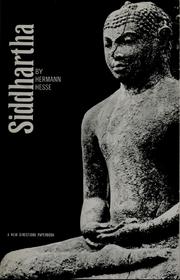
Siddhartha
Hermann Hesse
1922 · 139 pages · 2 reviews
 Others: Overwhelmingly positive
Hermann Hesse wrote Siddhartha after he traveled to India in the 1910s. It tells the story of a young boy who travels the country in a quest for spiritual enlightenment in the time of Guatama Buddha. It is a compact, lyrical work, which reads like an allegory about the finding of wisdom.
Why?
What made the match, strongest first
Also classics and historical fiction96%Similar descriptionsPersonalize your recommendations4%Ulysses
James Joyce
1914 · 740 pages · 1 review
 Others: Mixed
Written over a seven-year period, from 1914 to 1921, this book has survived bowdlerization, legal action and controversy. The novel deals with the events of one day in Dublin, 16th June 1904, now known as "Bloomsday". The principal characters are Stephen Dedalus, Leopold Bloom and his wife Molly. Ulysses has been labelled dirty, blasphemous and unreadable. In a famous 1933 court decision, Judge John M. Woolsey declared it an emetic book-although he found it not quite obscene enough to disallow its importation into the United States-and Virginia Woolf was moved to decry James Joyce's "cloacal obsession". None of these descriptions, however, do the slightest justice to the novel. To this day it remains the modernist masterpiece, in which the author takes both Celtic lyricism and vulgarity to splendid extremes. It is funny, sorrowful, and even (in its own way) suspenseful. And despite the exegetical industry that has sprung up in the last 75 years, Ulysses is also a compulsively readable book.
Why?
What made the match, strongest first
Also classics and historical fiction96%Similar descriptionsPersonalize your recommendations4%The Pickwick Papers
Charles Dickens
1800 · 758 pages · 2 reviews
Others: MixedDickens’ first novel was originally written and published as a serial. It is a comedy relating the misadventures of the members of The Pickwick Club, whose main purpose is to discover and relate quaint and curious phenomena of social life and customs throughout England. This quest takes the members to all parts of the country, travelling by coach and sampling the comforts or otherwise of various coaching inns.
Why?
What made the match, strongest first
Also classics and historical fiction97%Similar descriptionsPersonalize your recommendations3%The small house at Allington
Anthony Trollope
1864 · 605 pages · 7 reviews
 Others: Positive
The Chronicles of Barsetshire, Book 5: The Small House at Allington The Small House at Allington introduces Trollope's most charming heroine, the betwitching Lily Dale, onto the Barsetshire scene. She so endeared herself to readers of the Cornhill Magazine, where A Small House was first published in serial form, that Trollope was bombarded by letters begging him to marry her to her lifelong adorer Johnny Eames. Lily is the niece of Squire Dale, an embittered old bachelor entrenched in the "Great House" at Allington. His sister-in-law lives at the adjacent "Small House" with her two daughters Lily and Bell, and the action centers on the relations between the two houses and on the romantic entanglements of the two girls. We also meet Sir Raffle Buffle, the bullying head of a government department, the heartless Lady Dumbello, and the shallow Adolphus Crosbie, who gets his just deserts in the form of the frigid Lady Alexandrina de Courcy. Trollope's characteristic theme of the invasion of a pastoral, conservative world by brash and progressive forces from London gives him an opportunity in this novel for vivid, contrasting descriptions of gracious country living, with croquet and tea on the lawn, and of the cut and thrust of London life in the 1860s. - Back cover.
Why?
What made the match, strongest first
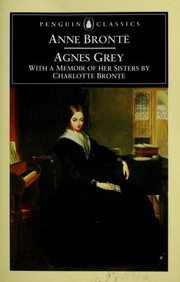
Also classics and historical fiction98%Similar descriptionsPersonalize your recommendations2%Agnes Grey
Anne Brontë
1847 · 186 pages · 2 reviews
Others: MixedIn her Introduction to an edition of "Agnes Grey," Barbara A. Suess writes "Bronte provides a portrait of the governess that is as sympathetic as her fictional indictment of the shallow, selfish moneyed class is biting." Anne Bronte relies on her own personal involvement in her duties as a home teacher to bring Agnes Grey to life. Agnes, a rector's daughter, must take employment as a governess to help her family make financial ends meet. But her situations with the spoiled, self-obsessed Bloomfield children and later with the ruthless Murray family forces her into a lonely, humiliating experience that is a wearying one extraordinarily blossoming into a romantic relationship with the local vicar, Edward Weston. Agnes' concern for her family brings her to these unfortunate trials where she suffers stupid and egotistic proprietors and their over-indulged progeny. She was not able to foresee the hardships she would have to undergo along with the class snobbery to which she was also subjected. And yet a career as a governess was the only "respectable" job available to an unmarried woman in Victorian England. Bronte's simple and uncomplicated rendition of these sordid affairs made circumstances surrounding such brutish conditions authentic enough to necessitate investigation and improvement.
Why?
What made the match, strongest first
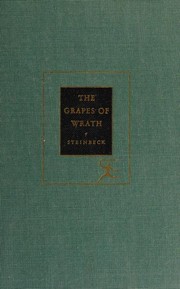
Also classics and historical fiction98%Similar descriptionsPersonalize your recommendations2%The Grapes of Wrath
John Steinbeck
1939 · 544 pages · 4 reviews
Others: Overwhelmingly positiveSteinbeck’s classic novel of the Great Depression is as vivid now as ever. The story focuses on a family of Oklahoma sharecroppers, farmers who work another man’s land for a share of the crops. Driven from their home by drought and poverty they take to the road in a battered old truck and make their way to California to look for work. When they arrive they find hundreds of others like them being forced to work for breadline wages. they begin working as fruit pickers, strike-breakers replacing the people who have been trying to establish a union but their consciences force them to leave.
Why?
What made the match, strongest first
Also classics and historical fiction99%Similar descriptionsPersonalize your recommendations1%