
 Loved it
it's an amazing heart achingly beautiful book and I will forever feel like that family truly lived like it is perfection so please go read that you haven't already
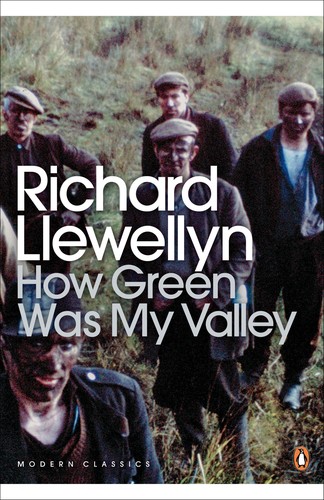
Others: Positive This is a story set in a south Wales coal mining valley and tells of a family striving to improve their lives through hard work, education and their non-conformist faith. The main character is the youngest son, Huw Morgan and his life's journey through the difficulties associated with the mining industry and the awful risks involved in deep coal mining in the mid nineteenth century. The narrative traces the dignity and fortitude of hard working Welsh miners and their ambitions and hopes for their futures. The location of the story is usually considered to be in a village called Gilfach Goch in the Rhondda Valley. The collieries are long gone but their scars are still evident, returning to the green of the book's title.
Genres: historical fiction, classics
Lists: …
John Steinbeck
1939 · 544 pages · 4 reviews
 Others: Overwhelmingly positive
Steinbeck’s classic novel of the Great Depression is as vivid now as ever. The story focuses on a family of Oklahoma sharecroppers, farmers who work another man’s land for a share of the crops. Driven from their home by drought and poverty they take to the road in a battered old truck and make their way to California to look for work. When they arrive they find hundreds of others like them being forced to work for breadline wages. they begin working as fruit pickers, strike-breakers replacing the people who have been trying to establish a union but their consciences force them to leave.
What made the match, strongest first
Hermann Hesse
1922 · 139 pages · 2 reviews
Others: Overwhelmingly positiveHermann Hesse wrote Siddhartha after he traveled to India in the 1910s. It tells the story of a young boy who travels the country in a quest for spiritual enlightenment in the time of Guatama Buddha. It is a compact, lyrical work, which reads like an allegory about the finding of wisdom.
What made the match, strongest first
Charles Dickens
1800 · 758 pages · 2 reviews
 Others: Mixed
Dickens’ first novel was originally written and published as a serial. It is a comedy relating the misadventures of the members of The Pickwick Club, whose main purpose is to discover and relate quaint and curious phenomena of social life and customs throughout England. This quest takes the members to all parts of the country, travelling by coach and sampling the comforts or otherwise of various coaching inns.
What made the match, strongest first
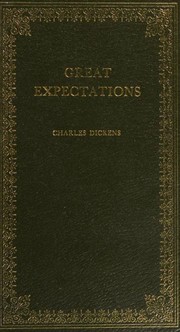
Charles Dickens
1861 · 484 pages · 9 reviews
Others: Leaning positiveGreat Expectations is the thirteenth novel by Charles Dickens and his penultimate completed novel. It depicts the education of an orphan nicknamed Pip (the book is a bildungsroman; a coming-of-age story). It is Dickens' second novel, after David Copperfield, to be fully narrated in the first person. The novel was first published as a serial in Dickens's weekly periodical All the Year Round, from 1 December 1860 to August 1861. In October 1861, Chapman and Hall published the novel in three volumes. The novel is set in Kent and London in the early to mid-19th century and contains some of Dickens's most celebrated scenes, starting in a graveyard, where the young Pip is accosted by the escaped convict Abel Magwitch. Great Expectations is full of extreme imagery – poverty, prison ships and chains, and fights to the death – and has a colourful cast of characters who have entered popular culture. These include the eccentric Miss Havisham, the beautiful but cold Estella, and Joe, the unsophisticated and kind blacksmith. Dickens's themes include wealth and poverty, love and rejection, and the eventual triumph of good over evil. Great Expectations, which is popular both with readers and literary critics, has been translated into many languages and adapted numerous times into various media.
What made the match, strongest first
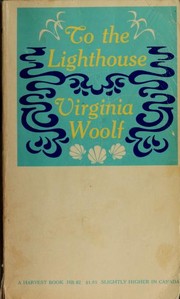
Virginia Woolf
1927 · 242 pages · 4 reviews
Others: Overwhelmingly positiveThis novel is an extraordinarily poignant evocation of a lost happiness that lives on in the memory. For years now the Ramsays have spent every summer in their holiday home in Scotland, and they expect these summers will go on forever.In this, her most autobiographical novel, Virginia Woolf captures the intensity of childhood longing and delight, and the shifting complexity of adult relationships. From an acute awareness of transcience, she creates an enduring work of art.
What made the match, strongest first
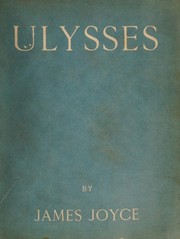
James Joyce
1914 · 740 pages · 1 review
Others: MixedWritten over a seven-year period, from 1914 to 1921, this book has survived bowdlerization, legal action and controversy. The novel deals with the events of one day in Dublin, 16th June 1904, now known as "Bloomsday". The principal characters are Stephen Dedalus, Leopold Bloom and his wife Molly. Ulysses has been labelled dirty, blasphemous and unreadable. In a famous 1933 court decision, Judge John M. Woolsey declared it an emetic book-although he found it not quite obscene enough to disallow its importation into the United States-and Virginia Woolf was moved to decry James Joyce's "cloacal obsession". None of these descriptions, however, do the slightest justice to the novel. To this day it remains the modernist masterpiece, in which the author takes both Celtic lyricism and vulgarity to splendid extremes. It is funny, sorrowful, and even (in its own way) suspenseful. And despite the exegetical industry that has sprung up in the last 75 years, Ulysses is also a compulsively readable book.
What made the match, strongest first
Loved itit's an amazing heart achingly beautiful book and I will forever feel like that family truly lived like it is perfection so please go read that you haven't already