

 Neutral
The penultimate truth is a welltrodden path. Post-apocalyptic, people living in underground bunkers discover that the surface isn't quite as hostile as they were led to believe. But that would be a bit bloody simple, wouldn't it?
 Others: Mostly negative
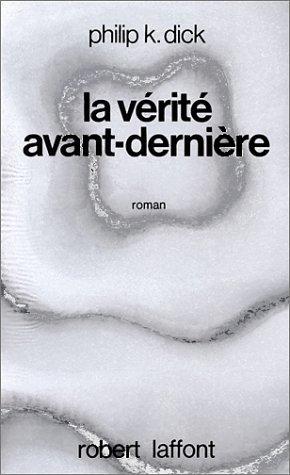
The Penultimate Truth is a 1964 science fiction novel by American writer Philip K. Dick. The story is set in a future where the bulk of humanity is kept in large underground shelters. The people are told that World War III is being fought above them, when in reality the war ended years ago. The novel is based on Dick's 1953 short story "The Defenders". Dick also drew upon two other of his short stories for the plot of the novel: "The Mold of Yancy" and "The Unreconstructed M".
Genres: science fiction
Lists: …
Philip K. Dick
1970 · 208 pages · 4 reviews
 Others: Overwhelmingly positive
A Maze of Death is a 1970 science fiction novel by American writer Philip K. Dick. Like many of Dick's novels, it portrays what appears to be a drab and harsh off-world human colony and explores the difference between reality and perception. It is, however, one of his few to examine the human death instinct and capacity for murder and is one of his darkest novels.
What made the match, strongest first
Philip K. Dick
1966 · 230 pages · 1 review
 Others: Mixed
Now Wait for Last Year is a 1966 science fiction novel by American writer Philip K. Dick. It is set in 2055, when Earth is caught between two galactic powers in an interstellar conflict. Dr. Eric Sweetscent and his wife Kathy get addicted to a powerful drug that appears to cause time travel. The doctor's patient is the world leader, UN Secretary General. Of the twenty-eight novels Dick published in the 1960s and 1970s, this novel is one of the five chosen to represent this period of his career in The Library of America series, Volume Two. Dr. Eric Sweetscent has problems. His planet is enmeshed in an unwinnable war. His wife is lethally addicted to a drug that whips its users helplessly back and forth across time -- and is hell-bent on making Eric suffer along with her. And Sweetscent's newest patient is not only the most important man on the embattled planet Earth but quite possibly the sickest. For Secretary Gino Molinari has turned his mortal illness into an instrument of political policy -- and Eric cannot tell if his job is to make the Male better or to keep him poised just this side of death.Now Wait for Last fear bursts through the envelope between the impossible and the inevitable. Even as ushers us into a future that looks uncannily LIKE the present, it makes the normal seem terrifyingly provisional -- and compels anyone who reads it to wonder if he really knows what time it is.From the Trade Paperback edition.
What made the match, strongest first
Frederik Pohl
1952 · 171 pages · 2 reviews
Others: MixedThe Space Merchants is a 1952 science fiction novel by American writers Frederik Pohl and Cyril M. Kornbluth. Originally published in Galaxy Science Fiction magazine as a serial entitled Gravy Planet, the novel was first published as a single volume in 1953, and has sold heavily since. It deals satirically with a hyper-developed consumerism, seen through the eyes of an advertising executive. In 1984, Pohl published a sequel, The Merchants' War. In 2012, it was included in the Library of America omnibus American Science Fiction: Four Classic Novels 1953–1956. Pohl revised the original novel in 2011 with added material and more contemporary references. It was rated the 24th "all-time best novel" in a 1975 Locus poll, jointly with The Martian Chronicles and The War of the Worlds. The novel was also included in David Pringle's list of 100 best science fiction novels.
What made the match, strongest first
Tanith Lee
1979 · 159 pages · 7 reviews
Others: Overwhelmingly positiveThe world called Indigo turned upside down for Magdala Cled one unexpected morning. From being that world's only genetic misfit, the shunned outcast of an otherwise ideal society. she became the focus of attention for mighty forces. Once they had installed her in the midst of the Electric Forest, with its weird trees and its super-luxurious private home, Magdala awoke to the potentials which were opening up all about her. And to realize also the peril that now seemed poised above Indigo... which only she, the hated one, could possibly circumvent. An extraordinary incursion into hard-core science fiction by the same brilliant and colorful talent that produced THE BIRTHGRAVE and DEATH'S MASTER.
What made the match, strongest first
H. G. Wells
1900 · 300 pages · 3 reviews
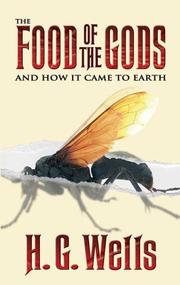
Others: Overwhelmingly positiveThe Food of the Gods and How It Came to Earth is a science fiction novel by H. G. Wells that was first published in 1904. Wells called it "a fantasia on the change of scale in human affairs. . . . I had hit upon [the idea] while working out the possibilities of the near future in a book of speculations called Anticipations (1901)". The novel, which has had various B-movie adaptations, is about a group of scientists that invents food that accelerates the growth of children and turns them into giants when they become adults.
What made the match, strongest first
Christopher Priest
1974 · 272 pages · 10 reviews
 Others: Mostly positive
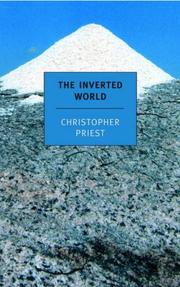
The city is winched along tracks through a devastated land full of hostile tribes. Rails must be freshly laid ahead of the city and carefully removed in its wake. Rivers and mountains present nearly insurmountable challenges to the ingenuity of the city's engineers. But if the city does not move, it will fall farther and farther behind the "optimum" into the crushing gravitational field that has transformed life on Earth. The only alternative to progress is death. The secret directorate that governs the city makes sure that its inhabitants know nothing of this. Raised in common in creches, nurtured on synthetic food, prevented above all from venturing outside the closed circuit of the city, they are carefully sheltered from the dire necessities that have come to define human existence. And yet the city is in crisis. The people are growing restive, the population is dwindling, and the rulers know that, for all their efforts, slowly but surely the city is slipping ever farther behind the optimum. Helward Mann is a member of the city's elite. Better than anyone, he knows how tenuous is the city's continued existence. But the world--he is about to discover--is infinitely stranger than the strange world he believes he knows so well.
What made the match, strongest first
NeutralThe penultimate truth is a welltrodden path. Post-apocalyptic, people living in underground bunkers discover that the surface isn't quite as hostile as they were led to believe. But that would be a bit bloody simple, wouldn't it?
Not a fanfor me this book was a little bit hard to get into because even though pkd's books are usually really short and tight this book I think is under 200 pages there were just so many characters and I do like his characters in some of his books but I felt like in the penultimate truth they didn't really have distinct voices and so with so many characters that all kind of sounded the same I started to confuse them I got a little bit lost