
 Loved it
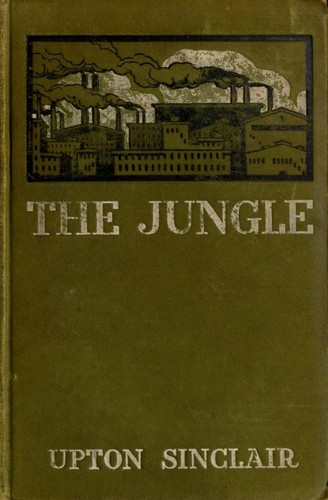
I love this book, The Jungle by Upton Sinclair. I haven't read it in like 5 years. Out of all of the canonical literature that I've read in my life, I think this might be my favorite book.
Others: Positive Upton Sinclair's dramatic and deeply moving story exposed the brutal conditions in the Chicago stockyards at the turn of the nineteenth century and brought into sharp moral focus the appalling odds against which immigrants and other working people struggled for their share of the American dream. Denounced by the conservative press as an un-American libel on the meatpacking industry, the book was championed by more progressive thinkers, including then President Theodore Roosevelt, and was a major catalyst to the passing of the Pure Food and Meat Inspection act, which has tremendous impact to this day.
Genres: historical fiction, classics, graphic novel
Lists: …
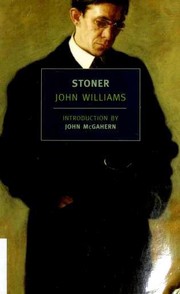
John Williams
1965 · 278 pages · 6 reviews
 Others: Overwhelmingly positive
William Stoner is born at the end of the nineteenth century into a dirt-poor Missouri farming family. Sent to the state university to study agronomy, he instead falls in love with English literature and embraces a scholar’s life, so different from the hardscrabble existence he has known. And yet as the years pass, Stoner encounters a succession of disappointments: marriage into a “proper” family estranges him from his parents; his career is stymied; his wife and daughter turn coldly away from him; a transforming experience of new love ends under threat of scandal. Driven ever deeper within himself, Stoner rediscovers the stoic silence of his forebears and confronts an essential solitude. John Williams’s luminous and deeply moving novel is a work of quiet perfection. William Stoner emerges from it not only as an archetypal American, but as an unlikely existential hero, standing, like a figure in a painting by Edward Hopper, in stark relief against an unforgiving world.
What made the match, strongest first
Charles Dickens
1861 · 484 pages · 9 reviews
Others: Leaning positiveGreat Expectations is the thirteenth novel by Charles Dickens and his penultimate completed novel. It depicts the education of an orphan nicknamed Pip (the book is a bildungsroman; a coming-of-age story). It is Dickens' second novel, after David Copperfield, to be fully narrated in the first person. The novel was first published as a serial in Dickens's weekly periodical All the Year Round, from 1 December 1860 to August 1861. In October 1861, Chapman and Hall published the novel in three volumes. The novel is set in Kent and London in the early to mid-19th century and contains some of Dickens's most celebrated scenes, starting in a graveyard, where the young Pip is accosted by the escaped convict Abel Magwitch. Great Expectations is full of extreme imagery – poverty, prison ships and chains, and fights to the death – and has a colourful cast of characters who have entered popular culture. These include the eccentric Miss Havisham, the beautiful but cold Estella, and Joe, the unsophisticated and kind blacksmith. Dickens's themes include wealth and poverty, love and rejection, and the eventual triumph of good over evil. Great Expectations, which is popular both with readers and literary critics, has been translated into many languages and adapted numerous times into various media.
What made the match, strongest first
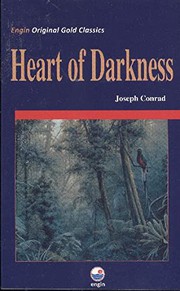
Joseph Conrad
1899 · 146 pages · 4 reviews
Others: Mostly positiveHeart of Darkness (1899) is a novella by Polish-English novelist Joseph Conrad, about a voyage up the Congo River into the Congo Free State, in the heart of Africa, by the story's narrator Charles Marlow. Marlow tells his story to friends aboard a boat anchored on the River Thames. Joseph Conrad is one of the greatest English writers, and Heart of Darkness is considered his best. His readers are brought to face our psychological selves to answer, ‘Who is the true savage?’. Originally published in 1902, Heart of Darkness remains one of this century’s most enduring works of fiction. Written several years after Joseph Conrad’s grueling sojourn in the Belgian Congo, the novel is a complex meditation on colonialism, evil, and the thin line between civilization and barbarity.
What made the match, strongest first
F. Scott Fitzgerald
1920 · 182 pages · 13 reviews
Others: Mostly positiveHere is a novel, glamorous, ironical, compassionate – a marvelous fusion into unity of the curious incongruities of the life of the period – which reveals a hero like no other – one who could live at no other time and in no other place. But he will live as a character, we surmise, as long as the memory of any reader lasts. "There was something gorgeous about him, some heightened sensitivity to the promises of life.... It was an extraordinary gift for hope, a romantic readiness such as I have never found in any other person and which it is not likely I shall ever find again." It is the story of this Jay Gatsby who came so mysteriously to West Egg, of his sumptuous entertainments, and of his love for Daisy Buchanan – a story that ranges from pure lyrical beauty to sheer brutal realism, and is infused with a sense of the strangeness of human circumstance in a heedless universe. It is a magical, living book, blended of irony, romance, and mysticism. --first edition jacket
What made the match, strongest first
Fiódor Dostoievski
1866 · 516 pages · 1 review
Others: PositiveFrom wikipedia: Crime and Punishment (Russian: Преступлéние и наказáние, tr. Prestupleniye i nakazaniye; IPA: [prʲɪstʊˈplʲenʲə ɪ nəkɐˈzanʲə]) is a novel by the Russian author Fyodor Dostoyevsky. It was first published in the literary journal The Russian Messenger in twelve monthly installments during 1866.1 It was later published in a single volume. It is the second of Dostoyevsky's full-length novels following his return from ten years of exile in Siberia. Crime and Punishment is considered the first great novel of his "mature" period of writing.[2] Crime and Punishment focuses on the mental anguish and moral dilemmas of Rodion Raskolnikov, an impoverished ex-student in St. Petersburg who formulates and executes a plan to kill an unscrupulous pawnbroker for her cash. Raskolnikov argues that with the pawnbroker's money he can perform good deeds to counterbalance the crime, while ridding the world of a worthless vermin. He also commits this murder to test his own hypothesis that some people are naturally capable of such things, and even have the right to do them. Several times throughout the novel, Raskolnikov justifies his actions by comparing himself with Napoleon Bonaparte, believing that murder is permissible in pursuit of a higher purpose.
What made the match, strongest first
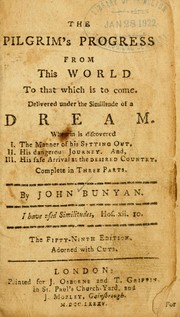
John Bunyan
1678 · 324 pages · 0 reviews
Bunyan's allegory uses the everyday world of common experience as a metaphor for the spiritual journey of the soul toward God. The hero, Christian, encounters many obstacles in his quest: the Valley of the Shadow of Death, Vanity Fair, Doubting Castle, the Wicket Gate, as well as those who tempt him from his path (e.g., Talkative, Mr. Worldly Wiseman, the Giant Despair). But in the end he reaches Beulah Land, where he awaits the crossing of the river of death and his entry into the heavenly city. "Pilgrim's Progress" was enormously influential not only as a best-selling inspirational tract in the late 17th century, but as an ancestor of the 18th-century English novel, and many of its themes and ideas have entered permanently into Western culture.
What made the match, strongest first
Loved itI love this book, The Jungle by Upton Sinclair. I haven't read it in like 5 years. Out of all of the canonical literature that I've read in my life, I think this might be my favorite book.