

 Loved it
This is tiny and it doesn't tell you the meaning of life at all. In fact, it makes you feel really bad about life.
Review 1 of 2
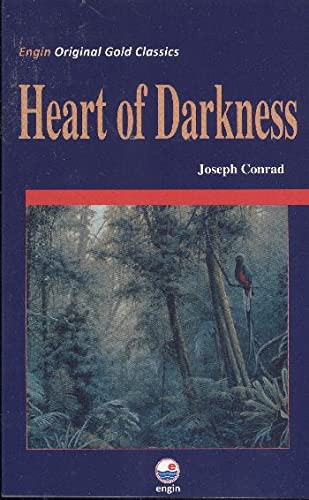
Others: Mostly positive Heart of Darkness (1899) is a novella by Polish-English novelist Joseph Conrad, about a voyage up the Congo River into the Congo Free State, in the heart of Africa, by the story's narrator Charles Marlow. Marlow tells his story to friends aboard a boat anchored on the River Thames. Joseph Conrad is one of the greatest English writers, and Heart of Darkness is considered his best. His readers are brought to face our psychological selves to answer, ‘Who is the true savage?’. Originally published in 1902, Heart of Darkness remains one of this century’s most enduring works of fiction. Written several years after Joseph Conrad’s grueling sojourn in the Belgian Congo, the novel is a complex meditation on colonialism, evil, and the thin line between civilization and barbarity.
Genres: romance, mystery, historical fiction, classics
Lists: …
Fiódor Dostoievski
1866 · 516 pages · 1 review
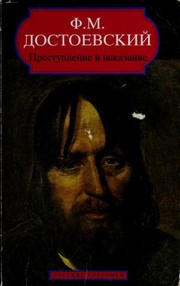
Others: PositiveFrom wikipedia: Crime and Punishment (Russian: Преступлéние и наказáние, tr. Prestupleniye i nakazaniye; IPA: [prʲɪstʊˈplʲenʲə ɪ nəkɐˈzanʲə]) is a novel by the Russian author Fyodor Dostoyevsky. It was first published in the literary journal The Russian Messenger in twelve monthly installments during 1866.1 It was later published in a single volume. It is the second of Dostoyevsky's full-length novels following his return from ten years of exile in Siberia. Crime and Punishment is considered the first great novel of his "mature" period of writing.[2] Crime and Punishment focuses on the mental anguish and moral dilemmas of Rodion Raskolnikov, an impoverished ex-student in St. Petersburg who formulates and executes a plan to kill an unscrupulous pawnbroker for her cash. Raskolnikov argues that with the pawnbroker's money he can perform good deeds to counterbalance the crime, while ridding the world of a worthless vermin. He also commits this murder to test his own hypothesis that some people are naturally capable of such things, and even have the right to do them. Several times throughout the novel, Raskolnikov justifies his actions by comparing himself with Napoleon Bonaparte, believing that murder is permissible in pursuit of a higher purpose.
What made the match, strongest first
Charles Dickens
1800 · 396 pages · 6 reviews
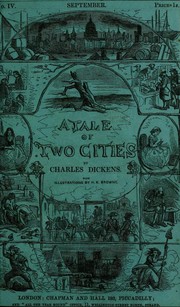
Others: Leaning positiveA Tale of Two Cities is a historical novel published in 1859 by Charles Dickens, set in London and Paris before and during the French Revolution. The novel tells the story of the French Doctor Manette, his 18-year-long imprisonment in the Bastille in Paris, and his release to live in London with his daughter Lucie whom he had never met. The story is set against the conditions that led up to the French Revolution and the Reign of Terror. In the Introduction to the Encyclopedia of Adventure Fiction, critic Don D'Ammassa argues that it is an adventure novel because the protagonists are in constant danger of being imprisoned or killed. As Dickens's best-known work of historical fiction, A Tale of Two Cities is said to be one of the best-selling novels of all time. In 2003, the novel was ranked 63rd on the BBC's The Big Read poll. The novel has been adapted for film, television, radio, and the stage, and has continued to influence popular culture.
What made the match, strongest first
Vladimir Nabokov
1777 · 319 pages · 8 reviews
 Others: Overwhelmingly positive
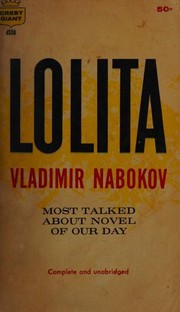
Lolita is a 1955 novel written by Russian-American novelist Vladimir Nabokov. The novel is notable for its controversial subject: the protagonist and unreliable narrator, a middle-aged literature professor under the pseudonym Humbert Humbert, is obsessed with a 12-year-old girl, Dolores Haze, whom he sexually molests after he becomes her stepfather. "Lolita" is his private nickname for Dolores. The novel was originally written in English and first published in Paris in 1955 by Olympia Press. Later it was translated into Russian by Nabokov himself and published in New York City in 1967 by Phaedra Publishers.
What made the match, strongest first
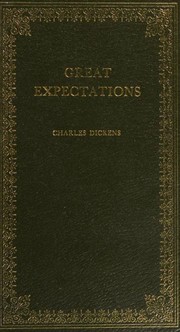
Charles Dickens
1861 · 484 pages · 9 reviews
Others: Leaning positiveGreat Expectations is the thirteenth novel by Charles Dickens and his penultimate completed novel. It depicts the education of an orphan nicknamed Pip (the book is a bildungsroman; a coming-of-age story). It is Dickens' second novel, after David Copperfield, to be fully narrated in the first person. The novel was first published as a serial in Dickens's weekly periodical All the Year Round, from 1 December 1860 to August 1861. In October 1861, Chapman and Hall published the novel in three volumes. The novel is set in Kent and London in the early to mid-19th century and contains some of Dickens's most celebrated scenes, starting in a graveyard, where the young Pip is accosted by the escaped convict Abel Magwitch. Great Expectations is full of extreme imagery – poverty, prison ships and chains, and fights to the death – and has a colourful cast of characters who have entered popular culture. These include the eccentric Miss Havisham, the beautiful but cold Estella, and Joe, the unsophisticated and kind blacksmith. Dickens's themes include wealth and poverty, love and rejection, and the eventual triumph of good over evil. Great Expectations, which is popular both with readers and literary critics, has been translated into many languages and adapted numerous times into various media.
What made the match, strongest first
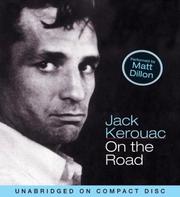
Jack Kerouac
1957 · 304 pages · 3 reviews
 Others: Mostly negative
Described as everything from a "last gasp" of romantic fiction to a founding text of the Beat Generation movement, this story amounts to a nonfiction novel (as critics were later to describe some works). Unpublished writer buddies wander from coast to coast in search of whatever they find, eager for experience. Kerouac's spokesman is Sal Paradise (himself) and real-life friend Neal Casady appears as Dean Moriarty.
What made the match, strongest first
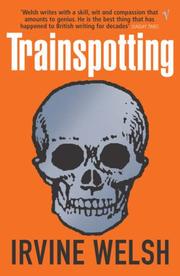
Irvine Welsh
1993 · 348 pages · 1 review
Others: PositiveScottish writer Irvine Welsh's first novel, Trainspotting, is a collection of short-stories revolving around a group of friends, their drug use, and struggles in the city of Edinburgh.
What made the match, strongest first
Loved itThis is tiny and it doesn't tell you the meaning of life at all. In fact, it makes you feel really bad about life.
Loved itThis is one of those books that I do enjoy and continue to enjoy, and it's perpetually on that reread list for me. Soon as I finish it, I put it right back at the bottom of that list to be read a few years later, and I look forward to my next reread of this one.
 Mixed
It's definitely a classic that I think everyone should read, but it's not necessarily one of my favorites, you know?