
 Loved it
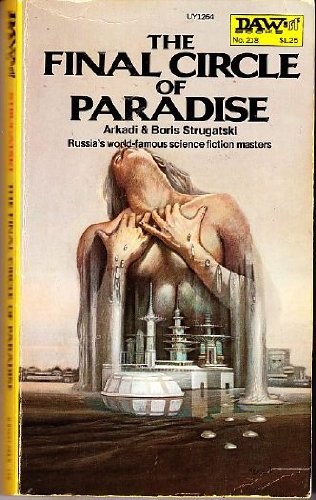
Final Circle of Paradise by the Strugatskys, love this book.
Review 1 of 3
Others: Positive When Ivan Zhilin, interplanetary engineer, returned after years of space work, he wanted a quiet vacation on some sunny restful spot on Earth. And at first, it seemed he found the place - a charming seaside city in a "liberated" country. But somehow, since his long sojourn in far orbits, things had subtly gone wrong. He got disquieting hints of irrational actions, of secret societies of a destructive nature, of events of mass madness... and a constant reference to a mysterious product only available through the "right connections." And when he pursued the enigmas, he found himself projected into The Final Circle of Paradise - the ultimate electronic "high."
Genres: science fiction
Lists: …
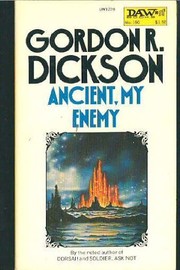
Gordon R. Dickson
1974 · 215 pages · 3 reviews
Others: PositiveSTATED FIRST PRINTING. APRIL 1976 DAW MASS MARKET PAPERBACK, Gordon R. Dickson (The Forever Man). Here are stories of interstellar exploration, of adventure at the dawn of star flight and at the ultimate end of star flight, of man versus machine, of man versus nature, and of man versus the cosmos. - Goodreads
What made the match, strongest first
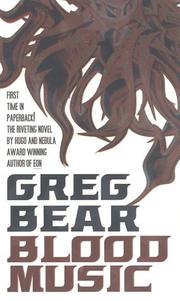
Greg Bear
1985 · 262 pages · 7 reviews
 Others: Overwhelmingly positive
In the tradition of the greatest cyberpunk novels, Blood Music explores the imminent destruction of mankind and the fear of mass destruction by technological advancements. The novel follows present-day events in which the fears concerning the nuclear annihilation of the world subsided after the Cold War and the fear of chemical warfare spilled over into the empty void it left behind. An amazing breakthrough in genetic engineering made by Vergil Ulam is considered too dangerous for further research, but rather than destroy his work, he injects himself with his creation and walks out of his lab, unaware of just how his actions will change the world. Author Greg Bear’s treatment of the traditional tale of scientific hubris is both suspenseful and a compelling portrait of a new intelligence emerging amongst us, irrevocably changing our world.
What made the match, strongest first
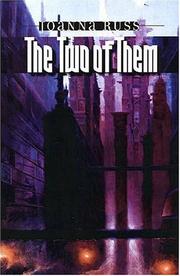
Joanna Russ
1978 · 181 pages · 1 review
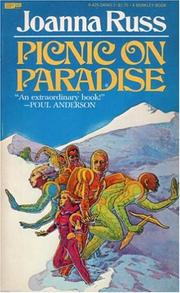
Others: PositiveHow female solidarity begins―in experience, thought, action, and force of conviction. Irene, a rebellious product of an American 1950s upbringing, has fled from a repressive and sexist society into a life of apparent equality and adventure as part of the elite Trans-Temporal Authority's cadre of travelers. Under the tutelage of Ernst, a friend/lover and teacher/father, Irene has achieved status and dignity. Irene and Ernst are assigned to a Muslim world where they meet Zubedeyeh, a young girl whose creativity is being transformed into madness by the male chauvinistic society in which she lives. Vowing to rescue her, Irene unleashes a destructive cycle of violence. Originally published in 1978, The Two of Them is a powerful portrait of a future sexist society. This modern classic conveys its politics with rigor and complexity, in a story filled with suspense and unforgettable characters.
What made the match, strongest first
Joanna Russ
1968 · 157 pages · 1 review
Others: PositiveHurled through time to a strange future world where unseen forces clashed in an inexplicable war, Trans-Temporal Agent Alyx was given the job of guiding eight very important tourists to a station of safety. Alyx seemed exactly right for the job: she was tough, resourceful, and exerienced in the hard hand-to-hand fighting of Earth's barbaric past. But when she found what traps and dangers she faced in this gleaming tomorrow, even Alyx began to fear...
What made the match, strongest first
Kate Wilhelm
1977 · 195 pages · 4 reviews
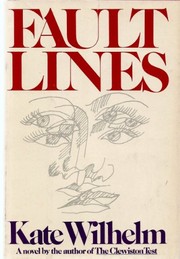
Others: PositiveFrom the back cover of Timescape Books paperback September 1978: Emily Always Knew How to Live. Emily Carmichael was always her own woman -- as the men in her life found out -- from the days when she was an aristocrat's wife in New York high society, through the great events of an era, to the years that bring her to San Francisco, divorced and disillusioned, to take in destitute artists. Now she lies trapped by an earthquake, under the rubble of her California cottage. As she waits to be freed, memories crowd her mind -- of her husband, her son, her lovers. She has reached a crossroads, and for Emily, life will never be the same.
What made the match, strongest first
Clifford D. Simak
1952 · 254 pages · 5 reviews
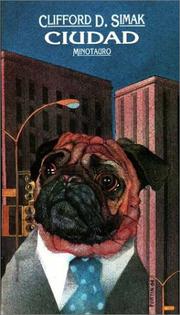
Others: PositiveComment by John Clute: We know better now, of course. But they still entrance us, the old page-turners from the glory days of American SF, half a century or so ago, when the world was full of futures we were never going to have. In the mid-1940s, when he began to publish the episodes that would be assembled as City in 1952, Clifford Simak, a Minneapolis-based journalist and author, could still carry us away with the dream that cars and pollution and even the great cities of the world – "Huddling Place", the title of one of these tales, is his own derisory term for them – would soon be brushed off the map by Progress, leaving nothing behind but tasteful exurbs filled with middle-class nuclear families living the good life, with fishing streams and greenswards sheltering each home from the stormy blast. Fortunately, Simak soon gets past this demented vision of a near-future world saved by technological fixes, a dementia common then to SF writers and gurus and politicians alike, and launches into an astonishingly eventful narrative of the next 10,000 years as seen through the eyes of one family and the immortal robot Jenkins, and all told with a weird pastoral serenity that for a kid like me seemed near to godlike. In its course City touches on almost everything dear to 1940s SF, and to me remembering. Robots. Genetic Engineering. Space. Jupiter. Domed cities. Keeps. Hiveminds. Matter transmission. Telepathy. Parallel worlds. Paranormal empathy. Mutants. Supermen. It's all there, and, thanks to Simak's skilled hand at the wheel, it's all in place: suave, sibylline, swift. The whole is framed as a series of legends told by the uplifted Dogs who have replaced the human race, now gone for ever. They have been bred not to kill. At the end, only Jenkins remains to keep them from learning how to repeat history and die. It all seemed immensely sad and wise then, but fun. It still does.
What made the match, strongest first
Loved itFinal Circle of Paradise by the Strugatskys, love this book.