
 Loved it
science writing can sometimes be boring I will admit that but it's definitely not here
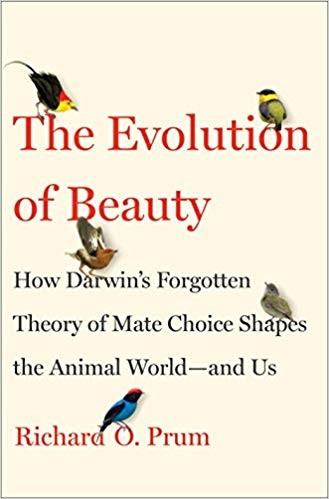
Others: Positive What can explain the incredible diversity of beauty in nature? Richard O. Prum, an award-winning ornithologist, discusses Charles Darwin's second and long-neglected theory--aesthetic mate choice--and what it means for our understanding of evolution. In addition, Prum connects those same evolutionary dynamics to the origins and diversity of human sexuality, offering riveting new thinking about the evolution of human beauty and the role of mate choice, thereby transforming our ancestors from typical infanticidal primates into socially intelligent, pair-bonding caregivers. Prum's book is an exhilarating tour de force that begins in the trees and ends by fundamentally challenging how we understand human evolution and ourselves. --
Lists: …
Charles Duhigg
2012 · 371 pages · 2 reviews
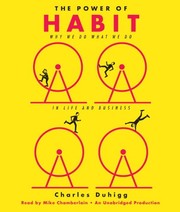
Others: PositiveA young woman walks into a laboratory. Over the past two years, she has transformed almost every aspect of her life. She has quit smoking, run a marathon, and been promoted at work. The patterns inside her brain, neurologists discover, have fundamentally changed. Marketers at Procter & Gamble study videos of people making their beds. They are desperately trying to figure out how to sell a new product called Febreze, on track to be one of the biggest flops in company history. Suddenly, one of them detects a nearly imperceptible pattern -- and with a slight shift in advertising, Febreze goes on to earn a billion dollars a year. An untested CEO takes over one of the largest companies in America. His first order of business is attacking a single pattern among his employees -- how they approach worker safety -- and soon the firm, Alcoa, becomes the top performer in the Dow Jones. What do all these people have in common? They achieved success by focusing on the patterns that shape every aspect of our lives. They succeeded by transforming habits. In The Power of Habit, award-winning New York Times business reporter Charles Duhigg takes us to the thrilling edge of scientific discoveries that explain why habits exist and how they can be changed. With penetrating intelligence and an ability to distill vast amounts of information into engrossing narratives, Duhigg brings to life a whole new understanding of human nature and its potential for transformation. Along the way we learn why some people and companies struggle to change, despite years of trying, while others seem to remake themselves overnight. We visit laboratories where neuroscientists explore how habits work and where, exactly, they reside in our brains. We discover how the right habits were crucial to the success of Olympic swimmer Michael Phelps, Starbucks CEO Howard Schultz, and civil-rights hero Martin Luther King, Jr. We go inside Procter & Gamble, Target superstores, Rick Warrens Saddleback Church, NFL locker rooms, and the nations largest hospitals and see how implementing so-called keystone habits can earn billions and mean the difference between failure and success, life and death. At its core, The Power of Habit contains an exhilarating argument: The key to exercising regularly, losing weight, raising exceptional children, becoming more productive, building revolutionary companies and social movements, and achieving success is understanding how habits work. Habits arent destiny. As Charles Duhigg shows, by harnessing this new science, we can transform our businesses, our communities, and our lives. - Publisher.
What made the match, strongest first
Thor Hanson
2015 · 277 pages · 2 reviews
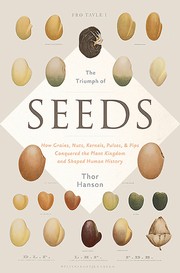
Others: PositiveWe live in a world of seeds. From our morning toast to the cotton in our clothes, they are quite literally the stuff and staff of life: supporting diets, economies, and civilizations around the globe. Just as the search for nutmeg and pepper drove the Age of Discovery, coffee beans fueled the Enlightenment and cottonseed sparked the Industrial Revolution. Seeds are fundamental objects of beauty, evolutionary wonders, and simple fascinations. Yet, despite their importance, seeds are often seen as commonplace, their extraordinary natural and human histories overlooked. Thanks to this stunning new book, they can be overlooked no more. This is a book of knowledge, adventure, and wonder, spun by an award-winning writer with both the charm of a fireside story-teller and the hard-won expertise of a field biologist. A fascinating scientific adventure, it is essential reading for anyone who loves to see a plant grow.
What made the match, strongest first
Kurt Vonnegut
1820 · 295 pages · 3 reviews
 Others: Overwhelmingly positive
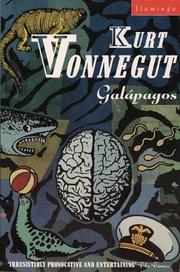
Observed by a ghost of the Vietnam War for one million years, the descendants of survivors of a cruise to the Galapagos Archipielago prove Darwin's Theory of Evolution. The ghost of a shipbuilder tells the story of an ill-fated cruise to the Galapagos Islands.
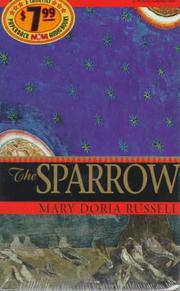
Mary Doria Russell
1996 · 408 pages · 13 reviews
Others: Mostly positiveThe Sparrow is a novel about a remarkable man, a living saint, a life-long celibate and Jesuit priest, who undergoes an experience so harrowing and profound that it makes him question the existence of God. This experience--the first contact between human beings and intelligent extraterrestrial life--begins with a small mistake and ends in a horrible catastrophe.
What made the match, strongest first
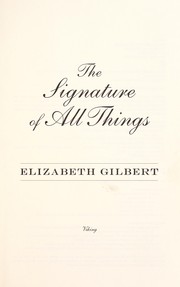
Elizabeth Gilbert
2001 · 512 pages · 2 reviews
Others: Positive" A glorious, sweeping novel of desire, ambition, and the thirst for knowledge, from the # 1 New York Times bestselling author of Eat, Pray, Love and Committed. In The Signature of All Things, Elizabeth Gilbert returns to fiction, inserting her inimitable voice into an enthralling story of love, adventure and discovery. Spanning much of the eighteenth and nineteenth centuries, the novel follows the fortunes of the extraordinary Whittaker family as led by the enterprising Henry Whittaker-a poor-born Englishman who makes a great fortune in the South American quinine trade, eventually becoming the richest man in Philadelphia. Born in 1800, Henry's brilliant daughter, Alma (who inherits both her father's money and his mind), ultimately becomes a botanist of considerable gifts herself.^ As Alma's research takes her deeper into the mysteries of evolution, she falls in love with a man named Ambrose Pike who makes incomparable paintings of orchids and who draws her in the exact opposite direction-into the realm of the spiritual, the divine, and the magical. Alma is a clear-minded scientist; Ambrose a utopian artist-but what unites this unlikely couple is a desperate need to understand the workings of this world and the mechanisms behind all life. Exquisitely researched and told at a galloping pace, The Signature of All Things soars across the globe-from London to Peru to Philadelphia to Tahiti to Amsterdam, and beyond. Along the way, the story is peopled with unforgettable characters: missionaries, abolitionists, adventurers, astronomers, sea captains, geniuses, and the quite mad.^ But most memorable of all, it is the story of Alma Whittaker, who-born in the Age of Enlightenment, but living well into the Industrial Revolution-bears witness to that extraordinary moment in human history when all the old assumptions about science, religion, commerce, and class were exploding into dangerous new ideas. Written in the bold, questing spirit of that singular time, Gilbert's wise, deep, and spellbinding tale is certain to capture the hearts and minds of readers. "-- "Spanning much of the eighteenth and nineteenth centuries, the novel follows the fortunes of the extraordinary Whittaker family as led by the enterprising Henry Whittaker--a poor-born Englishman who makes a great fortune in the South American quinine trade, eventually becoming the richest man in Philadelphia. Born in 1800, Henry's brilliant daughter, Alma (who inherits both her father's money and his mind), ultimately becomes a botanist of considerable gifts herself. As Alma's research takes her deeper into the mysteries of evolution, she falls in love with a man named Ambrose Pike who makes incomparable paintings of orchids and who draws her in the exact opposite direction--into the realm of the spiritual, the divine, and the magical. Alma is a clear-minded scientist; Ambrose a utopian artist--but what unites this unlikely couple is a desperate need to understand the workings of this world and the mechanisms behind all life. The story is peopled with unforgettable characters: missionaries, abolitionists, adventurers, astronomers, sea captains, geniuses, and the quite mad. But most memorable of all, it is the story of Alma Whittaker, who--born in the Age of Enlightenment, but living well into the Industrial Revolution--bears witness to that extraordinary moment in human history when all the old assumptions about science, religion, commerce, and class were exploding into dangerous new ideas"--
What made the match, strongest first
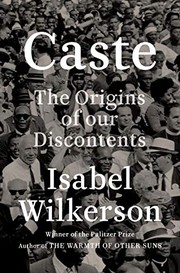
Isabel Wilkerson
2020 · 496 pages · 2 reviews
Others: Overwhelmingly positive“As we go about our daily lives, caste is the wordless usher in a darkened theater, flashlight cast down in the aisles, guiding us to our assigned seats for a performance. The hierarchy of caste is not about feelings or morality. It is about power—which groups have it and which do not.” In this brilliant book, Isabel Wilkerson gives us a masterful portrait of an unseen phenomenon in America as she explores, through an immersive, deeply researched narrative and stories about real people, how America today and throughout its history has been shaped by a hidden caste system, a rigid hierarchy of human rankings. Beyond race, class, or other factors, there is a powerful caste system that influences people’s lives and behavior and the nation’s fate. Linking the caste systems of America, India, and Nazi Germany, Wilkerson explores eight pillars that underlie caste systems across civilizations, including divine will, bloodlines, stigma, and more. Using riveting stories about people—including Martin Luther King, Jr., baseball’s Satchel Paige, a single father and his toddler son, Wilkerson herself, and many others—she shows the ways that the insidious undertow of caste is experienced every day. She documents how the Nazis studied the racial systems in America to plan their out-cast of the Jews; she discusses why the cruel logic of caste requires that there be a bottom rung for those in the middle to measure themselves against; she writes about the surprising health costs of caste, in depression and life expectancy, and the effects of this hierarchy on our culture and politics. Finally, she points forward to ways America can move beyond the artificial and destructive separations of human divisions, toward hope in our common humanity. Beautifully written, original, and revealing, Caste: The Origins of Our Discontents is an eye-opening story of people and history, and a reexamination of what lies under the surface of ordinary lives and of American life today. --https://www.penguinrandomhouse.ca/books/653196/caste-oprahs-book-club-by-isabel-wilkerson/9780593230268
What made the match, strongest first
Loved itscience writing can sometimes be boring I will admit that but it's definitely not here