
 Loved it
2018 was the year that I discovered through Hansen as one of my favorite natural history writers ... I am going to put the triumph of seeds on my consideration list
Review 1 of 2
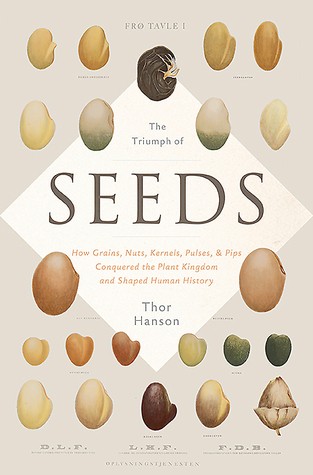
Others: Positive We live in a world of seeds. From our morning toast to the cotton in our clothes, they are quite literally the stuff and staff of life: supporting diets, economies, and civilizations around the globe. Just as the search for nutmeg and pepper drove the Age of Discovery, coffee beans fueled the Enlightenment and cottonseed sparked the Industrial Revolution. Seeds are fundamental objects of beauty, evolutionary wonders, and simple fascinations. Yet, despite their importance, seeds are often seen as commonplace, their extraordinary natural and human histories overlooked. Thanks to this stunning new book, they can be overlooked no more. This is a book of knowledge, adventure, and wonder, spun by an award-winning writer with both the charm of a fireside story-teller and the hard-won expertise of a field biologist. A fascinating scientific adventure, it is essential reading for anyone who loves to see a plant grow.
Lists: …
Richard O. Prum
2017 · 428 pages · 1 review
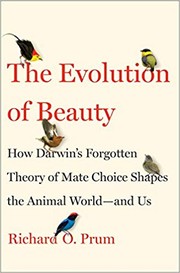
Others: PositiveWhat can explain the incredible diversity of beauty in nature? Richard O. Prum, an award-winning ornithologist, discusses Charles Darwin's second and long-neglected theory--aesthetic mate choice--and what it means for our understanding of evolution. In addition, Prum connects those same evolutionary dynamics to the origins and diversity of human sexuality, offering riveting new thinking about the evolution of human beauty and the role of mate choice, thereby transforming our ancestors from typical infanticidal primates into socially intelligent, pair-bonding caregivers. Prum's book is an exhilarating tour de force that begins in the trees and ends by fundamentally challenging how we understand human evolution and ourselves. --
What made the match, strongest first
Hope Jahren
2016 · 512 pages · 4 reviews
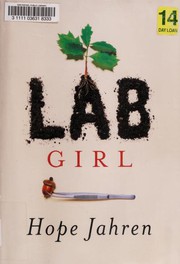
Others: PositiveAn illuminating debut memoir of a woman in science; a moving portrait of a longtime friendship; and a stunningly fresh look at plants that will forever change how you see the natural world Acclaimed scientist Hope Jahren has built three laboratories in which she’s studied trees, flowers, seeds, and soil. Her first book is a revelatory treatise on plant life—but it is also so much more. Lab Girl is a book about work, love, and the mountains that can be moved when those two things come together. It is told through Jahren’s remarkable stories: about her childhood in rural Minnesota with an uncompromising mother and a father who encouraged hours of play in his classroom’s labs; about how she found a sanctuary in science, and learned to perform lab work done “with both the heart and the hands”; and about the inevitable disappointments, but also the triumphs and exhilarating discoveries, of scientific work. Yet at the core of this book is the story of a relationship Jahren forged with a brilliant, wounded man named Bill, who becomes her lab partner and best friend. Their sometimes rogue adventures in science take them from the Midwest across the United States and back again, over the Atlantic to the ever-light skies of the North Pole and to tropical Hawaii, where she and her lab currently make their home. Jahren’s probing look at plants, her astonishing tenacity of spirit, and her acute insights on nature enliven every page of this extraordinary book. Lab Girl opens your eyes to the beautiful, sophisticated mechanisms within every leaf, blade of grass, and flower petal. Here is an eloquent demonstration of what can happen when you find the stamina, passion, and sense of sacrifice needed to make a life out of what you truly love, as you discover along the way the person you were meant to be.
What made the match, strongest first
Bill Schutt
2017 · 332 pages · 2 reviews
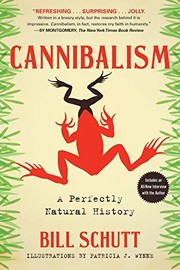
Others: Positive"Eating one's own kind is completely natural behavior in thousands of species, including humans. Throughout history we have engaged in cannibalism for reasons relating to famine, burial rites, and medicinal remedies. Cannibalism has been used as a form of terrorism but also as the ultimate expression of filial piety. With unexpected wit and a wealth of knowledge, Bill Schutt, a research associate at the American Museum of Natural History, takes us on a tour of the field, exploring exciting new avenues of research and investigating questions like why so many fish eat their offspring and some amphibians consume their mother's skin; why sexual cannibalism is an evolutionary advantage for certain spiders; why, until the end of the eighteenth century, British royalty regularly ate human body parts; how cannibalism may be linked to the extinction of Neanderthals; why microbes on sacramental bread may have led to Catholics' to persecute European Jews in the Middle Ages. Today, the subject of humans consuming one another has been relegated to the realm of horror movies, fiction, and the occasional psychopath, but be forewarned: As climate change progresses and humans see more famine, disease, and overcrowding, biological and cultural constraints may well disappear. These are the very factors that lead to outbreaks of cannibalism. As he examines these close encounters of the cannibal kind, Bill Schutt makes the ick-factor fascinating"--
What made the match, strongest first
Elizabeth Gilbert
2001 · 512 pages · 2 reviews
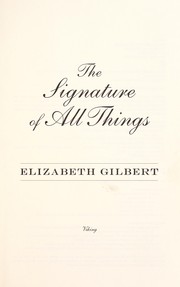
Others: Positive" A glorious, sweeping novel of desire, ambition, and the thirst for knowledge, from the # 1 New York Times bestselling author of Eat, Pray, Love and Committed. In The Signature of All Things, Elizabeth Gilbert returns to fiction, inserting her inimitable voice into an enthralling story of love, adventure and discovery. Spanning much of the eighteenth and nineteenth centuries, the novel follows the fortunes of the extraordinary Whittaker family as led by the enterprising Henry Whittaker-a poor-born Englishman who makes a great fortune in the South American quinine trade, eventually becoming the richest man in Philadelphia. Born in 1800, Henry's brilliant daughter, Alma (who inherits both her father's money and his mind), ultimately becomes a botanist of considerable gifts herself.^ As Alma's research takes her deeper into the mysteries of evolution, she falls in love with a man named Ambrose Pike who makes incomparable paintings of orchids and who draws her in the exact opposite direction-into the realm of the spiritual, the divine, and the magical. Alma is a clear-minded scientist; Ambrose a utopian artist-but what unites this unlikely couple is a desperate need to understand the workings of this world and the mechanisms behind all life. Exquisitely researched and told at a galloping pace, The Signature of All Things soars across the globe-from London to Peru to Philadelphia to Tahiti to Amsterdam, and beyond. Along the way, the story is peopled with unforgettable characters: missionaries, abolitionists, adventurers, astronomers, sea captains, geniuses, and the quite mad.^ But most memorable of all, it is the story of Alma Whittaker, who-born in the Age of Enlightenment, but living well into the Industrial Revolution-bears witness to that extraordinary moment in human history when all the old assumptions about science, religion, commerce, and class were exploding into dangerous new ideas. Written in the bold, questing spirit of that singular time, Gilbert's wise, deep, and spellbinding tale is certain to capture the hearts and minds of readers. "-- "Spanning much of the eighteenth and nineteenth centuries, the novel follows the fortunes of the extraordinary Whittaker family as led by the enterprising Henry Whittaker--a poor-born Englishman who makes a great fortune in the South American quinine trade, eventually becoming the richest man in Philadelphia. Born in 1800, Henry's brilliant daughter, Alma (who inherits both her father's money and his mind), ultimately becomes a botanist of considerable gifts herself. As Alma's research takes her deeper into the mysteries of evolution, she falls in love with a man named Ambrose Pike who makes incomparable paintings of orchids and who draws her in the exact opposite direction--into the realm of the spiritual, the divine, and the magical. Alma is a clear-minded scientist; Ambrose a utopian artist--but what unites this unlikely couple is a desperate need to understand the workings of this world and the mechanisms behind all life. The story is peopled with unforgettable characters: missionaries, abolitionists, adventurers, astronomers, sea captains, geniuses, and the quite mad. But most memorable of all, it is the story of Alma Whittaker, who--born in the Age of Enlightenment, but living well into the Industrial Revolution--bears witness to that extraordinary moment in human history when all the old assumptions about science, religion, commerce, and class were exploding into dangerous new ideas"--
What made the match, strongest first
Thor Hanson
2011 · 336 pages · 2 reviews
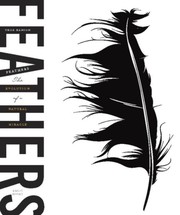
Others: PositiveFeathers are an evolutionary marvel: aerodynamic, insulating, beguiling. They date back more than 100 million years. Yet their story has never been fully told. In Feathers, biologist Thor Hanson details a sweeping natural history, as feathers have been used to fly, protect, attract, and adorn through time and place. Applying the research of paleontologists, ornithologists, biologists, engineers, and even art historians, Hanson asks: What are feathers? How did they evolve? What do they mean to us? Engineers call feathers the most efficient insulating material ever discovered, and they are at the root of biology's most enduring debate. They silence the flight of owls and keep penguins dry below the ice. They have decorated queens, jesters, and priests. And they have inked documents from the Constitution to the novels of Jane Austen. Feathers is a captivating and beautiful exploration of this most enchanting object.
What made the match, strongest first
Michael Pollan
2006 · 450 pages · 1 review
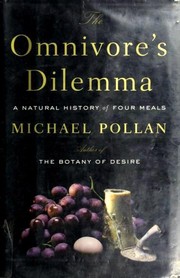
Others: PositiveWhat should we have for dinner? The question has confronted us since man discovered fire, but according to Michael Pollan, the bestselling author of The Botany of Desire, how we answer it today, at the dawn of the twenty-first century, may well determine our very survival as a species. Should we eat a fast-food hamburger? Something organic? Or perhaps something we hunt, gather, or grow ourselves? The omnivore’s dilemma has returned with a vengeance, as the cornucopia of the modern American supermarket and fast-food outlet confronts us with a bewildering and treacherous food landscape. What’s at stake in our eating choices is not only our own and our children’s health, but the health of the environment that sustains life on earth. In this groundbreaking book, one of America’s most fascinating, original, and elegant writers turns his own omnivorous mind to the seemingly straightforward question of what we should have for dinner. To find out, Pollan follows each of the food chains that sustain us—industrial food, organic or alternative food, and food we forage ourselves—from the source to a final meal, and in the process develops a definitive account of the American way of eating. His absorbing narrative takes us from Iowa cornfields to food-science laboratories, from feedlots and fast-food restaurants to organic farms and hunting grounds, always emphasizing our dynamic coevolutionary relationship with the handful of plant and animal species we depend on. Each time Pollan sits down to a meal, he deploys his unique blend of personal and investigative journalism to trace the origins of everything consumed, revealing what we unwittingly ingest and explaining how our taste for particular foods and flavors reflects our evolutionary inheritance. The surprising answers Pollan offers to the simple question posed by this book have profound political, economic, psychological, and even moral implications for all of us. Beautifully written and thrillingly argued, The Omnivore’s Dilemma promises to change the way we think about the politics and pleasure of eating. For anyone who reads it, dinner will never again look, or taste, quite the same.
What made the match, strongest first
Loved it2018 was the year that I discovered through Hansen as one of my favorite natural history writers ... I am going to put the triumph of seeds on my consideration list