
 Mixed
Delaney is a tough go I think will be a tough go for a lot of readers it's a book about mythology among other things book about gender it's good but it's I mean it's a discombobulating experience as most Delany books are
Review 1 of 2
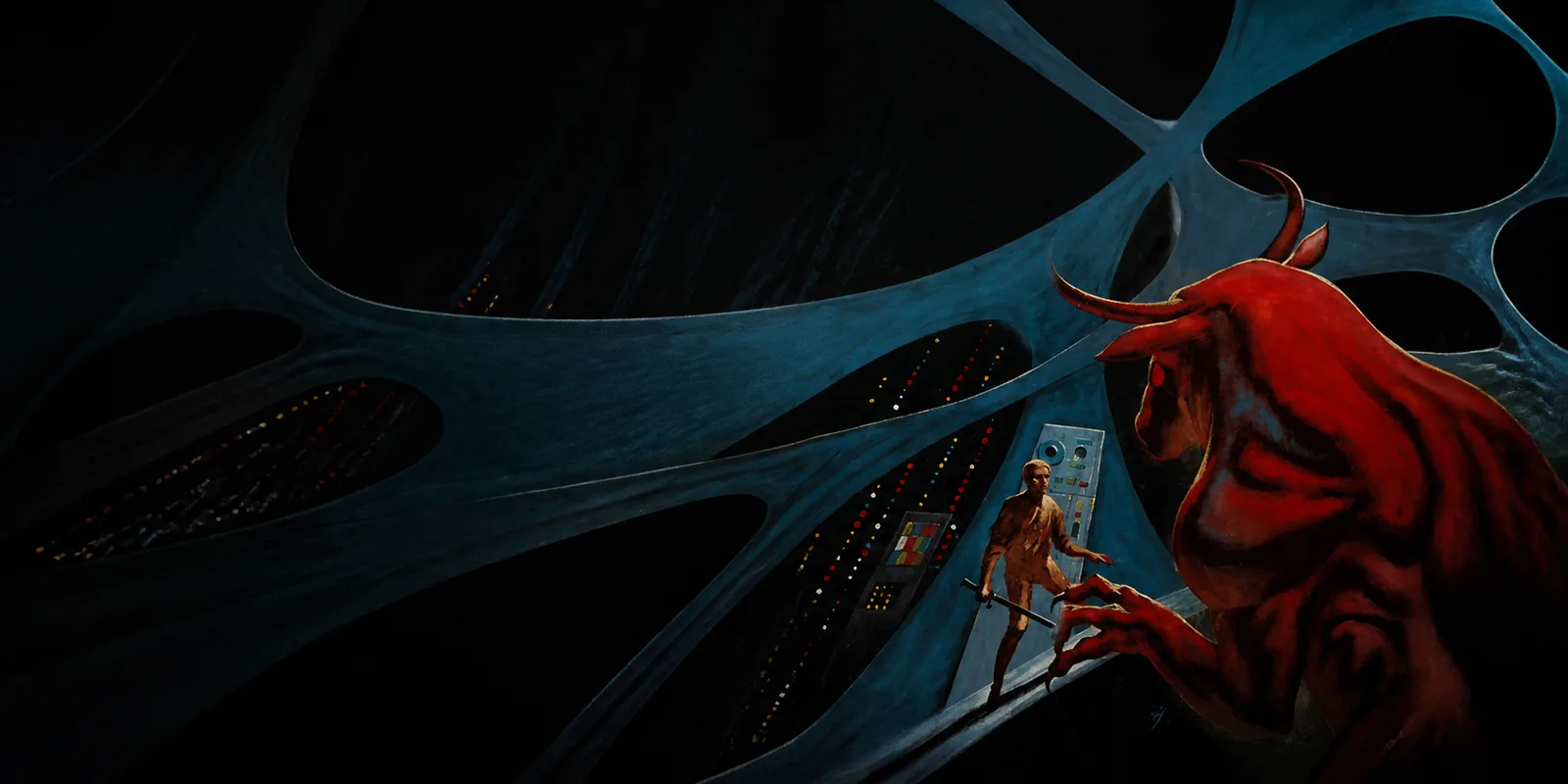
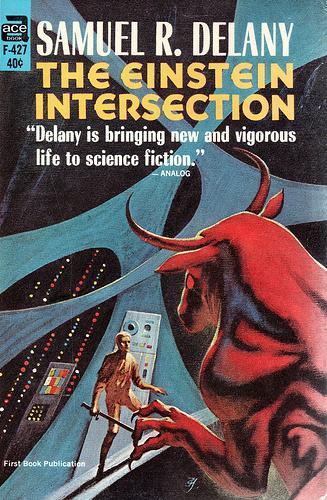
Others: Mixed The Einstein Intersection won the Nebula Award for best science fiction novel of 1967. The surface story tells of the problems a member of an alien race, Lo Lobey, has assimilating the mythology of earth, where his kind have settled among the leftover artifacts of humanity. The deeper tale concerns, however, the way those who are "different" must deal with the dominant cultural ideology. The tale follows Lobey's mythic quest for his lost love, Friza. In luminous and hallucinated language, it explores what new myths might emerge from the detritus of the human world as those who are "different" try to seize history and the day.
Genres: science fiction
Lists: …
Gene Wolfe
1981 · 303 pages · 2 reviews
 Others: Positive
Severian is in possession of a gem considered to be "The Claw of the Conciliator", a powerful relic of the Master of Power, a legendary figure of mythic proportions. Armed with his sword, Terminus Est, and the Claw, Severian continues his journey to Thrax, the city of his exile. Bizarre apes, strange cannibalistic rituals, and the foreigner named Jonas all lie in his future.
What made the match, strongest first
Samuel R. Delany
1966 · 192 pages · 6 reviews
Others: Mostly positiveDuring an interstellar war one side develops a language, Babel-17, that can be used as a weapon. Learning it turns one into an unwilling traitor as it alters perception and thought. This is discovered by the starship captain Rydra Wong. She is recruited to discover how the enemy are infiltrating and sabotaging strategic sites.
What made the match, strongest first
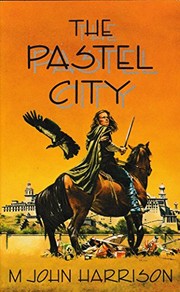
M. John Harrison
1972 · 157 pages · 4 reviews
Others: Leaning positiveVia The first book The Pastel City, presents a civilization in decline where medieval social patterns clash with the advanced technology and superscience energy weapons that the citizens of the city know how to use but have forgotten how to engineer. Harrison's leading character, Lord tegeus-Cromis, fancies himself a better poet than swordsman; yet he leads the battle to save Viriconium, the Pastel City, from the brain-stealing automatons known as the geteit chemosit from Earth's past.
What made the match, strongest first
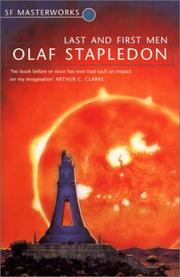
Olaf Stapledon
1930 · 326 pages · 1 review
Others: PositiveOne of the most succinct and accurate renderings of mankind's present state of mind and future progression. It documents the future of man from the start of WW2 and continues until the Sun engulfs the earth, and beyond. Considering this book was first published in 1931, it is remarkable, both in its honesty as regards human nature, and in its phenomenal span. By the time we reach chapter 3 of the 16 in this book, it is already 2300 AD and you feel like you have had the viewpoint of a God. So intense is the writing, that a few pages can take you hours to read and weeks to think about. What a writer, what a visionary. Of particular interest to me was the laconic way he can sum up an entire country's culture and people, and the accuracy of prediction in the first part of the book. Points to note :- All budding politicians should be forced to read this book. It should be part of any politics curriculum. Strikingly accurate and plausible portent of homo sapiens future. Read in the context of 2002, it is easy to see mankind's current folly and the extrapolation of current scientific endeavours. For example, we may achieve global peace ("An Americanised Planet"") for a few millennia, but at the cost of spiritual and intellectual freedom and development. When the "Fall of the First Men" happened, recovery took a very long time :- "Later, when the epidemic was spent, even though civilisation was already in ruins, a concerted effort of devotion might yet have rebuilt it on a more modest plan. But among the First Men, only a minority had ever been capable of wholehearted devotion. The great majority were by nature too much obsessed by private impulses." Sounds like the malaise of current homo sapiens. The theme of continual physical exertion and constant movement of attention as an underpinning for the lifestyles of all successful social inhabitants was beautifully described. This is so true of today's and future societies. No pause for reflection or contemplation. The abandonment of philosophy as a science in the future. The pig-headed clinging to pagan artefact or idol worship, rather than logic. The brilliant description of the "Second Men", with his finer array of senses, and his natural propensity for altruism. The plausible evolution of intelligent life on Mars in 10 million years time, with the subsequent misunderstanding of what is intelligent between Earth and Mars. Man's creation of more evolved forms of man meshes brilliantly with current genetic research. "Time travel" achieved by mental regression into past minds. The future remains unknown. Conclusions :- Apply common sense to the situation as it is now, to work out the best course of action. Never invoke traditions or old beliefs as these threaten your survival in an ever-changing environment. Within the same species, organisms are equally complex biochemically. Therefore, any social structure that imposes arbitrary division within the species, is intrinsically flawed. This is true of current homo sapiens organisation, where certain people are far more highly regarded than others for stupid reasons, and divisions between cliques of people usually erupt in violence, rather than heated debate. Just because someone cannot be convinced of your way of seeing things, doesn't mean that physical coercion becomes necessary. "Live and let live" doesn't mean live it up and let the rest live in squalor. Nothing should be regarded as taboo, save that which is unnatural. There are absolutely no restrictions on what anyone can think. If you can have it, then anyone can have it.
What made the match, strongest first
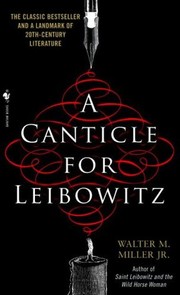
Walter M. Miller Jr.
1959 · 320 pages · 4 reviews
Others: MixedHighly unusual After the Holocaust novel. In the far future, 20th century texts are preserved in a monastery, as "sacred books". The monks preserve for centuries what little science there is, and have saved the science texts and blueprints from destruction many times, also making beautifully illuminated copies. As the story opens to a world run on a basically fuedal lines, science is again becoming fashionable, as a hobby of rich men, at perhaps 18th or early 19th century level of comprehesion. A local lord, interested in science, comes to the monastery. What happens after that is an exquisitely told tale, stunning and extremely moving, totally different from any other After the Holocaust story
What made the match, strongest first
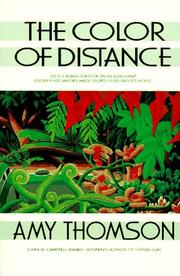
Amy Thomson
1995 · 431 pages · 3 reviews
Others: Leaning positiveThe award-winning author of Virtual Girl creates a strange new world of infinite possibilities where honor, sacrifice, and friendship between humans and aliens can mean many different things at once. Reprint.
What made the match, strongest first
MixedDelaney is a tough go I think will be a tough go for a lot of readers it's a book about mythology among other things book about gender it's good but it's I mean it's a discombobulating experience as most Delany books are