

 Loved it
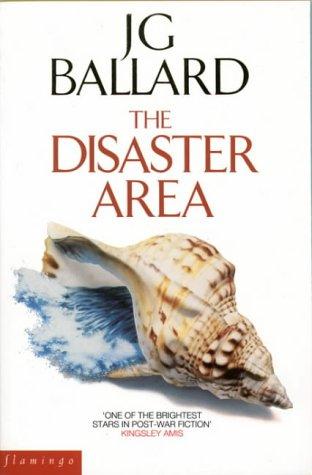
the disaster area, which is a great story and a great collection.
Review 1 of 3
Others: Positive This mesmerizing collection demonstrates perfectly Ballard’s extraordinary writing talent. All the concentrated power and imagination that distinguish his novels are demonstrated here: the iron strength of his stories lies in the juxtaposition of a recognizable physical word with an inner, complex dream landscape. Contents: - Storm-bird, Storm-dreamer (1966) - The Concentration City (1957) (variant of Build-Up) - The Subliminal Man (1963) - Now Wakes the Sea (1963) - Minus One (1963) - Mr F. is Mr F. (1961) - Zone of Terror (1960) - Manhole 69 (1957) - The Impossible Man (1966) Cover illustration by Chris Moore
Genres: science fiction
Lists: …
J. G. Ballard
1962 · 159 pages · 1 review
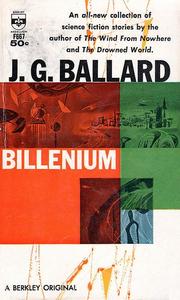
Others: PositiveAn all-new collection of science fiction stories by the author of The Wind From Nowhere and The Drowned World. Includes the following short stories and novelettes: "Billenium", a.k.a "Billennium" (1961) "The Insane Ones" (1962) "Studio 5, The Stars" (1961) "The Gentle Assassin" (1961) "Build-Up", a.k.a "The Concentration City" (1957) "Now: Zero" (1959) "Mobile", a.k.a "Venus Smiles" (1957) "Chronopolis" (1960) "Prima Belladonna" (1956) "The Garden of Time" (1962)
What made the match, strongest first
Lee Harding
1977 · 222 pages · 2 reviews
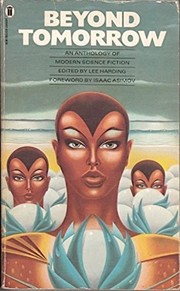
Others: PositiveContents: 7 • Foreword: The Bad News and the Good • (1976) • essay by Isaac Asimov 11 • Idiot Stick • (1958) • shortstory by Damon Knight 24 • Nine Lives • (1969) • novelette by Ursula K. Le Guin 47 • The Commuter • (1953) • shortstory by Philip K. Dick 59 • The Oath • (1960) • novelette by James Blish 77 • Takeover Bid • (1965) • novelette by John Baxter 94 • Comes Now the Power • (1966) • shortstory by Roger Zelazny 100 • Litterbug • (1969) • novelette by Tony Morphett 117 • Mother Hitton's Littul Kittons • [The Instrumentality of Mankind] • (1961) • novelette by Cordwainer Smith 138 • A Song Before Sunset • (1976) • shortstory by David Grigg 149 • Sundance • (1969) • shortstory by Robert Silverberg 163 • The Oh in Jose • (1966) • shortstory by Brian W. Aldiss (variant of The O in José) [as by Brian Aldiss ] 172 • The Man Who Came Early • (1956) • novelette by Poul Anderson 194 • Call Him Lord • (1966) • novelette by Gordon R. Dickson 213 • The Garden of Time • (1962) • shortstory by J. G. Ballard
What made the match, strongest first
Robert Silverberg
1972 · 256 pages · 5 reviews
 Others: Overwhelmingly positive
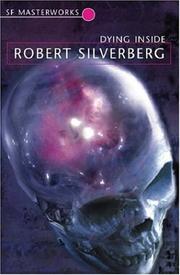
From the back cover: David Selig is outwardly unimpressive. His early promise as a student and scholar is unrealised. He has no proper job, he has no girlfriend. But, inside, Selig has the power of a god, for he can probe other people's minds and read their thoughts and feelings. This extraordinary faculty defines his sense of self -- his power is him. But with the onset of middle age, Selig's capacity to read minds is failing fast, and he must struggle to come to terms with that loss -- to accept that he is dying inside...
What made the match, strongest first
Piers Anthony
1967 · 234 pages · 1 review
Others: PositiveFrom back cover Berkley paperback September 1984: It was a new word for Hell. An escape-proof prison mine, where the worst criminals in the Universe were condemned to perpetual suffering in the ruby darkness. Aton had committed the unpardonable crime. He was condemned to Chthon for loving the minionette, the sensuous siren-spirit no man was allowed to possess... or even desire. And to find out who she was and why she was forbidden, Aton had to do what none before him had ever done. Escape from Chthon!
What made the match, strongest first
James Blish
1966 · 190 pages · 1 review
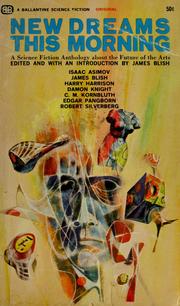
Others: PositiveCover art by Richard Powers. This anthology contains: A Master of Babylon by Edgar Pangborn; A Man of Talent by Robert Silverberg; With These Hands by C. M. Kornbluth; The Country of the Kind by Damon Knight; Portrait of the Artist by Harry Harrison; Dreaming is a Private Thing by Isaac Asimov; and A Work of Art; and The Dark Night of the Soul by James Blish.
What made the match, strongest first
Henry Kuttner
1947 · 208 pages · 2 reviews
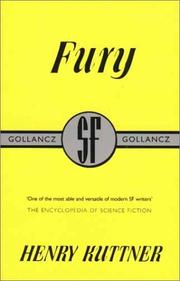
Others: PositiveUnder the roiling seas of Venus, under the deadly atmosphere are the Keeps, fully enclosed cities, and within them live the descendants of those survivors who used that atomic energy to propel the spaceships which first took them to Venus. In the massive superstructures that were built under the Venusian seas a complex feudal society devoted to decadence has evolved. Presiding over that society are the Immortals - genetic throwbacks to the mutant atomic survivors - who control the culture. This is a stable society but the stability will lead only to its destruction; the environment of Venus outside the Keeps is malevolent and it is encroaching. Into this society is born Sam Harker, the son of an Immortal whose human mother perishes in childbirth. The object of his father's hatred and disdain, Sam Harker is subjected to treatments which stunt his growth and render him hairless, then exiled from the society of Immortals to lead a tumultuous, rebel's life, one inspired by his hatred and desire for vengeance upon that society which exiled him. Sam wants revenge, he wants to destroy the society which has made him an outcast. His search for revenge and his great abilities make him more powerful than the decadent residents of the Keeps, even more powerful than the Immortals. As Sam becomes a politician appealing to the masses in his search for power, his campaign assaults the society itself that society becomes at risk. In the aftermath of destruction, the reclamation of human destiny becomes possible if humanity is forced to leave the Keeps.In unpublished correspondence with Sam Moskowitz in the l960's, in relation to Moskowitz's Seekers of Tomorrow, a collection of biographies of major science fiction writers, C.L. Moore wrote that Fury came about because John Campbell, the editor of Astounding, wanted a novel from the Kuttners and insisted upon its immediate delivery. The novel was scheduled and written so quickly Moore said, that the first part (of a three part serial) was in print before they had completed the final installment. The novel was half-written before the Kuttners themselves truly understood its plot and characters. Paradoxically, this urgency and improvisation led to a novel with great spontaneity, with high-wire intensity and unpredictability and Fury has been acclaimed as perhaps the only novel at the level of the great Kuttner and Moore short stories which dominated Astounding in the l940's. (Mutant, also published by Rosetta), is also highly regarded but that latter work was assembled from five self-standing novelettes spaced over a more considerable period.) The influence of Fury upon other writers is evident; much of the decadence of John Brunner's, Robert Silveberg's, Brian Aldiss's and Philip K.Dick's projected human societies in their fiction of the l960's was foreshadowed by the Kuttners.
What made the match, strongest first
Loved itthe disaster area, which is a great story and a great collection.