
 Loved it
I quite enjoyed it I didn't like blow my socks off or anything so it's kind of mid-tier but I enjoyed the writing
Review 1 of 2
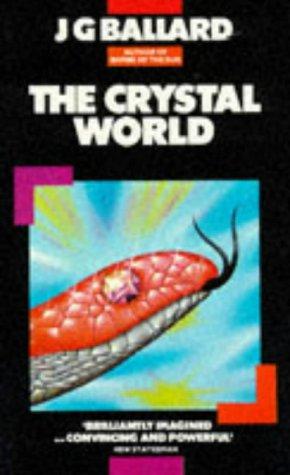
Others: Leaning positive The West African jungle is turning into crystal. Everywhere plants, trees and animals are changing and men are fleeing except some foolhardy types who remain to drift, dazzled, through this spectacular dreamworld.
Genres: science fiction
Lists: …
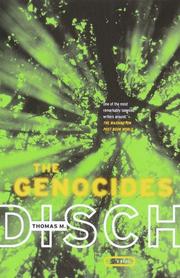
Thomas M. Disch
1967 · 167 pages · 5 reviews
 Others: Overwhelmingly positive
This spectacular novel established Thomas M. Disch as a major new force in science fiction. First published in 1965, it was immediately labeled a masterpiece reminiscent of the works of J.G. Ballard and H.G. Wells In this harrowing novel, the world's cities have been reduced to cinder and ash and alien plants have overtaken the earth. The plants, able to grow the size of maples in only a month and eventually reach six hundred feet, have commandeered the world's soil and are sucking even the Great Lakes dry. In northern Minnesota, Anderson, an aging farmer armed with a Bible in one hand and a gun in the other, desperately leads the reduced citizenry of a small town in a daily struggle for meager existence. Throw into this fray Jeremiah Orville, a marauding outsider bent on a bizarre and private revenge, and the fight to live becomes a daunting task.
What made the match, strongest first
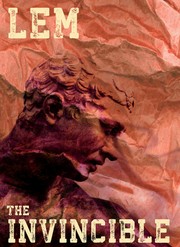
Stanisław Lem
1967 · 221 pages · 3 reviews
 Others: Neutral
Reads initially like the sort of traditional science fiction you might see on TV - rocket lands on foreign planet, sends out teams to discover what gives. what follows is a gripping scientific detective story as we learn the terrible secrets of a past race, and Lem takes us on a journey of wonder and awe. Reminiscent of the final passages of HG Wells' Time Machine as the author shows us beings and worlds we could never imagine. I've read this several times and will read it again and you should too.
What made the match, strongest first
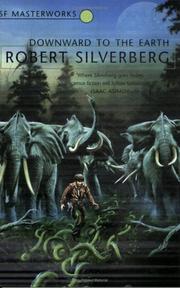
Robert Silverberg
1970 · 189 pages · 6 reviews
Others: Overwhelmingly positiveFrom the shrouding fogs of its Mist Country to the lunatic tropical fertility of its jungles, the planet Belzagor was alien in the extreme. Before the decolonization movement, it had been part of Earth's Galaxy-wide empire. But the Nildoror and Sulido-ror, Belzagor's two intelligent species, had been given their independence, and once again they ruled themselves. Edmund Gundersen, a former colonial official from Earth, was returning to Belzagor after an eight year absence. Officially, he was a tourist, but in reality he was seeking redemption—redemption for the crimes he had committed against the Nildoror and Sulidoror. Even now, he still found it hard to accept their independence. The Nildoror were great elephant-like beings; and the Sulidoror, husky bipeds covered with dark red hair, had long arms tipped with terrifying claws. How could such creatures, without any technology to speak of, run an entire planet? Yet they did, and they had one thing that had always eluded human understanding—the ceremony of rebirth. Somehow this mysterious rite linked the two species, and the act that weighed most heavily on Gundersen's mind had occurred in connection with it. During an emergency, he had commandeered a group of Nildoror for a labor detail. Using a fusion torch, he had forced them to obey, and on his account they had missed their rebirth. To atone for this deed, Gundersen had decided to journey alone through Belzagor's jungles. When he reached the Mist Country, he would offer himself as a candidate for rebirth—even if it would mean the end of his life as a human!
What made the match, strongest first
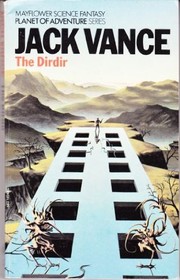
Jack Vance
1975 · 158 pages · 1 review
 Others: Mixed
Getting back to Earth from the planet Tschai involved only stealing a spaceship or having one built to order — for Tschai was the abode of several intelligent star-born races and, as such, had spaceyards. But Adam Reith's problem was not so simple. He'd already been lucky to escape the Chasch and the Wankh and a dozen different types of humans, and now his course led directyly to the Great Sivishe Spaceyards in the domains of the Dirdir. But the Dirdir were quite different from the other aliens who competed for this world. They were quicker, more sinister, and had an unrelenting thirst for hunting victims like Adam Reith. The closer he came to his objective, the keener their hunting instincts would become!
What made the match, strongest first
Jack Vance
1970 · 224 pages · 1 review
Others: MixedThe Pnume are native to Tschai, living underground in a vast network of caverns with their human slave-species, the Pnumekin. Historians of Tschai, the Pnume collect its past with scholarly disinterest; they hear rumors of Adam Reith - a man who claims to come from another planet, named Earth - and they want him for permanent display in Foreverness, museum of Tschai life! Reith must survive the Pnume tunnels, if he is ever to return to Earth. Tschai The Pnume is part 4 of 4 of Tschai Tschai is a planet orbiting the star Carina 4269, 212 light-years from Earth. It is populated by three alien, mutually hostile species; the displaced, native Pnume; and various human races, some of whom live as slaves or clients of the aliens. Each of the four novels relates Reith's adventures with one of the species, and is named after that species.
What made the match, strongest first
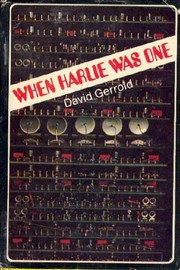
David Gerrold
1972 · 279 pages · 1 review
 Others: Negative
A stunning first novel that grapples with the definition of consciousness and what it is to be human. The novel is primarily a series of conversations between a computer programmer / psychologist and his invention, H.A.R.L.I.E., a self-programming computer that has total access to information and knowledge through something similar to the Internet. As the computer matures, the question of what it means to be human becomes a serious one for the financial backers of the project concerned with the cost of the program. If HARLIE is conscious then he can't be disconnected: That would be murder. However, to keep him connected and working for the company amounts to slavery. HARLIE must figure out a way to be both financially viable and free at the same time. HARLIE reappears in Gerrold's later Starwolf novels.
What made the match, strongest first
Loved itI quite enjoyed it I didn't like blow my socks off or anything so it's kind of mid-tier but I enjoyed the writing
Mixedis a extremely beautifully written boring book ... it's highly literary it is again very slow but I do appreciate it for the quality of the writing