

 Loved it
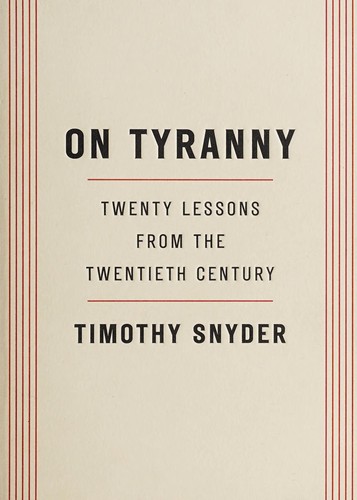
this was originally a shorter political pamphlet that came out just about like tyranny and fighting tyranny... anyway I enjoyed this I gave it four out of five stars
Others: Positive In previous books, Holocaust historian Timothy Snyder dissected the events and values that enabled the rise of Hitler and Stalin and the execution of their catastrophic policies. With Twenty Lessons, Snyder draws from the darkest hours of the twentieth century to provide hope for the twenty-first. As he writes, "Americans are no wiser than the Europeans who saw democracy yield to fascism, Nazism and communism. Our one advantage is that we might learn from their experience."
Genres: nonfiction
Lists: …
Amanda Ripley
2021 · 368 pages · 1 review
Others: PositiveA “compulsively readable” (Evan Osnos, National Book Award–winning author) book from the New York Times bestselling author of The Unthinkable and award-winning journalist Amanda Ripley investigating how good people get captured by high conflict—and how they break free.When we are baffled by the insanity of the “other side”—in our politics, at work, or at home—it’s because we aren’t seeing how the conflict itself has taken over. That’s what “high conflict” does. High conflict is what happens when discord distills into a good-versus-evil kind of feud, the kind with an us and a them. In this state, the brain behaves differently. We feel increasingly certain of our own superiority, and everything we do to try to end the conflict, usually makes it worse. Eventually, we can start to mimic the behavior of our adversaries, harming what we hold most dear. Our journey spans California, Chicago, Colombia, New York, and beyond, following people caught in political feuds, gang vendettas, and deep ideological divides as they confront the stories fueling their conflicts and seek a path forward. All these people, in dramatically different situations, were drawn into high conflict by similar forces, including conflict entrepreneurs, humiliation, and false binaries. But ultimately, all of them found ways to transform high conflict into good conflict, the kind that made them better people. They rehumanized and recategorized their opponents, and they revived curiosity and wonder, even as they continued to fight for what they knew was right. People do escape high conflict. Individuals—even entire communities—can short-circuit the feedback loops of outrage and blame, if they want to. “Insightful and enthralling” (The New York Times Book Review) High Conflict provides a mind-opening new way to think about conflict that will transform how we move through the world.
What made the match, strongest first
Amanda Montell
2019 · 304 pages · 6 reviews
 Others: Overwhelmingly positive
"A brash, enlightening, and wildly entertaining feminist look at gendered language and the way it shapes us..."--From dust jacket, front flap.
What made the match, strongest first
Robin Wall Kimmerer
2024 · 128 pages · 5 reviews
 Others: Mixed
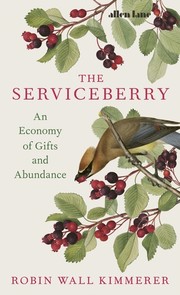
From the #1 New York Times bestselling author of Braiding Sweetgrass, a bold and inspiring vision for how to orient our lives around gratitude, reciprocity, and community, based on the lessons of the natural world. As Indigenous scientist and author of Braiding Sweetgrass Robin Wall Kimmerer harvests serviceberries alongside the birds, she considers the ethic of reciprocity that lies at the heart of the gift economy. How, she asks, can we learn from Indigenous wisdom and the plant world to reimagine what we value most? Our economy is rooted in scarcity, competition, and the hoarding of resources, and we have surrendered our values to a system that actively harms what we love. Meanwhile, the serviceberry’s relationship with the natural world is an embodiment of reciprocity, interconnectedness, and gratitude. The tree distributes its wealth—its abundance of sweet, juicy berries—to meet the needs of its natural community. And this distribution ensures its own survival. As Kimmerer explains, “Serviceberries show us another model, one based upon reciprocity, where wealth comes from the quality of your relationships, not from the illusion of self-sufficiency.” As Elizabeth Gilbert writes, Robin Wall Kimmerer is “a great teacher, and her words are a hymn of love to the world.” The Serviceberry is an antidote to the broken relationships and misguided goals of our times, and a reminder that “hoarding won’t save us, all flourishing is mutual.”
What made the match, strongest first
Bob Joseph
2018 · 160 pages · 2 reviews
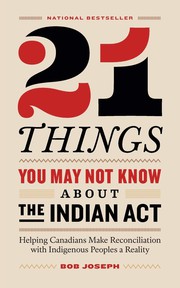
Others: PositiveA guide to understanding the Indian Act and its impact on generations of Indigenous Peoples, as well as an examination of how Indigenous Peoples can return to self-government, self-determination, and self-reliance.
What made the match, strongest first
Angela Saini
2017 · 213 pages · 1 review
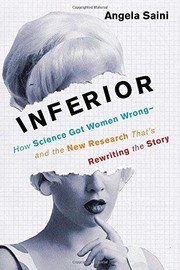
Others: Positive213 pages ; 24 cm
What made the match, strongest first
Rosan Smits
2026 · 192 pages · 1 review
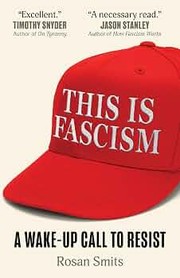
Others: PositiveAn international bestseller, this “excellent” (Timothy Snyder, author of On Tyranny), urgent book outlines how fascism has returned to the mainstream―and how we can stop it Fascism is back. This time no swastikas or concentration camps, but MAGA hats and masked immigration officers. In his second term, Donald Trump is putting together a fascist regime. Not only Trump’s political adversaries say so; his own former advisers do, too. Internationally renowned scholars―experts in the field of fascism―say the evidence is overwhelming: Fascism is on the rise, not just in the US but around the world. Political scientist Rosan Smits topples the strongly held conviction in the West that our established democracies are immune. They are not. Fascism wasn’t just born in the West; it’s where new variants are being incubated. And these modern variants pose a threat not only to our national democracies but the international rules-based order built on law and human rights. The illusion that “it can’t happen here” makes us vulnerable and apathetic, precisely at a moment when action is still possible. Standing up against emerging fascism requires collective action. Nothing is inevitable in politics, and fascism doesn’t stand a chance if enough people understand that an attack on one person’s freedom is an attack on everyone’s freedom. If, in short, enough people understand: This is fascism.
What made the match, strongest first
Loved itthis was originally a shorter political pamphlet that came out just about like tyranny and fighting tyranny... anyway I enjoyed this I gave it four out of five stars