I found this to be great I gave this like a 4.5 star the last part of it to keep it from being a total five was that the last handful of chapters just felt like a little bit redundant... really like the first like five or six chapters are like the meat of it and that was really good
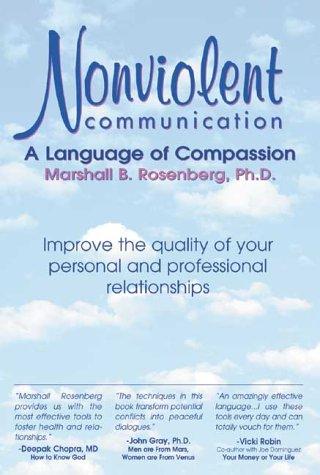
Nonviolent Communication (1999)
An enlighting look at how peaceful communication can create compassionate connections with family, friends, and other acquaintances, this book uses stories, examples, and sample dialogues to provide solutions to communication problems both at home and in the workplace. Guidance is provided on identifying and articulating feelings and needs, expressing anger fully, and exploring the power of empathy in order to speak honestly without creating hostility, break patterns of thinking that lead to anger and depression, and communicate compassionately. These nonviolent communication skills are fully explained and can be applied to personal, professional, and political differences. Included in the new edition is information on how to compassionately connect with oneself.
- ISBN:
- 9781892005281
- Length:
- 222 pages
Genres: nonfiction
Lists: …
Similar books
Loving Corrections
adrienne maree brown
2024 · 200 pages · 1 review

Others: PositiveNew York Times–bestselling author adrienne maree brown transcends binary thinking about "accountability" and shares dignified, holistic ways for individuals and communities to address harmful and destructive patterns. This selection of prescient, compassionate essays explores patterns we engage in that are rooted in limited thinking. Through a lens of “loving correction” rather than mere critique, author adrienne maree brown helps us reimagine how to hold ourselves, our loved ones, and our communities accountable by setting clear boundaries, engaging in reflection, and nurturing honest relationships. Loving Corrections is divided into two sections, with the first portion featuring new essays including “A Word for White People” and “Relinquishing the Patriarchy” and writing on topics like moving from fragility to fortitude, disability, and navigating critique within activist communities. The second section expands and updates pieces from brown's popular monthly column “Murmurations” in YES! Magazine that explore accountability—within oneself and community—with depth, inventiveness, and empathy. Along with allowing us more authentic access to ourselves and to each other, the “corrections” in the book’s title are intended to explore and break identity-based patterns including white supremacy, fragility, patriarchy, and ableism. brown also offers practical guidance on how to apologize and be accountable from our nuanced positions of power, history, and resources. Building on her previous work—especially Holding Change and We Will Not Cancel Us—brown reminds us how much we need each "It is only through relationship that we learn how to be, understand our impact on others and explore small shifts that may yield remarkable collective change."

Why?
What made the match, strongest first
Also nonfiction72%Similar descriptions16%Thoughts on Tomes loved bothPersonalize your recommendations12%Honoring Your Ancestors
Mallorie Vaudoise
2019 · 264 pages · 2 reviews
Others: PositiveDiscover the Spiritual Nourishment and Magical Power of Ancestor Veneration Learn how to connect to your ancestors and receive the benefits that come from veneration―deeper spirituality, more love in your life, better outcomes in creative pursuits, powerful magic and spellwork, and an improved sense of wellness. Filled with hands-on techniques and tips, Honoring Your Ancestors shows you how to create an ancestor altar so you can work with ancestors of all kinds. Author Mallorie Vaudoise also shares fascinating ideas for incorporating rituals, spells, family recipes, and even practices like music and dancing to help you open this wonderful new dimension of your spiritual journey. Ancestor veneration is one of the most widespread spiritual practices in the world. This book shares the important distinctions between working with blood ancestors, lineage ancestors, and affinity ancestors while helping you recognize the signs that your ancestors are responding to your petitions and offerings. You will also explore important topics like mediumship and ancestral trauma so you can be sure to develop a veneration practice that's uplifting and affirming for you.
Why?
What made the match, strongest first
Also nonfiction81%Thoughts on Tomes loved both14%Similar descriptionsPersonalize your recommendations5%Besom, Stang & Sword
Christopher Orapello
2018 · 320 pages · 1 review
Others: Positive"The book returns the Craft to its primordial forces—animism, baneful plants, folk magic, ecstasy, and hedge-witchery—without gatekeeping, armchair pseudo-academia, or pretension.”—Mat Auryn, author of Psychic Witch Regional traditional witchcraft is an animistic form of witchcraft that moves away from the religious harvest festivals and fertility-minded practices associated with the more common Wiccan form of witchcraft. Very few of us in this age are farmers or dependent upon crops and harvests. Regional traditional witchcraft teaches people to find their craft in their own backyards, in the uncultivated land or urban cityscape alike, and in their ancestors rather than in ancient foreign deities or in a neopagan-styled religious form of witchcraft. It's not about where you're from but where you are. The material in this book is adaptable to any region in which the practitioner lives. Although the lack of deity worship and holy days is a significant part of the authors' nonreligious approach, this book presents a complete system of practice utilizing ritual, chant, trance, the six paths of witchcraft as defined and explained by the text, and the practices associated with traditional witchcraft.
Why?
What made the match, strongest first
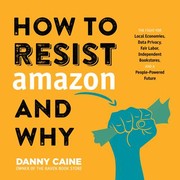
Also nonfiction82%Thoughts on Tomes loved both14%Similar descriptionsPersonalize your recommendations4%How to Resist Amazon and Why
Danny Caine
2019 · 73 pages · 1 review
Others: PositiveWhen a company's workers are literally dying on the job, when their business model relies on preying on local businesses and even their own vendors, when their CEO is the richest person in the world while their workers make low wages with impossible quotas... wouldn't you want to resist? Danny Caine, owner of Raven Book Store in Lawrence, Kansas has been an outspoken critic of the seemingly unstoppable Goliath of the bookselling world: Amazon. In this book, he lays out the case for shifting our personal money and civic investment away from global corporate behemoths and to small, local, independent businesses. Well-researched and lively, his tale covers the history of big box stores, the big political drama of delivery, and the perils of warehouse work. He shows how Amazon's ruthless discount strategies mean authors, publishers, and even Amazon themselves can lose money on every book sold. And he spells out a clear path to resistance, in a world where consumers are struggling to get by. In-depth research is interspersed with charming personal anecdotes from bookstore life, making this a readable, fascinating, essential book for the 2020s. publisher
Why?
What made the match, strongest first
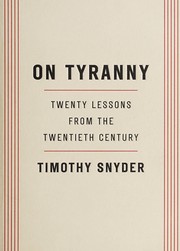
Also nonfiction83%Thoughts on Tomes loved both14%Similar descriptionsPersonalize your recommendations3%On Tyranny
Timothy Snyder
2017 · 128 pages · 1 review
Others: PositiveIn previous books, Holocaust historian Timothy Snyder dissected the events and values that enabled the rise of Hitler and Stalin and the execution of their catastrophic policies. With Twenty Lessons, Snyder draws from the darkest hours of the twentieth century to provide hope for the twenty-first. As he writes, "Americans are no wiser than the Europeans who saw democracy yield to fascism, Nazism and communism. Our one advantage is that we might learn from their experience."
Why?
What made the match, strongest first
Also nonfiction83%Thoughts on Tomes loved both14%Similar descriptionsPersonalize your recommendations3%Tragedy of Heterosexuality
Jane Ward
2020 · 216 pages · 1 review
Others: PositiveA troubling account of heterosexual desire in the era of #MeToo Heterosexuality is in crisis. Reports of sexual harassment, misconduct, and rape saturate the news in the era of #MeToo. Straight men and women spend thousands of dollars every day on relationship coaches, seduction boot camps, and couple’s therapy in a search for happiness. In The Tragedy of Heterosexuality, Jane Ward smartly explores what, exactly, is wrong with heterosexuality in the twenty-first century, and what straight people can do to fix it for good. She shows how straight women, and to a lesser extent straight men, have tried to mend a fraught patriarchal system in which intimacy, sexual fulfillment, and mutual respect are expected to coexist alongside enduring forms of inequality, alienation, and violence in straight relationships. Ward also takes an intriguing look at the multi-billion-dollar self-help industry, which markets goods and services to help heterosexual couples without addressing the root of their problems. Ultimately, she encourages straight men and women to take a page out of queer culture, reminding them “about the human capacity to desire, fuck, and show respect at the same time.”
Why?
What made the match, strongest first
Also nonfiction83%Thoughts on Tomes loved both14%Similar descriptionsPersonalize your recommendations3%