

 Loved it
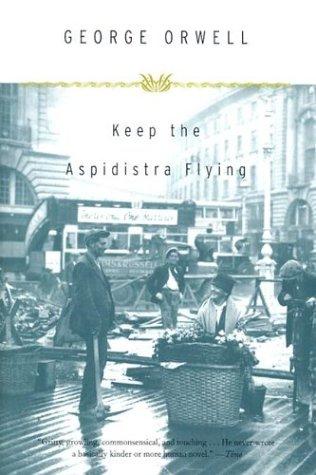
This is actually my favorite George Orwell book about a delusional failed son trying to make it as an artist.
Review 1 of 2
Others: Positive Gordon Comstock loathes dull, middle-class respectability and worship of money. He gives up a 'good job' in advertising to work part-time in a bookshop, giving him more time to write. But he slides instead into a self-induced poverty that destroys his creativity and his spirit. Only Rosemary, ever-faithful Rosemary, has the strength to challenge his commitment to his chosen way of life. Through the character of Gordon Comstock, Orwell reveals his own disaffection with the society he once himself renounced.
Lists: …
Franz Kafka
1927 · 288 pages · 3 reviews
Others: Positive"Franz Kafka's diaries and letters suggest that his fascination with America grew out of a desire to break away from his native Prague, even if only in his imagination. Kafka died before he could finish what he liked to call his ''American novel," but he clearly entitled it Der Verschollene ("The Missing Person") in a letter to his fiancee, Felice Bauer, in 1912. Kafka began writing the novel that fall and wrote the last completed chapter in 1914, but it wasn't until 1927, three years after his death, that Amerika - the title that Kafka's friend and literary executor Max Brod gave his edited version of the unfinished manuscript - was published in Germany by Kurt Wolff Verlag. An English translation by Willa and Edwin Muir was published in Great Britain in 1932 and in the United States in 1946." "Over the last thirty years, an international team of Kafka scholars has been working on German-language critical editions of all of Kafka's writings, going back to the original manuscripts and notes, correcting transcription errors, and removing Brod's editorial and stylistic interventions to create texts that are as close as possible to the way the author left them." "With the same expert balance of precision and nuance that marked his award-winning translation of The Castle, Mark Harman now restores the humor and particularity of language in his translation of the critical edition of Der Verschollene. Here is the story of young Karl Rossmann, who, following an incident involving a housemaid, is banished by his parents to America. With unquenchable optimism and in the company of two comic-sinister companions, he throws himself into misadventure after misadventure, eventually heading toward Oklahoma, where a career in the theater beckons. Though we can never know how Kafka planned to end the novel, Harman's superb translation allows us to appreciate, as closely as possible, what Kafka did commit to the page."--Jacket.
What made the match, strongest first
John Fowles
1965 · 617 pages · 0 reviews
A startlingly original novel about a young English graduate who takes a position as a teacher at a private school on a small Greek island. Bored and lonely he spends his free hours wandering alone until he meets a wealthy and mysterious neighbour. Soon he finds himself a victim of this man’s increasingly bizarre psychological games and obsessed with a young woman who may or may not be a willing participant in these games.
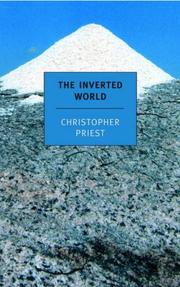
Christopher Priest
1974 · 272 pages · 10 reviews
Others: Mostly positiveThe city is winched along tracks through a devastated land full of hostile tribes. Rails must be freshly laid ahead of the city and carefully removed in its wake. Rivers and mountains present nearly insurmountable challenges to the ingenuity of the city's engineers. But if the city does not move, it will fall farther and farther behind the "optimum" into the crushing gravitational field that has transformed life on Earth. The only alternative to progress is death. The secret directorate that governs the city makes sure that its inhabitants know nothing of this. Raised in common in creches, nurtured on synthetic food, prevented above all from venturing outside the closed circuit of the city, they are carefully sheltered from the dire necessities that have come to define human existence. And yet the city is in crisis. The people are growing restive, the population is dwindling, and the rulers know that, for all their efforts, slowly but surely the city is slipping ever farther behind the optimum. Helward Mann is a member of the city's elite. Better than anyone, he knows how tenuous is the city's continued existence. But the world--he is about to discover--is infinitely stranger than the strange world he believes he knows so well.
What made the match, strongest first
H. G. Wells
1890 · 395 pages · 3 reviews
Others: PositiveGeorge Ponderovo's quiet young life is changed forever when he is forced to leave home and is apprenticed to his dynamic Uncle Edward in his chemist's shop. Edward, determined to "strike out", invents a bogus medicine called Tono-Bungay which earns him a vast fortune. George's share of the wealth enables him to live out his fantasies by building an aeroplane. As he witnesses the spectacular rise of the Tono-Bungay empire he contemplates a corrupt English society that allows his uncle to wield so much power. Tono-Bungay (1909) is widely regarded as Wells's finest novel, combining futuristic science fiction and contemporary social satire. His scathing account of Edwardian London remains as relevant today as when it was first published. No other writer has the breadth of Wells to encompass both George's personal breakdown and the full panorama of a degenerate imperial society. This is the only popular edition of the text to included Wells's final revisions. The notes explain his multi-layered allusions, and the Introduction places the nove in its literary and historical context. - Back cover.
What made the match, strongest first
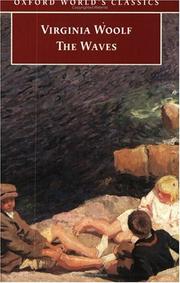
Virginia Woolf
1931 · 255 pages · 2 reviews
Others: Leaning positiveTracing the lives of a group of friends, this novel follows their development from childhood to middle age. Social events, individual achievements and disappointments form the outer structure of the book, but the focus is the inner life of the characters which is conveyed in rich poetic language.
Jean-Paul Sartre
1938 · 233 pages · 1 review
Others: PositiveA fascinating existentialist novel, written in the form of a journal, about a historian who moves to a small port in northern France to research a biography he is intending to write. Whilst there his senses become dulled and he becomes increasingly disgusted by his own existence, finding no solace with friends or a woman he begins an affair with.
What made the match, strongest first
Loved itThis is actually my favorite George Orwell book about a delusional failed son trying to make it as an artist.