


 Mixed
personally I found it rather entertaining but I didn't find it quite as memorable as some of his other works so for me this is a high B
 Others: Leaning positive
Second only to Slaughterhouse-Five of Vonnegut's canon in its prominence and influence, God Bless You, Mr. Rosewater (1965) presents Eliot Rosewater, an itinerant, semi-crazed millionaire wandering the country in search of heritage and philanthropic outcome, introducing the science fiction writer Kilgore Trout to the world and Vonnegut to the collegiate audience which would soon make him a cult writer. Trout, modeled according to Vonnegut on the science fiction writer Theodore Sturgeon (with whom Vonnegut had an occasional relationship) is a desperate, impoverished but visionary hack writer who functions for Eliot Rosewater as both conscience and horrid example. Rosewater, seeking to put his inheritance to some meaningful use (his father was an entrepreneur), tries to do good within the context of almost illimitable cynicism and corruption. It is in this novel that Rosewater wanders into a science fiction conference – an actual annual event in Milford, Pennsylvania – and at the motel delivers his famous monologue evoked by science fiction writers and critics for almost half a century: "None of you can write for sour apples... but you're the only people trying to come to terms with the really terrific things which are happening today." Money does not drive Mr. Rosewater (or the corrupt lawyer who tries to shape the Rosewater fortune) so much as outrage at the human condition. The novel was adapted for a 1979 Alan Menken musical. The novel is told mostly thru a collection of short stories dealing with Eliot's interactions with the citizens of Rosewater County, usually with the last sentence serving as a punch line. The antagonist's tale, Mushari's, is told in a similar short essay fashion. The stories reveal different hypocrisies of humankind in a darkly humorous fashion.
Lists: …
Kurt Vonnegut
1973 · 303 pages · 1 review
Others: MixedBreakfast Of Champions is vintage Vonnegut. One of his favorite characters, aging writer Kilgore Trout, finds to his horror that a Midwest car dealer is taking his fiction as truth. The result is murderously funny satire as Vonnegut looks at war, sex, racism, success, politics, and pollution in America and reminds us how to see the truth.From the Trade Paperback edition.
What made the match, strongest first
Nnedi Okorafor
2015 · 104 pages · 10 reviews
Others: Leaning positiveAfro-futurist science fiction.
Philip K. Dick
1964 · 238 pages · 3 reviews
 Others: Mostly negative
The Penultimate Truth is a 1964 science fiction novel by American writer Philip K. Dick. The story is set in a future where the bulk of humanity is kept in large underground shelters. The people are told that World War III is being fought above them, when in reality the war ended years ago. The novel is based on Dick's 1953 short story "The Defenders". Dick also drew upon two other of his short stories for the plot of the novel: "The Mold of Yancy" and "The Unreconstructed M".
What made the match, strongest first
Kurt Vonnegut
1997 · 219 pages · 1 review
Others: MixedOn February 13th, 2001, according to Vonnegut, the universe will tire momentarily of expanding forever. What's the point? Maybe it would be more fun to shrink for a change, and have a reunion of all the stuff back where it began. Then it could make a great big BANG again. It will shrink back to February 17th, 1991, but will then decide that expansion is the way to go, after all. As time marches on once more to 2001, though, Vonnegut and Trout and everybody else and everything else will have to do exactly what they did the first time through the decade, for good or ill: marry the wrong person, bet on the wrong horse. Whatever! Ten years of deja vu all over again! At least deja vu doesn't cause physical injury and property damage.
What made the match, strongest first
H. G. Wells
1898 · 213 pages · 8 reviews
 Others: Overwhelmingly positive
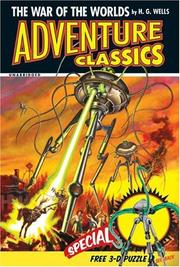
The ultimate science fiction classic: for more than one hundred years, this compelling tale of the Martian invasion of Earth has enthralled readers with a combination of imagination and incisive commentary on the imbalance of power that continues to be relevant today. The style is revolutionary for its era, employing a sophisticated first and third person account of the events which is both personal and focused on the holistic downfall of Earth's society. The Martians, as evil, mechanical and unknown a threat they are, remain daunting in today's society, where, despite technology's mammoth advances, humanity's hegemony over Earth is yet to be called into question. In Well's introduction to the book, where the character discusses with the later deceased Ogilvy about astronomy and the possibility of alien life defeating the 'savage' (to them) nineteenth-century Britain, is he insinuating that this is the truth and fate of humanity? It's up to you to decide…
What made the match, strongest first
Philip K. Dick
1964 · 240 pages · 5 reviews
Others: Mostly positiveMartian Time-Slip is a 1964 science fiction novel by American writer Philip K. Dick. The novel uses the common science fiction concept of a human colony on Mars. However, it also includes the themes of mental illness, the physics of time and the dangers of centralized authority. The novel was first published under the title All We Marsmen, serialized in the August, October and December 1963 issues of Worlds of Tomorrow magazine. The subsequent 1964 publication as Martian Time-Slip is virtually identical, with different chapter breaks.
What made the match, strongest first
Mixedpersonally I found it rather entertaining but I didn't find it quite as memorable as some of his other works so for me this is a high B
Loved itat one point in the book God bless you Mr rosewater he stands up and makes a speech about how much he loves science fiction writers for their craziness their philosophizing and their sort of openness to the idea of changing the universe so absolutely marvelous stuff really beautiful