

 Mixed
So, there were some elements of this that were good. There's a lot of elements of this that are basic. I don't necessarily think this is groundbreaking.
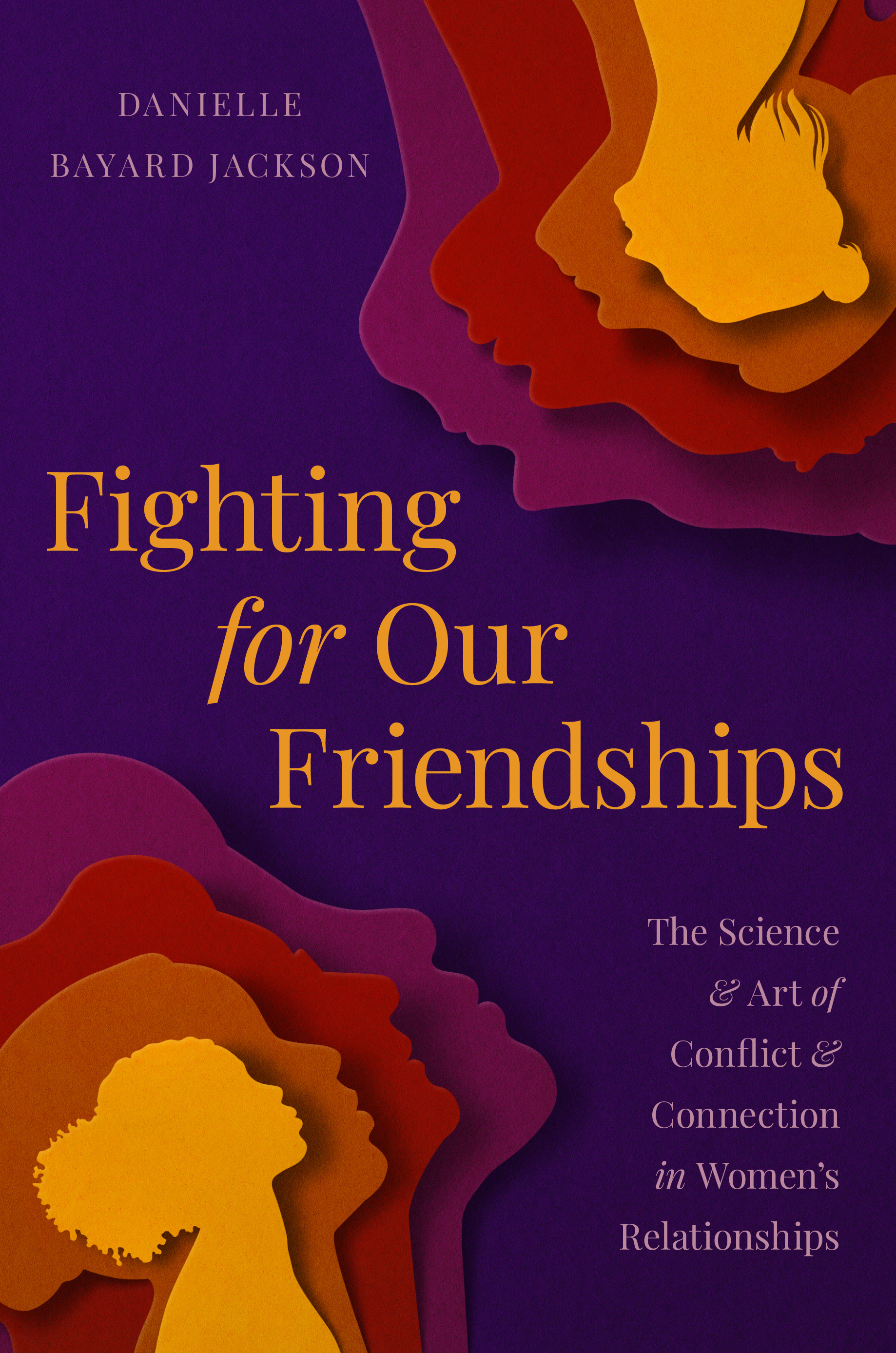
Others: Mixed Why do women's friendships feel complicated? Friendship coach and educator Danielle Bayard Jackson unpacks the latest research about women's cooperation and communication, while sharing practical strategies to preserve and strengthen these relationships. Fighting for Our Friendships is one part textbook, one part handbook. Readers will not only learn what the latest research has to say about the mechanics of women's friendships, but they'll walk away with real-life solutions for the most common conflicts that arise in their platonic relationships. Using a combination of psychology, science, narrative, and a few of the author's signature scripts and out-of-the-box exercises, readers will In a time when we are often encouraged to opt out of friendships at any sign of friction, Danielle Bayard Jackson is showing us how to opt in.
Genres: nonfiction
Lists: …
Patti Wigington
2020 · 256 pages · 1 review
Others: MixedCultivate Relationships with Your People for Empowerment and Healing This groundbreaking book shows you how to work with different types of ancestors to find, develop, and celebrate the personal power of your inner badass. By embracing the strength of your lineage―both blood relatives and those chosen by the heart―you can receive wisdom and guidance when you need it the most. Badass Ancestors provides a compelling series of rituals, meditations, mantras, and exercises that connect you with ancestral guides. You'll discover advice on genealogy research, the history of ancestor veneration in cultures around the world, ways to deal with problematic ancestors, and how to leave your own legacy for future generations. Each chapter offers unique calls to action―including crafts and recipes―that help you build self-confidence and overall badassery with your ancestors' assistance. When you develop relationships with your relatives and with spiritual or archetypal ancestors, you engage the process of healing trauma and achieving a deep sense of emotional and spiritual well-being.
What made the match, strongest first
Sarah Schulman
2016 · 294 pages · 2 reviews
 Others: Leaning negative
From intimate relationships to global politics, Sarah Schulman observes a continuum: that inflated accusations of harm are used to avoid accountability. Illuminating the difference between Conflict and Abuse, Schulman directly addresses our contemporary culture of scapegoating. This deep, brave, and bold work reveals how punishment replaces personal and collective self-criticism, and shows why difference is so often used to justify cruelty and shunning. Rooting the problem of escalation in negative group relationships, Schulman illuminates the ways cliques, communities, families, and religious, racial, and national groups bond through the refusal to change their self-concept. She illustrates how Supremacy behavior and Traumatized behavior resemble each other, through a shared inability to tolerate difference. This important and sure to be controversial book illuminates such contemporary and historical issues of personal, racial, and geo-political difference as tools of escalation towards injustice, exclusion, and punishment, whether the objects of dehumanization are other individuals in our families or communities, people with HIV, African Americans, or Palestinians. Conflict Is Not Abuse is a searing rejection of the cultural phenomenon of blame, cruelty, and scapegoating, and how those in positions of power exacerbate and manipulate fear of the "other" to achieve their goals.
What made the match, strongest first
Susana Monsó
2024 · 264 pages · 1 review
Others: MixedHow animals conceive of death and dying—and what it can teach us about our own relationships with mortality When the opossum feels threatened, she becomes paralyzed. Her body temperature plummets, her breathing and heart rates drop to a minimum, and her glands simulate the smell of a putrefying corpse. Playing Possum explores what the opossum and other creatures can teach us about how we and other species understand mortality, and demonstrates that the concept of death, far from being a uniquely human attribute, is widespread in the animal kingdom. With humor and empathy, Susana Monsó tells the stories of ants who attend their own funerals, chimpanzees who clean the teeth of their dead, dogs who snack on their caregivers, crows who avoid the places where they saw a carcass, elephants obsessed with collecting ivory, and whales who carry their dead for weeks. Monsó, one of today’s leading experts on animal cognition and ethics, shows how there are more ways to conceive of mortality than the human way, and challenges the notion that the only emotional reactions to death worthy of our attention are ones that resemble our own. Blending philosophical insight with new evidence from behavioral science and comparative psychology, Playing Possum dispels the anthropocentric biases that cloud our understanding of the natural world, and reveals that, when it comes to death and dying, we are just another animal.
What made the match, strongest first
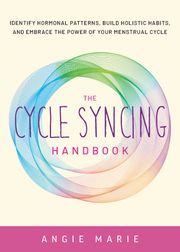
Angie Marie
2023 · 2 reviews
 Others: Positive
Hack your period with this approachable guide to unlocking your body’s true beauty through journal prompts, nutritional advice, and dynamic routines!Living cyclically is nothing new; just as nature is designed by cycles of high and low, push and pull, work and rest, so too are the bodies of half the people on Earth. However, modern society ignores and suppresses these natural hormonal fluctuations, leaving menstruators burned out and frustrated as they repress and combat their biology. By introducing the four phases of the menstrual cycle in an approachable way, The Cycle Syncing Handbook provides a straightforward guide on how to optimize every aspect of your life, including: Creativity and productivity Mobility and exercise habits Nutrition Romantic and platonic relationships And more! Written by an expertly trained doula and fertility awareness educator, this easy-to-follow yet informative handbook will empower you and teach you everything you need to master your menstrual cycle!
What made the match, strongest first
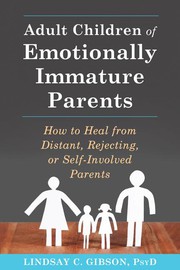
Lindsay C. Gibson
2015 · 221 pages · 1 review
Others: MixedIf you grew up with an emotionally immature, unavailable, or selfish parent, you may have lingering feelings of anger, loneliness, betrayal, or abandonment. You may recall your childhood as a time when your emotional needs were not met, when your feelings were dismissed, or when you took on adult levels of responsibility in an effort to compensate for your parent’s behavior. These wounds can be healed, and you can move forward in your life. In this breakthrough book, clinical psychologist Lindsay Gibson exposes the destructive nature of parents who are emotionally immature or unavailable. You will see how these parents create a sense of neglect, and discover ways to heal from the pain and confusion caused by your childhood. By freeing yourself from your parents’ emotional immaturity, you can recover your true nature, control how you react to them, and avoid disappointment. Finally, you’ll learn how to create positive, new relationships so you can build a better life. Discover the four types of difficult parents: The emotional parent instills feelings of instability and anxiety The driven parent stays busy trying to perfect everything and everyone The passive parent avoids dealing with anything upsetting The rejecting parent is withdrawn, dismissive, and derogatory
What made the match, strongest first
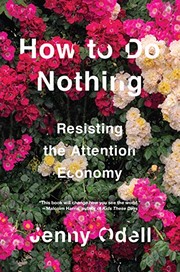
Jenny Odell
2019 · 256 pages · 3 reviews
Others: MixedNothing is harder to do these days than nothing. But in a world where our value is determined by our 24/7 data productivity . . . doing nothing may be our most important form of resistance. So argues artist and critic Jenny Odell in this field guide to doing nothing (at least as capitalism defines it). Odell sees our attention as the most precious—and overdrawn—resource we have. Once we can start paying a new kind of attention, she writes, we can undertake bolder forms of political action, reimagine humankind’s role in the environment, and arrive at more meaningful understandings of happiness and progress. Far from the simple anti-technology screed, or the back-to-nature meditation we read so often, How to do Nothing is an action plan for thinking outside of capitalist narratives of efficiency and techno-determinism. Provocative, timely, and utterly persuasive, this book is a four-course meal in the age of Soylent.
What made the match, strongest first
MixedSo, there were some elements of this that were good. There's a lot of elements of this that are basic. I don't necessarily think this is groundbreaking.