 Mixed
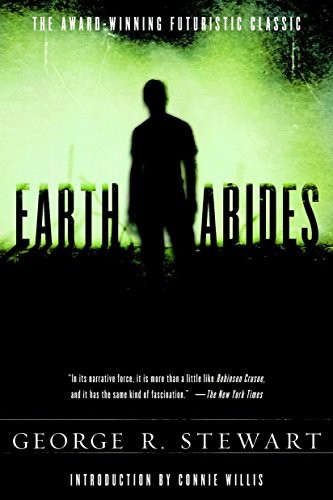
Earth Abides comes close to this warped paradise. It's cozy enough, but there's always a feeling of tension. This could go very wrong very quickly.
Review 1 of 2
Others: Mixed The story of rebuilding civilization after a plague nearly wipes out the human race.
Genres: science fiction
Lists: …
Clifford D. Simak
1952 · 254 pages · 5 reviews
 Others: Positive
Comment by John Clute: We know better now, of course. But they still entrance us, the old page-turners from the glory days of American SF, half a century or so ago, when the world was full of futures we were never going to have. In the mid-1940s, when he began to publish the episodes that would be assembled as City in 1952, Clifford Simak, a Minneapolis-based journalist and author, could still carry us away with the dream that cars and pollution and even the great cities of the world – "Huddling Place", the title of one of these tales, is his own derisory term for them – would soon be brushed off the map by Progress, leaving nothing behind but tasteful exurbs filled with middle-class nuclear families living the good life, with fishing streams and greenswards sheltering each home from the stormy blast. Fortunately, Simak soon gets past this demented vision of a near-future world saved by technological fixes, a dementia common then to SF writers and gurus and politicians alike, and launches into an astonishingly eventful narrative of the next 10,000 years as seen through the eyes of one family and the immortal robot Jenkins, and all told with a weird pastoral serenity that for a kid like me seemed near to godlike. In its course City touches on almost everything dear to 1940s SF, and to me remembering. Robots. Genetic Engineering. Space. Jupiter. Domed cities. Keeps. Hiveminds. Matter transmission. Telepathy. Parallel worlds. Paranormal empathy. Mutants. Supermen. It's all there, and, thanks to Simak's skilled hand at the wheel, it's all in place: suave, sibylline, swift. The whole is framed as a series of legends told by the uplifted Dogs who have replaced the human race, now gone for ever. They have been bred not to kill. At the end, only Jenkins remains to keep them from learning how to repeat history and die. It all seemed immensely sad and wise then, but fun. It still does.
What made the match, strongest first
Isaac Asimov
1955 · 192 pages · 2 reviews
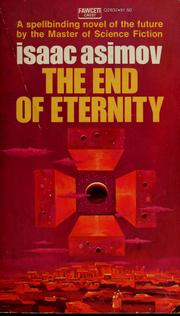
Others: MixedThe story of temporal engineers who meta-regulate the history of humanity through the centuries, eliminating risk, adventure, and space travel in the process. One man rebels in order to save the existence of someone he loves, and in the end the time bureaucracy is destroyed for the sake of individuality and human achievement. The theme is the opposite of the Foundation stories, where the central planners and manipulators of humanity always dominate.
What made the match, strongest first
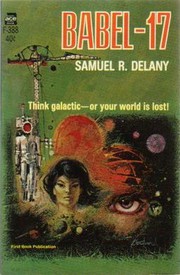
Samuel R. Delany
1966 · 192 pages · 6 reviews
Others: Mostly positiveDuring an interstellar war one side develops a language, Babel-17, that can be used as a weapon. Learning it turns one into an unwilling traitor as it alters perception and thought. This is discovered by the starship captain Rydra Wong. She is recruited to discover how the enemy are infiltrating and sabotaging strategic sites.
What made the match, strongest first
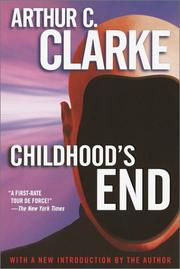
Arthur C. Clarke
1952 · 220 pages · 9 reviews
Others: Leaning positiveChildhood's End is a 1953 science fiction novel by British author Arthur C. Clarke. The story follows the peaceful alien invasion of Earth by the mysterious Overlords, whose arrival ends all war, helps form a world government, and turns the planet into a near-utopia. Many questions are asked about the origins and mission of the aliens, but they avoid answering, preferring to remain in their ships, governing through indirect rule. Decades later, the Overlords eventually show themselves, and their impact on human culture leads to a Golden Age. However, the last generation of children on Earth begin to display powerful psychic abilities, heralding their evolution into a group mind, a transcendent form of life.
What made the match, strongest first
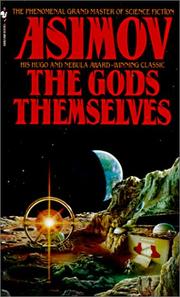
Isaac Asimov
1972 · 288 pages · 5 reviews
Others: Mostly positiveThe year is 2100 A.D.… And Man no longer stands alone in the universe. Now there are other worlds, other living beings. Alien beings who mate in threes and live on pure energy. New breeds of humans who have created their own environment and freed themselves from every social and sexual taboo. Yes, it is the future of new worlds, ever-changing worlds. And yet among them there is still Earth. Earth, where Man still strives to be the best. To advance himself beyond all other beings and their worlds. And this final, glorious step in mankind’s technical progress has been achieved: the discovery of an unlimited, non-polluting energy source. But what seems to be progress may, in reality, end in complete tragedy. Earth’s unlimited energy source is about to trigger unlimited destruction—and the end of a universe.
What made the match, strongest first
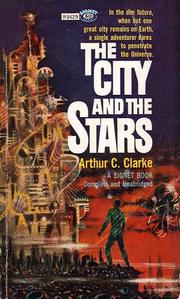
Arthur C. Clarke
1956 · 254 pages · 6 reviews
 Others: Mostly negative
Omnibus
What made the match, strongest first
MixedEarth Abides comes close to this warped paradise. It's cozy enough, but there's always a feeling of tension. This could go very wrong very quickly.