
 Loved it
it is a lively and personality packed collection of information on all different types of insects and I promise you it's going to give you a whole new appreciation for them even if they do give you the heie jeebies
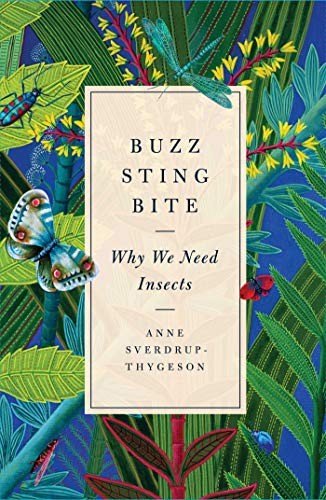
Others: Positive Insects comprise roughly half of the animal kingdom, and they live everywhere. Most of us think life would be better without bugs. In fact, life would be impossible without them. Without the pinhead-sized chocolate midge, cocoa flowers would not pollinate. The fruit fly is essential to medical and biological research experiments. Insects turn dead plants and animals into soil. They control organisms that are harmful to humans. Sverdrup-Thygeson shows us that there is more variety among insects than we can even imagine, and the more you learn about insects, the more fascinating they become. -- adapted from jacket "An enthusiastic, witty, and fascinating introduction to the world of insects and why we--and the planet we inhabit--could not survive without them. Insects comprise roughly half of the animal kingdom. They live everywhere--deep inside caves, high in the Himalayas, inside computers, in Yellowstone's hot springs, and in the ears and nostrils of much larger creatures. There are insects that have ears on their knees, eyes on their penises, and tongues under their feet. Most of us think life would be better without bugs. In fact, life would be impossible without them. Most of us know that we would not have honey without honeybees, but without the pinhead-sized chocolate midge, cocoa flowers would not be pollinated. No cocoa, no chocolate. The ink that was used to write the Declaration of Independence was derived from galls on oak trees, which are induced by a small wasp. The fruit fly was essential to medical and biological research experiments that resulted in six Nobel prizes. Blowfly larvae can clean difficult wounds; mealworms can digest plastic; ants have been essential to the development of antibiotics. Insects turn dead plants and animals into soil. They pollinate flowers, including crops that we depend on. They provide food for other animals, such as birds and bats. They control pests that are harmful to humans. Life as we know it depends on these small creatures. But recent years have brought disturbing reports of extensive declines in insect numbers and diversity, which could have serious consequences for us and the planet. With ecologist Anne Sverdrup-Thygeson as our capable, entertaining guide to the insect world, we'll learn that there is more variety among insects than we can even imagine, and the more you learn about insects, the more fascinating they become. Buzz, Sting, Bite is an essential introduction to the little creatures that make the world go round."--Dust jacket.
Lists: …
Brian W. Aldiss
1962 · 239 pages · 8 reviews
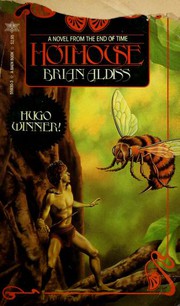
Others: Mostly positiveTHE LAST DAYS OF MAN Under a dying sun, monstrous sentient plants and carnivorous insects are the predators. Man is the prey...
Bill Schutt
2017 · 332 pages · 2 reviews
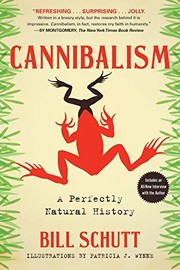
Others: Positive"Eating one's own kind is completely natural behavior in thousands of species, including humans. Throughout history we have engaged in cannibalism for reasons relating to famine, burial rites, and medicinal remedies. Cannibalism has been used as a form of terrorism but also as the ultimate expression of filial piety. With unexpected wit and a wealth of knowledge, Bill Schutt, a research associate at the American Museum of Natural History, takes us on a tour of the field, exploring exciting new avenues of research and investigating questions like why so many fish eat their offspring and some amphibians consume their mother's skin; why sexual cannibalism is an evolutionary advantage for certain spiders; why, until the end of the eighteenth century, British royalty regularly ate human body parts; how cannibalism may be linked to the extinction of Neanderthals; why microbes on sacramental bread may have led to Catholics' to persecute European Jews in the Middle Ages. Today, the subject of humans consuming one another has been relegated to the realm of horror movies, fiction, and the occasional psychopath, but be forewarned: As climate change progresses and humans see more famine, disease, and overcrowding, biological and cultural constraints may well disappear. These are the very factors that lead to outbreaks of cannibalism. As he examines these close encounters of the cannibal kind, Bill Schutt makes the ick-factor fascinating"--
What made the match, strongest first
Hope Jahren
2016 · 512 pages · 4 reviews
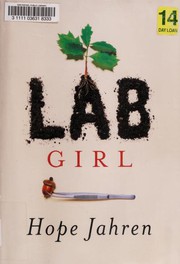
Others: PositiveAn illuminating debut memoir of a woman in science; a moving portrait of a longtime friendship; and a stunningly fresh look at plants that will forever change how you see the natural world Acclaimed scientist Hope Jahren has built three laboratories in which she’s studied trees, flowers, seeds, and soil. Her first book is a revelatory treatise on plant life—but it is also so much more. Lab Girl is a book about work, love, and the mountains that can be moved when those two things come together. It is told through Jahren’s remarkable stories: about her childhood in rural Minnesota with an uncompromising mother and a father who encouraged hours of play in his classroom’s labs; about how she found a sanctuary in science, and learned to perform lab work done “with both the heart and the hands”; and about the inevitable disappointments, but also the triumphs and exhilarating discoveries, of scientific work. Yet at the core of this book is the story of a relationship Jahren forged with a brilliant, wounded man named Bill, who becomes her lab partner and best friend. Their sometimes rogue adventures in science take them from the Midwest across the United States and back again, over the Atlantic to the ever-light skies of the North Pole and to tropical Hawaii, where she and her lab currently make their home. Jahren’s probing look at plants, her astonishing tenacity of spirit, and her acute insights on nature enliven every page of this extraordinary book. Lab Girl opens your eyes to the beautiful, sophisticated mechanisms within every leaf, blade of grass, and flower petal. Here is an eloquent demonstration of what can happen when you find the stamina, passion, and sense of sacrifice needed to make a life out of what you truly love, as you discover along the way the person you were meant to be.
What made the match, strongest first
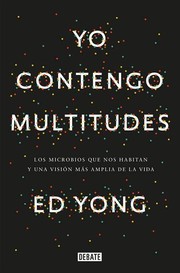
Ed Yong
2016 · 361 pages · 4 reviews
 Others: Overwhelmingly positive
Joining the ranks of popular science classics like The Botany of Desire and The Selfish Gene, a groundbreaking, wondrously informative, and vastly entertaining examination of the most significant revolution in biology since Darwin—a “microbe’s-eye view” of the world that reveals a marvelous, radically reconceived picture of life on earth. Every animal, whether human, squid, or wasp, is home to millions of bacteria and other microbes. Ed Yong, whose humor is as evident as his erudition, prompts us to look at ourselves and our animal companions in a new light—less as individuals and more as the interconnected, interdependent multitudes we assuredly are. The microbes in our bodies are part of our immune systems and protect us from disease. In the deep oceans, mysterious creatures without mouths or guts depend on microbes for all their energy. Bacteria provide squid with invisibility cloaks, help beetles to bring down forests, and allow worms to cause diseases that afflict millions of people. Many people think of microbes as germs to be eradicated, but those that live with us—the microbiome—build our bodies, protect our health, shape our identities, and grant us incredible abilities. In this astonishing book, Ed Yong takes us on a grand tour through our microbial partners, and introduces us to the scientists on the front lines of discovery. It will change both our view of nature and our sense of where we belong in it.
What made the match, strongest first
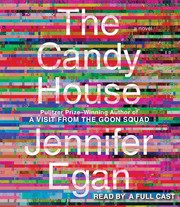
Jennifer Egan
2022 · 334 pages · 2 reviews
Others: Overwhelmingly positiveLinked short stories about a future where consciousness is uploadable, searchable and shareable, and humans are still humans despite everything.
What made the match, strongest first
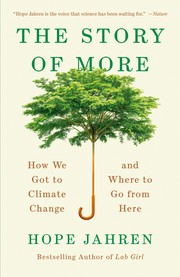
Hope Jahren
2019 · 208 pages · 1 review
Others: Positive"Hope Jahren is an award-winning geobiologist, a brilliant writer, and one of the seven billion people with whom we share this earth. The Story of More is her impassioned open letter to humanity as we stand at the crossroads of survival and extinction. Jahren celebrates the long history of our enterprising spirit--which has tamed wild crops, cured diseases, and sent us to the moon--but also shows how that spirit has created excesses that are quickly warming our planet to dangerous levels. In short, highly readable chapters, she takes us through the science behind the key inventions--from electric power to large-scale farming and automobiles--that, even as they help us, release untenable amounts of carbon dioxide into the atmosphere. She explains the current and projected consequences of greenhouse gases--from superstorms to rising sea levels--and shares the science-based tools that could help us fight back. At once an explainer on the mechanisms of warming and a capsule history of human development, The Story of More illuminates the link between our consumption habits and our endangered earth. It is the essential pocket primer on climate change that will leave an indelible impact on everyone who reads it."--
What made the match, strongest first
Loved itit is a lively and personality packed collection of information on all different types of insects and I promise you it's going to give you a whole new appreciation for them even if they do give you the heie jeebies