
 Loved it
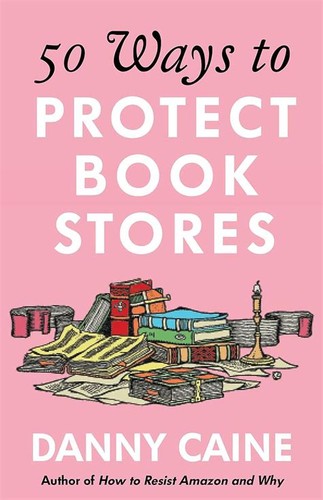
Okay, next favorite, I guess I would put 50 Ways to Protect Bookstores. I don't think there's anything wrong with this. I give it a four because I didn't feel particularly impressed by the writing in any way.
Others: Positive Bookstores are important. So are booksellers. And they--and the ideas and communities they serve--need protection. Danny Caine, the best-selling author of How to Resist Amazon and Why and co-owner of the Raven Book Store in Lawrence, Kansas, writes a stirring call to action. Bookstores are not charities, he writes, and they shouldn't get a pass on exploitative labor practices, but they play a vital role in our society that is worth upholding. Preparing the ground for a more expansive book on the topic, Caine offers 50 ideas for protecting this idiosyncratic business niche and, by extension, the neighborhoods that bookstores anchor. Some of the ideas are buy books at bookstores, talk them up on social media, and write glowing online reviews. Others ask you to think support your local bookstore's neighboring businesses, support your local library, and lobby your elected officials to pass legislation that ensures livable wages and makes it easier to run small businesses. Still others are just excellent go on dates at bookstores and buy and read weird books that you've never heard of before. Readers, publishers, politicians, workers, union organizers, and landlords can all find tailor-made calls to action in these pages. Especially now, with freedom of speech under attack from the right, it's time for us to protect books and those who sell them.
Genres: nonfiction
Lists: …
Danny Caine
2019 · 73 pages · 1 review
Others: PositiveWhen a company's workers are literally dying on the job, when their business model relies on preying on local businesses and even their own vendors, when their CEO is the richest person in the world while their workers make low wages with impossible quotas... wouldn't you want to resist? Danny Caine, owner of Raven Book Store in Lawrence, Kansas has been an outspoken critic of the seemingly unstoppable Goliath of the bookselling world: Amazon. In this book, he lays out the case for shifting our personal money and civic investment away from global corporate behemoths and to small, local, independent businesses. Well-researched and lively, his tale covers the history of big box stores, the big political drama of delivery, and the perils of warehouse work. He shows how Amazon's ruthless discount strategies mean authors, publishers, and even Amazon themselves can lose money on every book sold. And he spells out a clear path to resistance, in a world where consumers are struggling to get by. In-depth research is interspersed with charming personal anecdotes from bookstore life, making this a readable, fascinating, essential book for the 2020s. publisher
What made the match, strongest first
Roxane Gay
2014 · 310 pages · 5 reviews
 Others: Overwhelmingly positive
319 pages ; 23 cm
What made the match, strongest first
Dean Spade
2020 · 128 pages · 2 reviews
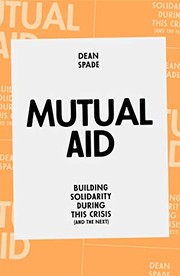
Others: Leaning positiveAround the world, people are faced with crisis after crisis, from the COVID-19 pandemic and climate change-induced fires, floods, and storms to the ongoing horrors of mass incarceration, brutal immigration enforcement, endemic gender violence, and severe wealth inequality. As governments fail to respond to—or actively engineer—each crisis, ordinary people are finding bold and innovative ways to share resources and support vulnerable members of their communities. This survival work, when done alongside social movement demands for transformative change, is called mutual aid. This book is about mutual aid: why it is so important, what it looks like, and how to do it. It provides a grassroots theory of mutual aid, describes how mutual aid has been a part of all larger, powerful social movements, and offers concrete tools for organizing, such as how to work in groups, decision-making process, how to prevent and address conflict, and how to deal with burnout. Mutual aid isn’t charity: it’s a form of organizing where people get to create new systems of care and generosity so we can survive.
What made the match, strongest first
Madhumita Murgia
2024 · 320 pages · 2 reviews
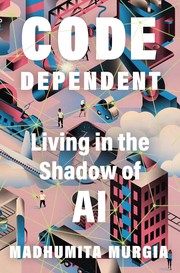
Others: PositiveShortlisted for the Women’s Prize for Non-Fiction Named one of the best books of the year by Publishers Weekly. A riveting story of what it means to be human in a world changed by artificial intelligence, revealing the perils and inequities of our growing reliance on automated decision-making On the surface, a British poet, an UberEats courier in Pittsburgh, an Indian doctor, and a Chinese activist in exile have nothing in common. But they are in fact linked by a profound common experience—unexpected encounters with artificial intelligence. In Code Dependent, Murgia shows how automated systems are reshaping our lives all over the world, from technology that marks children as future criminals, to an app that is helping to give diagnoses to a remote tribal community. AI has already infiltrated our day-to-day, through language-generating chatbots like ChatGPT and social media. But it’s also affecting us in more insidious ways. It touches everything from our interpersonal relationships, to our kids’ education, work, finances, public services, and even our human rights. By highlighting the voices of ordinary people in places far removed from the cozy enclave of Silicon Valley, Code Dependent explores the impact of a set of powerful, flawed, and often-exploitative technologies on individuals, communities, and our wider society. Murgia exposes how AI can strip away our collective and individual sense of agency, and shatter our illusion of free will. The ways in which algorithms and their effects are governed over the coming years will profoundly impact us all. Yet we can’t agree on a common path forward. We cannot decide what preferences and morals we want to encode in these entities—or what controls we may want to impose on them. And thus, we are collectively relinquishing our moral authority to machines. In Code Dependent, Murgia not only sheds light on this chilling phenomenon, but also charts a path of resistance. AI is already changing what it means to be human, in ways large and small, and Murgia reveals what could happen if we fail to reclaim our humanity.
What made the match, strongest first
Julian Sher
2023 · 3 reviews
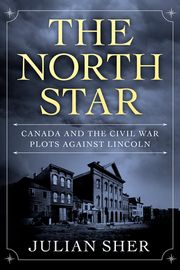
Others: PositiveA riveting, dramatic account of the years, months and days leading up to the assassination of Abraham Lincoln, revolving around the unexpected ways Canadians were deeply involved in every aspect of the American Civil War. Canadians take pride in being on the “good side” of the American Civil War, serving as a haven for 30,000 escaped slaves on the Underground Railroad. But dwelling in history's shadow is the much darker role Canada played in supporting the slave South and in fomenting the many plots against Lincoln. The North Star weaves together the different strands of several extraordinary Canadians and a handful of Confederate agents in Canada as they all make their separate, fateful journeys to the night of the assassination on April 14, 1865. They ended up crossing paths with Lincoln or his assassin John Wilkes Booth, as they were caught up in the maelstrom of history. The book shines a spotlight on the stories of such intrepid figures as Anderson Abbot, Canada’s first Black doctor, who joined the Union Army; Emma Edmonds, the New Brunswick woman who disguised herself as a man to enlist as a Union nurse; and Edward P. Doherty, the Quebec man who led the hunt to track down John Wilkes Booth. We also meet the wealthy men who aided and supported the Confederate side, such as Toronto aristocrat George Taylor Denison III and banker and Montreal mayor Henry Starnes. Sher creates vivid portraits of places we thought we knew. Montreal was a sort of 19th-century Casablanca of the North: a hub for assassins, money-men, mercenaries and soldiers on the run. Toronto was a headquarters for Confederate plotters and gun-runners. The two largest hotels in the country became nests of Confederate spies. Meticulously researched and richly illustrated, The North Star is a sweeping tale that makes long-ago events leap off the page with a relevance to today.
What made the match, strongest first
Jennifer L. Eberhardt, PhD
2019 · 368 pages · 3 reviews
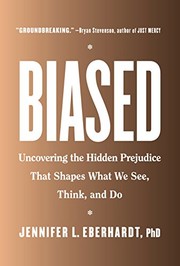
Others: PositiveFrom one of the world's leading experts on unconscious racial bias, a personal examination of one of the central controversies and culturally powerful issues of our time, and its influence on contemporary race relations and criminal justice. We do not have to be racist to be biased. With a perspective that is scientific, investigative, and personal, Jennifer L. Eberhardt offers a reasoned look into the effects of implicit racial bias, ranging from the subtle to the dramatic. Racial bias can lead to disparities in education, employment, housing, and the criminal justice system--and then those very disparities further reinforce the problem. In Biased, Eberhardt reveals how even when we are not aware of bias and genuinely wish to treat all people equally, ingrained stereotypes infect our visual perception, attention, memory, and behavior. Eberhardt's extensive work as a consultant to law enforcement, as well as a researcher with unprecedented access to data, including footage from police officers' body-worn cameras, informs every aspect of her book and makes it much more than a work of social psychology. Her research occurs not just in the laboratory but in police departments, courtrooms, prisons, boardrooms, and on the street. Interviews are interwoven with memories and stories from Eberhardt's own life and family. She offers practical suggestions for reform, and takes the reader behind the scenes to police departments implementing her suggestions. Refusing to shy away from the tragic consequences of prejudice, Eberhardt addresses how racial bias is not the fault of, or restricted to, a few "bad apples" in police departments or other institutions. We can see evidence of bias at all levels of society in media, education, and business practices. In Biased, Eberhardt reminds us that racial bias is a human problem--one all people can play a role in solving.
What made the match, strongest first
Loved itOkay, next favorite, I guess I would put 50 Ways to Protect Bookstores. I don't think there's anything wrong with this. I give it a four because I didn't feel particularly impressed by the writing in any way.