
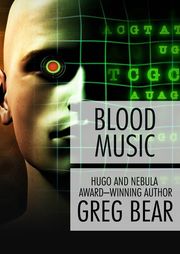
Having read the short story, the novel felt a little bit padded to me in places. As an example, the opening section focuses on Virgil and his lab work and he's getting canned and that was dealt with in a few short sentences in the original short story. Overall though, I enjoyed this look at the gray goo problem.

I review and rate the 9 science fiction books I read in August 2026
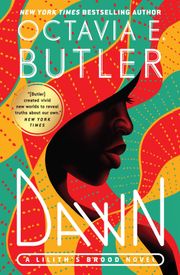
I really like the aliens of the piece and I think that Octavia Butler did a great job making them feel very different to us in numerous and interesting ways. Lilith was a good protagonist. I thought that the strange relationship between her and her Uloi minder was done very well indeed.
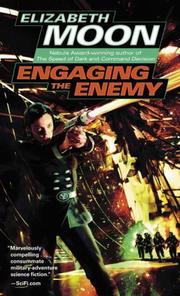
Book three, I must say, is a bit of a damp squib in comparison to what I remember anyway about the first two. Ky Vatta is still a pretty likable and capable character, but if I'm honest, nothing much of consequence happens for nearly all of the book. It's just pieces moving around the board.
I would say that it's a pretty complex book and there's an awful lot going on and often all at the same time. And I did mainly enjoy myself. I was a bit discombobulated by the ending which felt a little bit bolted on and in fact it reminded me of the final piece of Lord of the Rings where the gang go back to Hobbiton to find the fash in control.
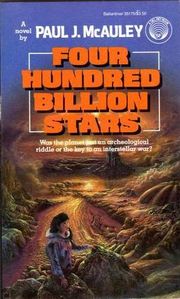
I thought that the setting for both books is great and I very much enjoyed that.
I found this to be a very fascinating and thorough assessment of those books and the themes within them and the links between them and of Banks's writing in general. In fact, I liked it so much that I went on to buy another similar book, also by Paul Kincaid, but this time focused on Brian Aldiss.
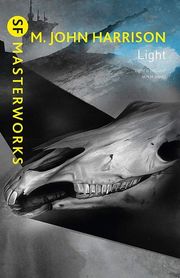
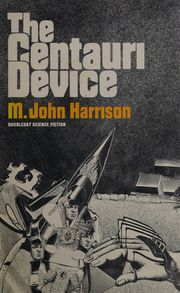
Most recently I read Light, which is a space opera of sorts, which I which I must say I liked much more than The Centauri Device, another space opera from earlier in his career.
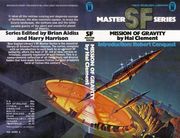
That said, I must say I didn't love Mission of Gravity. It wasn't I didn't find it anyway to be a highly engaging read. It was quite dry and very much of its time.
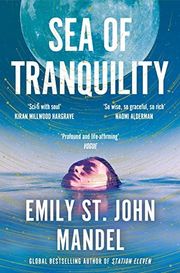
I thought that the character work in this book was done very well and I did enjoy Mandel's writing. Gaspery-Jacques, I thought, was a great character and I love how Mandel uses him as a foil for the story. The timey-wimey elements, and there certainly were timey-wimey elements, were handled deftly too, I thought, and proved to be highly satisfying as Gaspery-Jacques flouts the strict rules of time travel.
Like her earlier book, Station Eleven, I think that Sea of Tranquility is beautifully and cleverly written.
Most recently I read Light, which is a space opera of sorts, which I which I must say I liked much more than The Centauri Device, another space opera from earlier in his career.
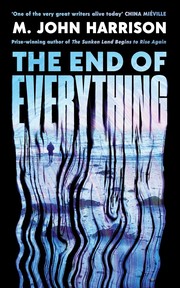
It's an odd book, a strange book, slippery, I think, and as I said, difficult to pin down or categorize, difficult to understand, for that matter. But having finished it and let it stew for some time, I think it's part diagnosis and part examination of our collective psyche and part a study of entropy and decline. Mainly for its sheer oddness and for the beauty of Harrison's prose, I give The End of Everything nine out of 10.
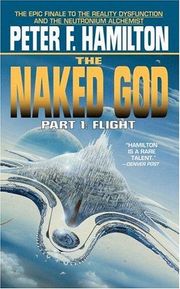
And if I'm honest, it did drag a little bit and I did think that the ending was a little bit of a cop-out. That's something I'd completely forgotten about in the years since my last reread. And if not a cop-out, then I did think it was a touch rushed, which is a bit ironic given the 3,000 page build-up.