Liked
one of the books we read that year was Beloved by Tony Morrison which is a heavy book but it's certainly a very good book. But my experience of it was just marred
Likedone of the books we read that year was Beloved by Tony Morrison which is a heavy book but it's certainly a very good book. But my experience of it was just marred
LikedI was kind of expecting it to be somewhere between Inherent Vice, which I thought was really good, and Bleeding Edge, which I thought was good, but not great.
LikedAnd I had some criticisms of I thought it was a very good book, but I had some criticisms of it.
LikedAnd The Count of Monte Cristo is a good example of a book that has deeper themes, but you could just read it as like an adventure novel.
LikedBut I actually thought the st- and this was completely unintentional by the author, but I thought the story was like a great case for like socialism because of the way they organized themselves when everything went to hell.
LikedAnd actually Europe Central is a great example of this because this book has so much research behind it. And so what I've been doing is I've actually been reading it Mhm. and then the next day or two, I have the audiobook going while I'm doing something else and I've been like, "Oh, I missed that. I missed this."
 Loved
I've said on the show before like if you were wanted to read everything that influenced Thomas Pynchon in the writing of that novel, you will never get around to reading that novel because so much went into it.
LikedWhich I have read. I did think it was good. There's a lot of useful information in there about how to, you know, approach reading novels or fiction at least with a more critical lens.
LovedI read Hamlet in high school. I don't didn't really have any you know, recollection or understanding of Hamlet that came immediately to mind while I was reading Infinite Jest. But in certain parts you know, they're a little bit more obvious than others, but I still deeply enjoyed the book and still got a lot out of it.
LikedI was kind of expecting it to be somewhere between Inherent Vice, which I thought was really good, and Bleeding Edge, which I thought was good, but not great.
LikedI think that it's a good example of like you can just read the story and like this guy just gets a job at a factory and some things go wrong and you know, it blows up and he ends up in the hospital or whatever. but there's obviously like a lot more commentary underneath that you can if you pay attention to you're like, I get it, you know.
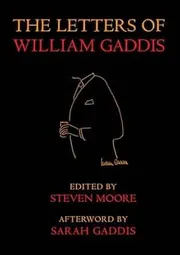
LikedWilliam Gaddis is another author I'm a big fan of and I've just keep his collected letters in my desk at work and it's kind of my office break book cuz if I don't read it for 3 days, then whatever.
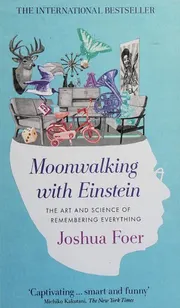
LovedI think we might have even talked about this last time you were here, but there's a great book called Moonwalking with Einstein by Joshua Foer and it's a non-fiction.
LikedI like it. it's it's about what I was expecting in terms of quality.
LovedAnd I just remember again, I was in a hospital bed, so I was already, you know, kind of in a vulnerable state, but like I remember have I had to put the book down. I was just like, "Wow." Hit me like a truck.
LikedI think you'd probably like The Man Who Was Thursday. It's kind of metafictional and weird
 Mixed
And you read T.S. Eliot, and The Waste Land is I've read The Waste Land. That's not easy to understand.
LovedI've heard a lot of comparisons to Faulkner. Which I know you haven't read but I mean I've read I read in high school but I like don't remember any of it. Yeah, I mean just the prose is incredible.