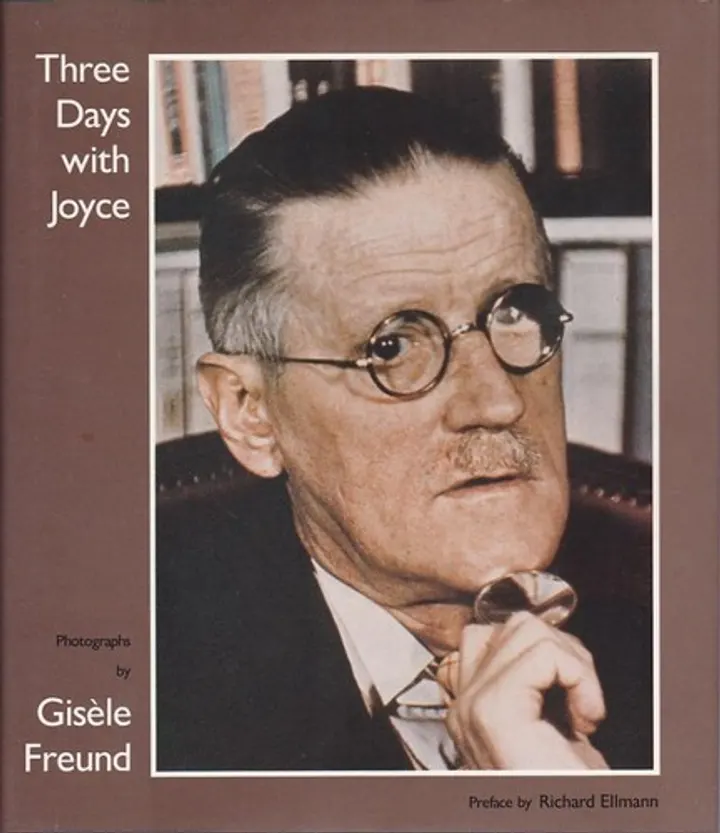

Three Days with Joyce
Three Days with JoyceGisèle Freund

Three Days with Joyce (1968)

Gisèle Freund

Series unknown

Creators: Loved

Joyce's lauded biographer (James Joyce), Ellmann, professor at Oxford, provides a moving, informative introduction to Freund's landmark book. The photographer's text and pictures create a rare feeling of intimacy with the author of Ulysses and Finnegans Wake when he was living in Paris during the late 1930s. Joyce is seen conferring with his family's best friends, Eugene and Marta Jolas (they published sections of Finnegans Wake in their review, Transition); with Sylvia Beach and Adrienne Monnier (who published Ulysses) et al. But the most eloquent photos epitomize Joyce's "iron affection" for his wife Nora, his daughter, his son and daughter-in-law and their child. Relaxing in their company, the great author displays the Irish wit usually hidden by his shyness or insecurity. In the closeups that include a striking color shot, one sees the artist as an older man, marked by worry over reactions to his innovative novels, by heartbreak over the mental illness of his beloved young daughter Lucia, a myriad of emotions behind the familiar, peering eyes. Copyright 1985 Reed Business Information, Inc.

ISBN:
9780892550968
Length:
70 pages

Lists: …

Reviews1

Similar books

Ernest HemingwayA Moveable Feast is a 1964 memoir belles-lettres by American author Ernest Hemingway about his years as a struggling expat journalist and writer in Paris during the 1920s. It was published posthumously.[1] The book details Hemingway's first marriage to Hadley Richardson and his associations with other cultural figures of the Lost Generation in Interwar France. The memoir consists of various personal accounts by Hemingway and involves many notable figures of the time, such as Sylvia Beach, Hilaire Belloc, Bror von Blixen-Finecke, Aleister Crowley, John Dos Passos, F. Scott and Zelda Fitzgerald, Ford Madox Ford, James Joyce, Wyndham Lewis, Pascin, Ezra Pound, Evan Shipman, Gertrude Stein, Alice B. Toklas, and Hermann von Wedderkop. The work also references the addresses of specific locations such as bars, cafes, and hotels, many of which can still be found in Paris today. Ernest Hemingway's suicide in July 1961 delayed the publication of the book due to copyright issues and several edits which were made to the final draft. The memoir was published posthumously in 1964, three years after Hemingway's death, by his fourth wife and widow, Mary Hemingway, based upon his original manuscripts and notes. An edition altered and revised by his grandson, Seán Hemingway, was published in 2009.

Why?

What made the match, strongest first

  • Loved by creators38 reviews
  • Similar descriptions54%
  • Bren Booth-Jones | Folio & Tome loved both46%