
 Mixed
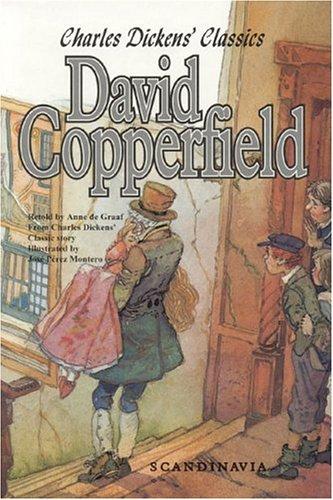
I get quite frustrated with the love stories in DAV C. I did enjoy it on this read but I definitely didn't enjoy as much as I have done previously
Review 1 of 4
 Others: Mostly negative
It adds to the charm of this book to remember that it is virtually a picture of the author's own boyhood. It is an excellent picture of the life of a struggling English youth in the middle of the last century. The pictures of Canterbury and London are true pictures and through these pages walk one of Dickens' wonderful processions of characters, quaint and humorous, villainous and tragic. Nobody cares for Dickens heroines, least of all for Dora, but take it all in al, l this book is enjoyed by young people more than any other of the great novelist. After having read this you will wish to read Nicholas Nickleby for its mingling of pathos and humor, Martin Chuzzlewit for its pictures of American life as seen through English eyes, and Pickwick Papers for its crude but boisterous humor.
Genres: romance, historical fiction, young adult, classics
Lists: …
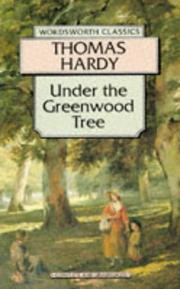
Thomas Hardy
1872 · 221 pages · 1 review
Others: MixedUnder the Greenwood Tree is the story of the romantic entanglement between church musician, Dick Dewey, and the attractive new school mistress, Fancy Day. A pleasant romantic tale set in the Victorian era, Under the Greenwood Tree is one of Thomas Hardy's most gentle and pastoral novels.
What made the match, strongest first
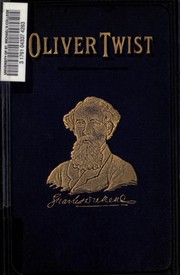
Charles Dickens
1800 · 434 pages · 3 reviews
Others: NegativeOliver Twist; or, The Parish Boy's Progress, is the second novel by English author Charles Dickens. It was originally published as a serial from 1837 to 1839, and as a three-volume book in 1838. The story follows the titular orphan, who, after being raised in a workhouse, escapes to London, where he meets a gang of juvenile pickpockets led by the elderly criminal Fagin, discovers the secrets of his parentage, and reconnects with his remaining family. Oliver Twist unromantically portrays the sordid lives of criminals, and exposes the cruel treatment of the many orphans in London in the mid-19th century.[2] The alternative title, The Parish Boy's Progress, alludes to Bunyan's The Pilgrim's Progress, as well as the 18th-century caricature series by painter William Hogarth, A Rake's Progress and A Harlot's Progress. In an early example of the social novel, Dickens satirises child labour, domestic violence, the recruitment of children as criminals, and the presence of street children. The novel may have been inspired by the story of Robert Blincoe, an orphan whose account of working as a child labourer in a cotton mill was widely read in the 1830s. It is likely that Dickens's own experiences as a youth contributed as well, considering he spent two years of his life in the workhouse at the age of 12 and subsequently, missed out on some of his education.
What made the match, strongest first
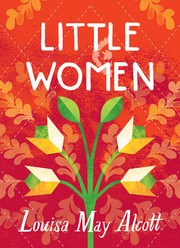
Louisa May Alcott
1848 · 469 pages · 12 reviews
 Others: Overwhelmingly positive
Louisa May Alcotts classic novel, set during the Civil War, has always captivated even the most reluctant readers. Little girls, especially, love following the adventures of the four March sisters--Meg, Beth, Amy, and most of all, the tomboy Jo--as they experience the joys and disappointments, tragedies and triumphs, of growing up. This simpler version captures all the charm and warmth of the original.
What made the match, strongest first
Charles Dickens
1861 · 484 pages · 9 reviews
 Others: Leaning positive
Great Expectations is the thirteenth novel by Charles Dickens and his penultimate completed novel. It depicts the education of an orphan nicknamed Pip (the book is a bildungsroman; a coming-of-age story). It is Dickens' second novel, after David Copperfield, to be fully narrated in the first person. The novel was first published as a serial in Dickens's weekly periodical All the Year Round, from 1 December 1860 to August 1861. In October 1861, Chapman and Hall published the novel in three volumes. The novel is set in Kent and London in the early to mid-19th century and contains some of Dickens's most celebrated scenes, starting in a graveyard, where the young Pip is accosted by the escaped convict Abel Magwitch. Great Expectations is full of extreme imagery – poverty, prison ships and chains, and fights to the death – and has a colourful cast of characters who have entered popular culture. These include the eccentric Miss Havisham, the beautiful but cold Estella, and Joe, the unsophisticated and kind blacksmith. Dickens's themes include wealth and poverty, love and rejection, and the eventual triumph of good over evil. Great Expectations, which is popular both with readers and literary critics, has been translated into many languages and adapted numerous times into various media.
What made the match, strongest first
F. Scott Fitzgerald
1920 · 182 pages · 13 reviews
Others: Mostly positiveHere is a novel, glamorous, ironical, compassionate – a marvelous fusion into unity of the curious incongruities of the life of the period – which reveals a hero like no other – one who could live at no other time and in no other place. But he will live as a character, we surmise, as long as the memory of any reader lasts. "There was something gorgeous about him, some heightened sensitivity to the promises of life.... It was an extraordinary gift for hope, a romantic readiness such as I have never found in any other person and which it is not likely I shall ever find again." It is the story of this Jay Gatsby who came so mysteriously to West Egg, of his sumptuous entertainments, and of his love for Daisy Buchanan – a story that ranges from pure lyrical beauty to sheer brutal realism, and is infused with a sense of the strangeness of human circumstance in a heedless universe. It is a magical, living book, blended of irony, romance, and mysticism. --first edition jacket
What made the match, strongest first
Emily Brontë
1846 · 312 pages · 32 reviews
Others: Mostly positiveWuthering Heights is an 1847 novel by Emily Brontë, initially published under the pseudonym Ellis Bell. It concerns two families of the landed gentry living on the West Yorkshire moors, the Earnshaws and the Lintons, and their turbulent relationships with Earnshaw's adopted son, Heathcliff. The novel was influenced by Romanticism and Gothic fiction.
What made the match, strongest first
MixedI get quite frustrated with the love stories in DAV C. I did enjoy it on this read but I definitely didn't enjoy as much as I have done previously
Not a fanthe other ones that i've read are great expectations david copperfield and all the old curiosity shop which i did not like