 Mixed
A man has the power to see a year into the future. Will he save humanity or will he [ __ ] everything up? And did Ursula Leguin write a better version of this with the lathe of heaven? Yes.
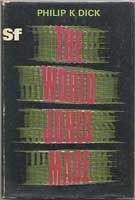
Others: Mixed The World Jones Made is a 1956 science fiction novel by American writer Philip K. Dick, examining notions of precognition, humanity, and politics. It was first published by Ace Books as one half of Ace Double D-150, bound dos-à-dos with Agent of the Unknown by Margaret St. Clair. The World Jones Made is set in the year 2002 AD. On a then-future post-apocalyptic Earth, there was a devastating conflict that involved the use of atomic weapons. Many American cities were targeted, and the People's Republic of China (and Soviet Union) also collapsed, leading to the imposition of a Federal World Government (Fedgov). In this particular dystopia, Relativism (a political theory having little to do with Einstein) emerged as the governing political orthodoxy. Relativism is said to be a moral and ethical philosophy that states everyone is free to believe what they wish, as long as they don't make anyone else try to follow that principle. Relativism has become established law after the destructiveness of the war unleashed by clashing ideologies. (However, dissidents from that orthodoxy do end up in forced labor camps). This sacrosanct principle is challenged by a man named Floyd Jones, whose assertions about the future prove correct. Relativism enables legal consumption of drugs like heroin and marijuana, as well as watching live sex shows with hermaphrodite human mutants. Due to the mutagenic effects of radiation from wartime nuclear exchanges, mutants earn their living within the entertainment industry, although one group has been subjected to deliberate genetic engineering, which later enables them to settle (an inhabitable) Venus. The novel addresses questions of Jones's agenda and trustworthiness as well as the decidedly ambiguous benefits of individual precognition.
Genres: science fiction, literary fiction
Lists: …
Philip K. Dick
1957 · 144 pages · 1 review
 Others: Positive
The Cosmic Puppets was published in 1957 in an Ace Double edition, back to back with The Sargasso of Space of Andrew North. This underrated novel of Philip K. Dick, which is more fantasy than SF, was kept out of the publishing loop for more than 25 years between its original publication in 1957 and the first re-publication in 1983. The Cosmic puppets, written in 1953, was first published as a novella under the title "A Glass of Darkness" in the 12/1956 issue of Satellite before it was expanded into a novel and published as a book. Yielding to a compulsion he can't explain, Ted Barton interrupts his vacation in order to visit the town of his birth, Millgate, Virginia. But upon entering the sleepy, isolated little hamlet, Ted is distraught to find that the place bears no resemblance to the one he left behind--and never did. He also discovers that in this Millgate Ted Barton died of scarlet fever when he was nine years old. Perhaps even more troubling is the fact that it is literally impossible to escape. Unable to leave, Ted struggles to find the reason for such disturbing incongruities, but before long, he finds himself in the midst of a struggle between good and evil that stretches far beyond the confines of the valley.Winner of both the Hugo and John W. Campbell awards for best novel, widely regarded as the premiere science fiction writer of his day, and the object of cult-like adoration from his legions of fans, Philip K. Dick has come to be seen in a literary light that defies classification in much the same way as Borges and Calvino. With breathtaking insight, he utilizes vividly unfamiliar worlds to evoke the hauntingly and hilariously familiar in our society and ourselves.From the Trade Paperback edition.
What made the match, strongest first
Philip K. Dick
1970 · 210 pages · 2 reviews
Others: PositiveFor all the strange worlds borne of his vast and vivid imagination, Philip K. Dick was largely concerned with humanity's most achingly familiar heartaches and struggles. In Our Friends From Frolix 8, he clashes private dreams against public battles in a fast-paced and provocative tale that ultimately addresses our salvation both as individuals and a whole.Nick Appleton is a menial laborer whose life is a series of endless frustrations. Willis Gram is the despotic oligarch of a planet ruled by big-brained elites. When they both fall in love with Charlotte Boyer, a feisty black marketer of revolutionary propaganda, Nick seems destined for doom. But everything takes a decidedly unpredictable turn when the revolution's leader, Thors Provoni, returns from ten years of intergalactic hiding with a ninety-ton protoplasmic slime that is bent on creating a new world order. Winner of both the Hugo and John W. Campbell awards for best novel, widely regarded as the premiere science fiction writer of his day, and the object of cult-like adoration from his legions of fans, Philip K. Dick has come to be seen in a literary light that defies classification in much the same way as Borges and Calvino. With breathtaking insight, he utilizes vividly unfamiliar worlds to evoke the hauntingly and hilariously familiar in our society and ourselves.From the Trade Paperback edition.
What made the match, strongest first
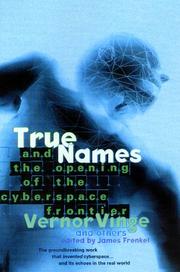
Vernor Vinge
1984 · 314 pages · 1 review
Others: Positive"A marvellous mixture of hard-science SF and sword-and-sorcery imagery.... You wish the author were present so you could applaud." - Analog
What made the match, strongest first
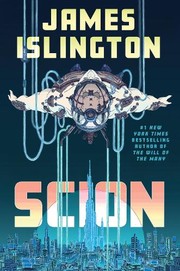
James Islington
2026 · 230 pages · 2 reviews
Others: PositiveMy job, when you think about it, isn't so different from a lot of people's. The more old-fashioned crowd do still get hung up on the 'killing people' part of it, I guess, but that's a them problem: it's been perfectly legal to take out lifers for ages. Besides, once ultrawealthy morons realised they had a way to live forever - limited resources be damned - there was only ever going to be one genuinely practical deterrent. So, sure, I have to deal with a tonne of boring planning. Inconvenient hours. Some pretty awkward face-to-face interactions. And like most of us, I'm really only clocking in to try and crawl out from beneath my debts. But someone's got to do it. Luckily, my genetic compatibilities make me really, really good at doing it. Still. This next job . . . I don't know. It's something I haven't had to deal with in years. Kind of the opposite of my regular duties. Strange, that it got thrown my way. I'm sure it'll all go totally fine though.
What made the match, strongest first
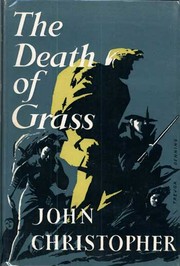
John Christopher
1956 · 222 pages · 6 reviews
 Others: Overwhelmingly positive
At first the virus wiping out grass and crops is of little concern to John Custance. It has decimated Asia, causing mass starvation and riots, but Europe is safe and a counter-virus is expected any day. Except, it turns out, the governments have been lying to their people. When the deadly disease hits Britain, society starts to descend into barbarism.
What made the match, strongest first
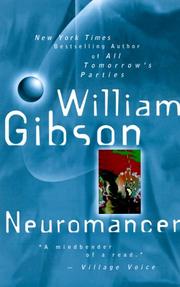
William Gibson
1984 · 288 pages · 13 reviews
Others: Mostly positiveThe first of William Gibson's Sprawl trilogy, Neuromancer is the classic cyberpunk novel. The winner of the Hugo, Nebula, and Philip K. Dick Awards, Neuromancer was the first fully-realized glimpse of humankind’s digital future — a shocking vision that has challenged our assumptions about our technology and ourselves, reinvented the way we speak and think, and forever altered the landscape of our imaginations. Henry Dorsett Case was the sharpest data-thief in the business, until vengeful former employees crippled his nervous system. But now a new and very mysterious employer recruits him for a last-chance run. The target: an unthinkably powerful artificial intelligence orbiting Earth in service of the sinister Tessier-Ashpool business clan. With a dead man riding shotgun and Molly, mirror-eyed street-samurai, to watch his back, Case embarks on an adventure that ups the ante on an entire genre of fiction. Hotwired to the leading edges of art and technology, Neuromancer is a cyberpunk, science fiction masterpiece — a classic that ranks with 1984 and Brave New World as one of the twentieth century’s most potent visions of the future.
What made the match, strongest first
MixedA man has the power to see a year into the future. Will he save humanity or will he [ __ ] everything up? And did Ursula Leguin write a better version of this with the lathe of heaven? Yes.