
 Loved it
This is a book that I've seen take a savage beating from other reviewers, but it's one that I'm particularly fond of.
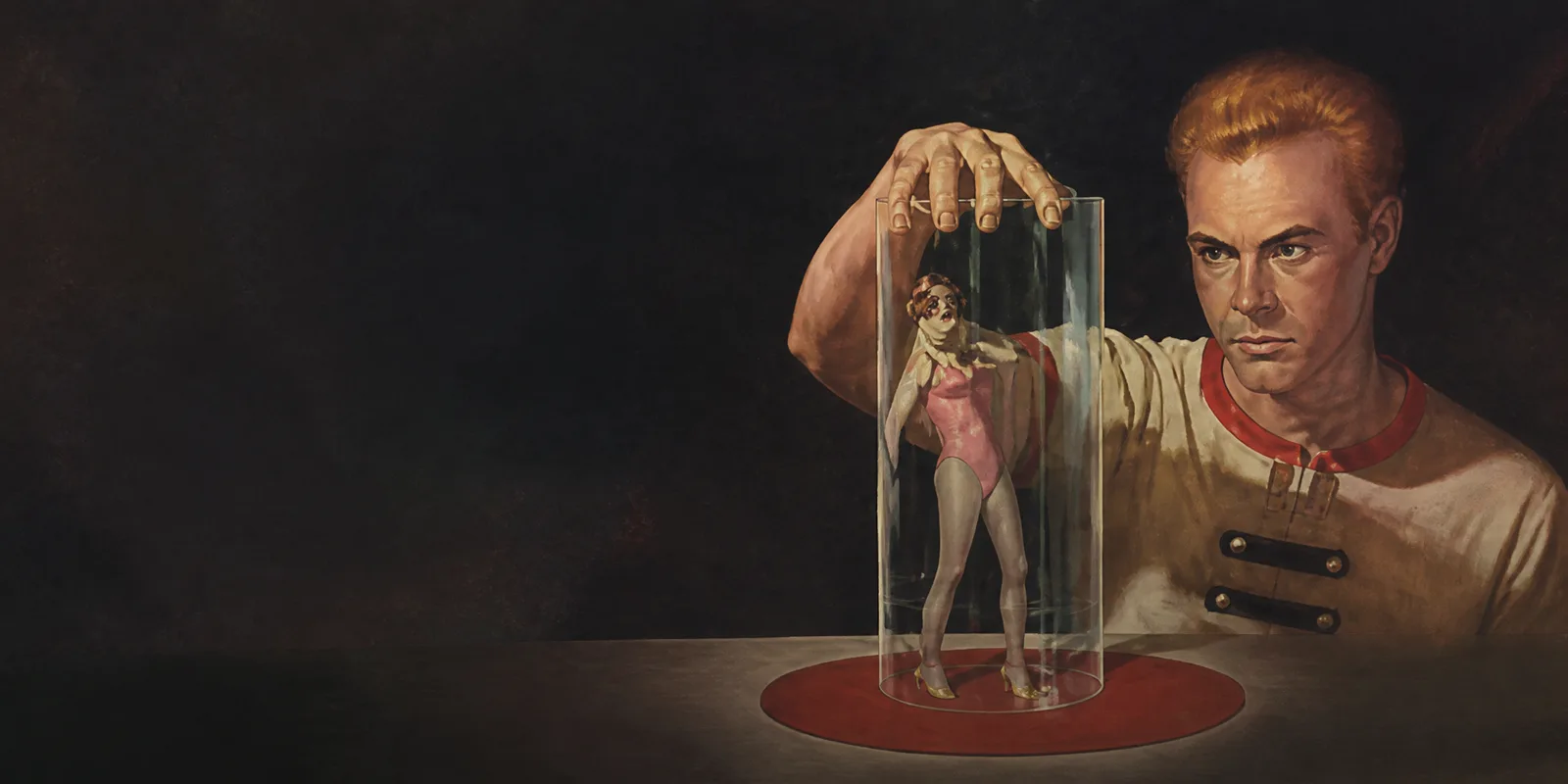
Others: Positive The Cosmic Puppets was published in 1957 in an Ace Double edition, back to back with The Sargasso of Space of Andrew North. This underrated novel of Philip K. Dick, which is more fantasy than SF, was kept out of the publishing loop for more than 25 years between its original publication in 1957 and the first re-publication in 1983. The Cosmic puppets, written in 1953, was first published as a novella under the title "A Glass of Darkness" in the 12/1956 issue of Satellite before it was expanded into a novel and published as a book. Yielding to a compulsion he can't explain, Ted Barton interrupts his vacation in order to visit the town of his birth, Millgate, Virginia. But upon entering the sleepy, isolated little hamlet, Ted is distraught to find that the place bears no resemblance to the one he left behind--and never did. He also discovers that in this Millgate Ted Barton died of scarlet fever when he was nine years old. Perhaps even more troubling is the fact that it is literally impossible to escape. Unable to leave, Ted struggles to find the reason for such disturbing incongruities, but before long, he finds himself in the midst of a struggle between good and evil that stretches far beyond the confines of the valley.Winner of both the Hugo and John W. Campbell awards for best novel, widely regarded as the premiere science fiction writer of his day, and the object of cult-like adoration from his legions of fans, Philip K. Dick has come to be seen in a literary light that defies classification in much the same way as Borges and Calvino. With breathtaking insight, he utilizes vividly unfamiliar worlds to evoke the hauntingly and hilariously familiar in our society and ourselves.From the Trade Paperback edition.
Genres: science fiction, literary fiction
Lists: …
Philip K. Dick
1970 · 210 pages · 2 reviews
Others: PositiveFor all the strange worlds borne of his vast and vivid imagination, Philip K. Dick was largely concerned with humanity's most achingly familiar heartaches and struggles. In Our Friends From Frolix 8, he clashes private dreams against public battles in a fast-paced and provocative tale that ultimately addresses our salvation both as individuals and a whole.Nick Appleton is a menial laborer whose life is a series of endless frustrations. Willis Gram is the despotic oligarch of a planet ruled by big-brained elites. When they both fall in love with Charlotte Boyer, a feisty black marketer of revolutionary propaganda, Nick seems destined for doom. But everything takes a decidedly unpredictable turn when the revolution's leader, Thors Provoni, returns from ten years of intergalactic hiding with a ninety-ton protoplasmic slime that is bent on creating a new world order. Winner of both the Hugo and John W. Campbell awards for best novel, widely regarded as the premiere science fiction writer of his day, and the object of cult-like adoration from his legions of fans, Philip K. Dick has come to be seen in a literary light that defies classification in much the same way as Borges and Calvino. With breathtaking insight, he utilizes vividly unfamiliar worlds to evoke the hauntingly and hilariously familiar in our society and ourselves.From the Trade Paperback edition.
What made the match, strongest first
Philip K. Dick
1957 · 255 pages · 2 reviews
Others: PositiveEye in the Sky is a science fiction novel by American writer Philip K. Dick, originally published in 1957. After an accident at the Belmont Bevatron, eight people are forced into several different alternate universes. These ersatz universes are later revealed to be solipsistic manifestations of each individual's innermost fears and prejudices, bringing the story in line with Dick's penchant for subjective realities. As well as his future discussions of theology and fears about McCarthy-era authoritarianism, the novel skewers several human foibles. The title refers to the eye of God, who appears as a character in the universe of religious fundamentalist Arthur Sylvester.
What made the match, strongest first
Tanith Lee
1979 · 159 pages · 7 reviews
 Others: Overwhelmingly positive
The world called Indigo turned upside down for Magdala Cled one unexpected morning. From being that world's only genetic misfit, the shunned outcast of an otherwise ideal society. she became the focus of attention for mighty forces. Once they had installed her in the midst of the Electric Forest, with its weird trees and its super-luxurious private home, Magdala awoke to the potentials which were opening up all about her. And to realize also the peril that now seemed poised above Indigo... which only she, the hated one, could possibly circumvent. An extraordinary incursion into hard-core science fiction by the same brilliant and colorful talent that produced THE BIRTHGRAVE and DEATH'S MASTER.
What made the match, strongest first
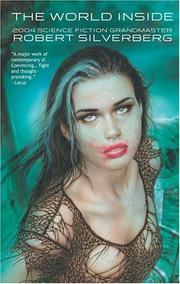
Robert Silverberg
1971 · 187 pages · 5 reviews
Others: PositiveIn 2381, the highly regulated life at the giant building known as Urbmon 116 may seem ideal, but some residents are experiencing dangerous dissatisfaction.
What made the match, strongest first
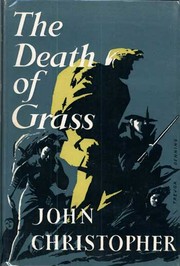
John Christopher
1956 · 222 pages · 6 reviews
Others: Overwhelmingly positiveAt first the virus wiping out grass and crops is of little concern to John Custance. It has decimated Asia, causing mass starvation and riots, but Europe is safe and a counter-virus is expected any day. Except, it turns out, the governments have been lying to their people. When the deadly disease hits Britain, society starts to descend into barbarism.
What made the match, strongest first
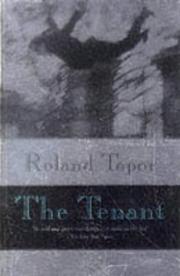
Roland Topor
1966 · 189 pages · 0 reviews
The Tenant chronicles a harrowing, fascinating descent into madness as the pathologically alienated Trelkovsky is subsumed into Simone Choule, an enigmatic suicide whose presence saturates his new apartment. More than a tale of possession, the novel probes disturbing depths of guilt, paranoia, and sexual obsession with an unsparing detachment.
What made the match, strongest first
Loved itThis is a book that I've seen take a savage beating from other reviewers, but it's one that I'm particularly fond of.