The Turn of the Screw
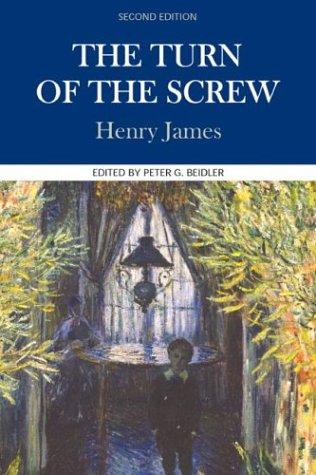
The Turn of the ScrewHenry James
Buy on Amazon

The Turn of the Screw (1898)

Henry James

Others: Positive

The governess of two enigmatic children fears their souls are in danger from the ghosts of the previous governess and her sinister lover.

ISBN:
9780393420371
Length:
160 pages

Genres: fantasy, romance, horror

Lists: …

Similar books

1 of 6
  • The King in Yellow

    Robert W. Chambers

    1895 · 229 pages · 1 review

    Others: Positive

    An important early classic of fantasy/sci-fi. [Main story:] The ill effects of a soul-destroying play, to read which brings doom. A discovery that changes living flesh to stone. The mad adherents of a cult of evil powers from beyond. A lost traveler is suddenly 400 years in the past. Great writing; powerful emotions. Chambers wrote mainly conventional stuff, but not here.

    Why?

    What made the match, strongest first

    On 5+ of the same lists
    59%
    Also fantasy and horror
    41%
    Personalize your recommendations
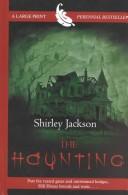
  • The Haunting of Hill House

    Shirley Jackson

    1959 · 246 pages · 13 reviews

    Others: Overwhelmingly positive

    First published in 1959, Shirley Jackson's The Haunting of Hill House has been hailed as a perfect work of unnerving terror. It is the story of four seekers who arrive at a notoriously unfriendly pile called Hill House: Dr. Montague, an occult scholar looking for solid evidence of a "haunting"; Theodora, his lighthearted assistant; Eleanor, a friendless, fragile young woman well acquainted with poltergeists; and Luke, the future heir of Hill House. At first, their stay seems destined to be merely a spooky encounter with inexplicable phenomena. But Hill House is gathering its powers— and soon, it will choose one of them to make its own.

    Why?

    What made the match, strongest first

    On 5+ of the same lists
    69%
    Also horror
    21%
    Better Than Food loved both
    10%
    Personalize your recommendations
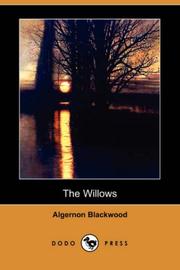
  • The Willows

    Algernon Blackwood

    2002 · 76 pages · 1 review

    Others: Positive

    After leaving Vienna, and long before you come to Budapest, the Danube enters a region of singular loneliness and desolation, where its waters spread away on all sides regardless of a main channel, and the country becomes a swamp for miles upon miles, covered by a vast sea of low willow-bushes. On the big maps this deserted area is painted in a fluffy blue, growing fainter in color as it leaves the banks, and across it may be seen in large straggling letters the word Sumpfe, meaning marshes. In high flood this great acreage of sand, shingle-beds, and willow-grown islands is almost topped by the water, but in normal seasons the bushes bend and rustle in the free winds, showing their silver leaves to the sunshine in an ever-moving plain of bewildering beauty. These willows never attain to the dignity of trees; they have no rigid trunks; they remain humble bushes, with rounded tops and soft outline, swaying on slender stems that answer to the least pressure of the wind; supple as grasses, and so continually shifting that they somehow give the impression that the entire plain is moving and alive. For the wind sends waves rising and falling over the whole surface, waves of leaves instead of waves of water, green swells like the sea, too, until the branches turn and lift, and then silvery white as their underside turns to the sun. En Los sauces, nos encontramos dos excursionistas que bajan por el cauce del Danubio en lo que iba a ser un viaje de placer. A una determinada altura del río donde se forma una isla artificial deciden acampar y pasar la noche para no adentrarse más en una zona especialmente complicada. La estancia en la isleta se hace cada vez más opresiva; en esa zona donde los sauces dominan el horizonte, ambos sienten una presencia terrible y no humana que amenaza su cordura y quizá algo más. Blackwood apuesta por una naturaleza inhóspita, salvaje, que va más allá de lo puramente animista. Los personajes intuyen en su entorno una fuerza que va más allá de su comprensión, que se han adentrado en un territorio que no les pertenece, que desdibuja la frontera entre lo humano y lo inhumano. Como cita Llopis en su Historia natural en los cuentos de miedo, «El meollo de toda la obra de ficción de Blackwood es la confrontación del hombre moderno de la época postracionalista con aterradoras fuerzas naturales o sobrenaturales»”. Los sauces es un relato corto (apenas unas setenta páginas) en las que encontramos las cotas más altas de Blackwood. Sin apenas usar el diálogo, el narrador interno del relato nos va introduciendo poco a poco en ese ambiente que se va enrareciendo alrededor de los dos personajes. Blackwood es un maestro a la hora de que un escenario aparentemente tan idílico como la campiña centroeuropea se convierta paulatinamente en un lugar ajeno a cualquier noción humana. Los personajes son bamboleados por esta incertidumbre, y por la malignidad de esa presencia que tan sólo intuyen. La edición de Hermida es excelente. No sólo por la excelente traducción de Óscar Mariscal, que también redacta una breve noticia sobre el autor, sino por los textos, la mayor parte de ellos inéditos en español, que se incluyen de H. P. Lovecraft, extraídos de su correspondencia, que permanece todavía, inexplicablemente, sin traducción a nuestro idioma. Los sauces es, quizá, la mejor oportunidad de conocer a este autor formidable que habría de tener una importancia capital en la literatura de género posterior.
    Why?

    What made the match, strongest first

    On 5+ of the same lists
    57%
    Also fantasy and horror
    32%
    Better Than Food loved both
    11%
    Personalize your recommendations
  • The Picture of Dorian Gray

    Oscar Wilde

    1890 · 250 pages · 20 reviews

    Others: Overwhelmingly positive
    The Picture of Dorian Gray is a philosophical novel by Irish writer Oscar Wilde. A shorter novella-length version was published in the July 1890 issue of the American periodical Lippincott’s Monthly Magazine. The novel-length version was published in April 1891. (Source: Wikipedia)

    Why?

    What made the match, strongest first

    On 5+ of the same lists
    68%
    Also fantasy and horror
    20%
    Better Than Food loved both
    12%
    Personalize your recommendations
  • A Christmas Carol

    Charles Dickens

    1843 · 114 pages · 7 reviews

    Others: Overwhelmingly positive

    A reprinting of the 1843 first edition, complete with the original illustrations, is supplemented by over eighty related sketches and annotations on and analyses of the text and historical notes on the writing of "The Christmas Carol."

    Why?

    What made the match, strongest first

    On 5+ of the same lists
    73%
    Also fantasy and horror
    27%
    Personalize your recommendations
  • Carmilla

    Sheridan Le Fanu

    1871 · 86 pages · 3 reviews

    Others: Mixed

    First published as a serial in The Dark Blue (1871–72), Carmilla is narrated by a young woman preyed upon by a female vampire named Carmilla, later revealed to be Mircalla, Countess Karnstein (Carmilla is an anagram of Mircalla). The character is a prototypical example of the lesbian vampire, expressing romantic desires toward the protagonist. The novella notably never acknowledges homosexuality as an antagonistic trait, leaving it subtle and morally ambiguous. The story is often anthologised, and has been adapted many times in film and other media.

    Why?

    What made the match, strongest first

    On 5+ of the same lists
    63%
    Also fantasy and horror
    37%
    Personalize your recommendations

Reviews1

Loved it

the turn of the screw by Henry James a brilliantly written masterfully understated short Gothic novel it's a story of a govern who is hired to take care of two children in a large estate that appears to be haunted by a couple of the previous inhabitants the question is whether or not the governess herself is a reliable narrator what's really going on you decide brilliant short novel spectacular writing I mean excellent

Review 1 of 2