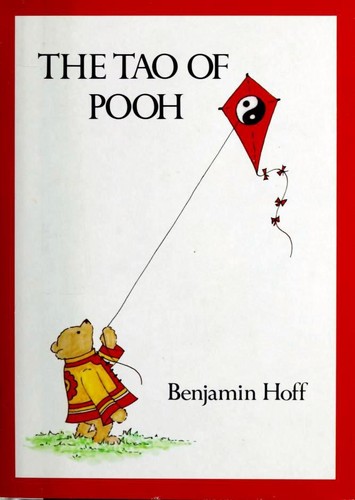
The Tao of Pooh
The Tao of PoohBenjamin Hoff
Buy on Amazon

The Tao of Pooh (1982)

Benjamin Hoff

Others: Positive

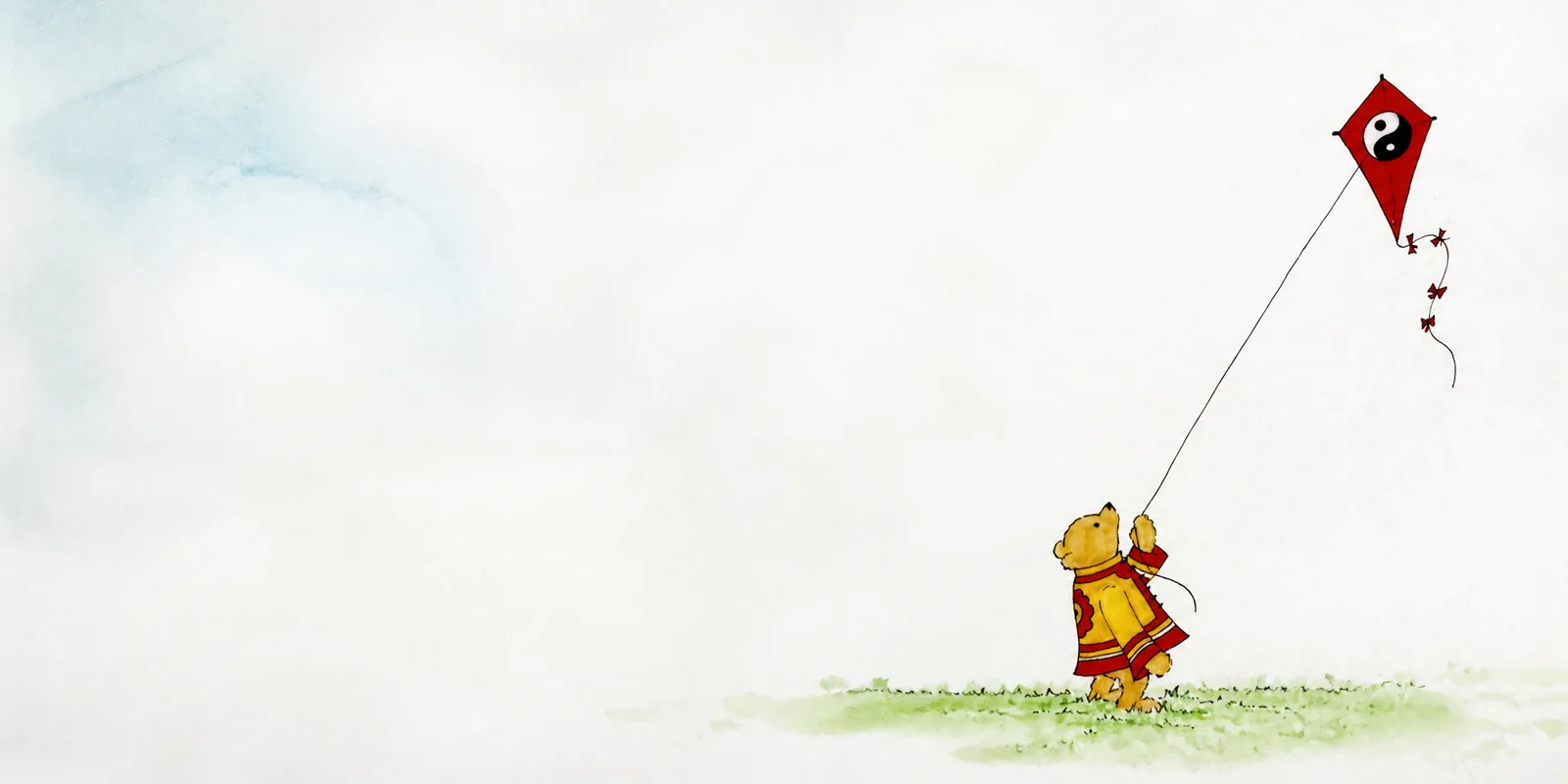
The how of Pooh? The Tao of who? The Tao of Pooh!?! Yes, Winnie-the-Pooh has a certain Way about him, a way of doing things that has made him the world's most beloved bear. In these pages Benjamin Hoff shows that Pooh's Way is amazingly consistent with the principles of living envisioned long ago by the Chinese founders of Taoism. The author's explanation of Taoism is through Pooh, and Pooh through Taoism, shows that this is not simply an ancient and remote philosophy but something you can use, here and now. And what is Taoism? It's really very simple. It calls for living without preconceived ideas about how life should be lived--but it's not a preconception of how life--It's... Well, you'd do better to read this book, and listen to Pooh, if you really want to find out. --front flap

ISBN:
9781559948289
Length:
158 pages

Genres: classics, nonfiction

Lists: …

Similar books

1 of 6
  • Besom, Stang & Sword

    Christopher Orapello

    2018 · 320 pages · 1 review

    Others: Positive

    "The book returns the Craft to its primordial forces—animism, baneful plants, folk magic, ecstasy, and hedge-witchery—without gatekeeping, armchair pseudo-academia, or pretension.”—Mat Auryn, author of Psychic Witch Regional traditional witchcraft is an animistic form of witchcraft that moves away from the religious harvest festivals and fertility-minded practices associated with the more common Wiccan form of witchcraft. Very few of us in this age are farmers or dependent upon crops and harvests. Regional traditional witchcraft teaches people to find their craft in their own backyards, in the uncultivated land or urban cityscape alike, and in their ancestors rather than in ancient foreign deities or in a neopagan-styled religious form of witchcraft. It's not about where you're from but where you are. The material in this book is adaptable to any region in which the practitioner lives. Although the lack of deity worship and holy days is a significant part of the authors' nonreligious approach, this book presents a complete system of practice utilizing ritual, chant, trance, the six paths of witchcraft as defined and explained by the text, and the practices associated with traditional witchcraft.

    Why?

    What made the match, strongest first

    On the same reading list
    61%
    Also nonfiction
    36%
    Similar descriptions
    3%
    Personalize your recommendations
  • A People's History of the United States

    Howard Zinn

    1980 · 729 pages · 1 review

    Others: Mixed

    Known for its lively, clear prose as well as its scholarly research, A People's History of the United States is the only volume to tell America's story from the point of view of -- and in the words of -- America's women, factory workers, African Americans, Native Americans, working poor, and immigrant laborers.

    Why?

    What made the match, strongest first

    Also classics and nonfiction
    73%
    On 2 of the same lists
    27%
    Personalize your recommendations
  • The Canon

    Natalie Angier

    2006 · 304 pages · 1 review

    Others: Mixed

    Award-winning science journalist Angier takes us on a "guided twirligig through the scientific canon." She draws on conversations with hundreds of the world's top scientists, and her own work as a reporter for the New York Times, to create an entertaining guide to scientific literacy--a joyride through the major scientific disciplines: physics, chemistry, biology, geology, and astronomy. It's for anyone who wants to understand the great issues of our time--from stem cells and bird flu to evolution and global warming. It's also one of those rare books that reignites our childhood delight in figuring out how things work: we learn what's actually happening when our ice cream melts or our coffee gets cold, what our liver cells do when we eat a caramel, how the horse shows evolution at work, and that we really are all made of stardust.--From publisher description.

    Why?

    What made the match, strongest first

    On the same reading list
    47%
    Also nonfiction
    40%
    Similar descriptions
    13%
    Personalize your recommendations
  • Meditations

    Marcus Aurelius

    1626 · 206 pages · 0 reviews

    Meditations is a collection of personal reflections and notes by the Roman Emperor Marcus Aurelius (reigned 161 to 180 AD), offering a profound look into the philosophy of Stoicism. It was never intended for publication, making it a raw and intimate self-help manual for the emperor during his campaigns and rule. The central theme revolves around living a good, rational, and virtuous life in harmony with nature and the cosmos. Aurelius continually reminds himself that everything in the universe is constantly changing and fleeting, urging the reader to accept the impermanence of life and the inevitability of death. He stresses the importance of focusing on what one can control—namely, their own thoughts and actions—and accepting everything else with tranquility, including the behavior of others and external events. This inner fortress of the mind is the only true source of peace. The book emphasizes duty and service to the greater community. As a rational being, one's purpose is to act justly and benevolently towards fellow humans. Aurelius encourages practicing humility, rising above petty insults, and viewing difficulties as opportunities for growth and the exercise of virtue. He advocates for an objective, detached perspective on all things, stripping away subjective judgment to see the world as it truly is. Ultimately, Meditations is a powerful, timeless guide on how to face adversity, manage emotions, maintain personal integrity, and find contentment through disciplined, rational self-examination and adherence to virtue.
    Why?

    What made the match, strongest first

    Also classics and nonfiction
    85%
    On the same reading list
    12%
    Similar descriptions
    3%
    Personalize your recommendations
  • Nausea

    Jean-Paul Sartre

    1938 · 233 pages · 1 review

    Others: Positive

    A fascinating existentialist novel, written in the form of a journal, about a historian who moves to a small port in northern France to research a biography he is intending to write. Whilst there his senses become dulled and he becomes increasingly disgusted by his own existence, finding no solace with friends or a woman he begins an affair with.

    Why?

    What made the match, strongest first

    On 4 of the same lists
    58%
    Also classics
    28%
    The Book Leo loved both
    14%
    Personalize your recommendations
  • Against Interpretation

    Susan Sontag

    1966 · 304 pages · 2 reviews

    Others: Positive

    "'Against Interpretation' was Susan Sontag's first collection of essays and is a modern classic. Originally published in 1966, it has never gone out of print and has influenced generations of readers all over the world. It includes some of Sontag's best-known works, among them "On Style", "Notes on 'Camp", and the titular essay "Against Interpretation", where Sontag argues that modern cultural conditions have given way to a new critical approach to aesthetics."

    Why?

    What made the match, strongest first

    Also classics and nonfiction
    86%
    The Book Leo loved both
    14%
    Personalize your recommendations

Reviews1

The Book Leo
Loved it

so The Tower of Pooh is this really short nonfiction/fiction novel about the author Benjamin Hoff having conversations with Winnie the Pooh. I know that's super cute. what Benjamin Hoff argues is that Pooh apparently is like a perfect example of toism because Winnie the Deoo has this way of just kind of going with the flow and accepting himself for who he is.

Review 1 of 5