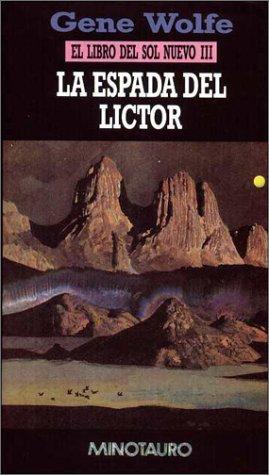
The Sword of the Lictor
The Sword of the LictorGene Wolfe
Buy on Amazon

The Sword of the Lictor (1981)

Gene Wolfe

Others: Positive

Beneath the dying sun the disgraced torturer, Severian, at last comes to his place of exile - Thrax, the City of Windowless Rooms. But Severian's journeying is not ended, and high in the Earth's ancient mountains he draws closer to his destiny.

ISBN:
9780283988608
Length:
301 pages

Genres: science fiction

Lists: …

Similar books

1 of 6
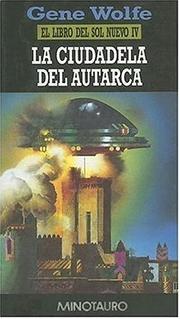
  • The Citadel of the Autarch

    Gene Wolfe

    1982 · 317 pages · 2 reviews

    Others: Positive

    Severian the Torturer, possessor of the miracle-producing gem, the Claw of the Conciliator, experiences strange adventures as he journeys across the savage land of Urth

    Why?

    What made the match, strongest first

    On 3 of the same lists
    48%
    Also science fiction
    38%
    Similar descriptions
    14%
    Personalize your recommendations
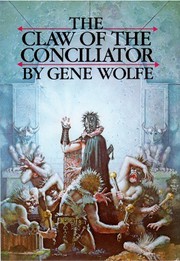
  • The claw of the conciliator

    Gene Wolfe

    1981 · 303 pages · 2 reviews

    Others: Positive

    Severian is in possession of a gem considered to be "The Claw of the Conciliator", a powerful relic of the Master of Power, a legendary figure of mythic proportions. Armed with his sword, Terminus Est, and the Claw, Severian continues his journey to Thrax, the city of his exile. Bizarre apes, strange cannibalistic rituals, and the foreigner named Jonas all lie in his future.

    Why?

    What made the match, strongest first

    On 2 of the same lists
    45%
    Also science fiction
    38%
    Similar descriptions
    17%
    Personalize your recommendations
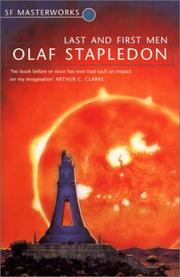
  • Last and First Men

    Olaf Stapledon

    1930 · 326 pages · 1 review

    Others: Positive

    One of the most succinct and accurate renderings of mankind's present state of mind and future progression. It documents the future of man from the start of WW2 and continues until the Sun engulfs the earth, and beyond. Considering this book was first published in 1931, it is remarkable, both in its honesty as regards human nature, and in its phenomenal span. By the time we reach chapter 3 of the 16 in this book, it is already 2300 AD and you feel like you have had the viewpoint of a God. So intense is the writing, that a few pages can take you hours to read and weeks to think about. What a writer, what a visionary. Of particular interest to me was the laconic way he can sum up an entire country's culture and people, and the accuracy of prediction in the first part of the book. Points to note :- All budding politicians should be forced to read this book. It should be part of any politics curriculum. Strikingly accurate and plausible portent of homo sapiens future. Read in the context of 2002, it is easy to see mankind's current folly and the extrapolation of current scientific endeavours. For example, we may achieve global peace ("An Americanised Planet"") for a few millennia, but at the cost of spiritual and intellectual freedom and development. When the "Fall of the First Men" happened, recovery took a very long time :- "Later, when the epidemic was spent, even though civilisation was already in ruins, a concerted effort of devotion might yet have rebuilt it on a more modest plan. But among the First Men, only a minority had ever been capable of wholehearted devotion. The great majority were by nature too much obsessed by private impulses." Sounds like the malaise of current homo sapiens. The theme of continual physical exertion and constant movement of attention as an underpinning for the lifestyles of all successful social inhabitants was beautifully described. This is so true of today's and future societies. No pause for reflection or contemplation. The abandonment of philosophy as a science in the future. The pig-headed clinging to pagan artefact or idol worship, rather than logic. The brilliant description of the "Second Men", with his finer array of senses, and his natural propensity for altruism. The plausible evolution of intelligent life on Mars in 10 million years time, with the subsequent misunderstanding of what is intelligent between Earth and Mars. Man's creation of more evolved forms of man meshes brilliantly with current genetic research. "Time travel" achieved by mental regression into past minds. The future remains unknown. Conclusions :- Apply common sense to the situation as it is now, to work out the best course of action. Never invoke traditions or old beliefs as these threaten your survival in an ever-changing environment. Within the same species, organisms are equally complex biochemically. Therefore, any social structure that imposes arbitrary division within the species, is intrinsically flawed. This is true of current homo sapiens organisation, where certain people are far more highly regarded than others for stupid reasons, and divisions between cliques of people usually erupt in violence, rather than heated debate. Just because someone cannot be convinced of your way of seeing things, doesn't mean that physical coercion becomes necessary. "Live and let live" doesn't mean live it up and let the rest live in squalor. Nothing should be regarded as taboo, save that which is unnatural. There are absolutely no restrictions on what anyone can think. If you can have it, then anyone can have it.
    Why?

    What made the match, strongest first

    Also science fiction
    46%
    On 2 of the same lists
    46%
    Media Death Cult loved both
    8%
    Personalize your recommendations
  • Marooned in Realtime

    Vernor Vinge

    1986 · 279 pages · 3 reviews

    Others: Positive

    From the back cover: "In The Peace War Vernor Vinge introduced the technology of bobbles, creating spheres where time stands still while minutes, years, or eons pass by outside. Originally used to counter the nucler threat, then to enforce an oppressive government, they don't really come into their own until the century after the Peace War. What better means for one-way time travel? With the bobble plus longevity treatments, human achievements would seem to have no limits... You can hardly turn the pages fast enough... (Marooned in Realtime) is a winner." -- Locus

    Why?

    What made the match, strongest first

    On the same reading list
    51%
    Also science fiction
    49%
    Personalize your recommendations
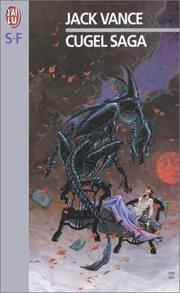
  • Cugel's Saga

    Jack Vance

    1983 · 334 pages · 4 reviews

    Others: Positive

    Sequel to Vance's book The Dying Earth

    Why?

    What made the match, strongest first

    Also science fiction
    50%
    On the same reading list
    41%
    Similar descriptions
    9%
    Personalize your recommendations
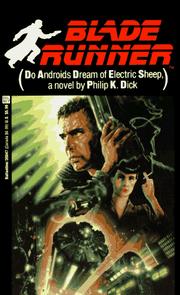
  • Do Androids Dream of Electric Sheep?

    Philip K. Dick

    1968 · 210 pages · 12 reviews

    Others: Overwhelmingly positive

    It was January 2021, and Rick Deckard had a license to kill. Somewhere among the hordes of humans out there, lurked several rogue androids. Deckard's assignment--find them and then..."retire" them. Trouble was, the androids all looked exactly like humans, and they didn't want to be found!

    Why?

    What made the match, strongest first

    Also science fiction
    54%
    On 4 of the same lists
    37%
    Media Death Cult loved both
    9%
    Personalize your recommendations

Reviews1

Loved it

I think I think this one sword of the luma may be my favorite actually. No, I don't know. I that's the weird thing when I think about it. That's the one I grab for. But I think it's because it might be the simplest, but then I think about it a bit longer and then I think of the others because they're more complicated. There's more revelations. So, just ignore me. But I really like it.

Review 1 of 2