
 Loved it
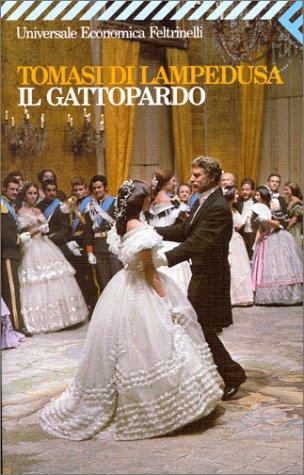
it is an incredibly pessimistic noble but it is so in a very beautiful way
Others: Positive The acclaimed novel by Lampedusa gives an exquisite portrait of a despotic Sicilian aristocrat. The story unfolds over the duration of Italian reunification during the nineteenth century, beginning at the time when Garibaldi’s forces have landed on Sicily as part of his drive to unify and modernise the country.
Genres: historical fiction
Lists: …
Alasdair Gray
1992 · 317 pages · 2 reviews
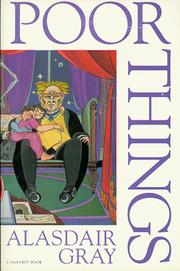
Others: PositiveA fantasy novel, presented as a discovered a manuscript, set in the nineteenth century. Frankenstein-like tale. Whitbread Novel Award, 1992.
What made the match, strongest first
Italo Calvino
1947 · 185 pages · 1 review
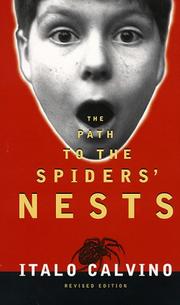
Others: Positive"Italo Calvino was only twenty-three when he first published this bold and imaginative novel. It tells the story of Pin, a cobbler's apprentice in a town on the Ligurian coast during World War II. He lives with his sister, a prostitute and spends as much time as he can at a seedy bar where he amuses the adult patrons. After a mishap with a Nazi soldier, Pin becomes involved with a band of partisans. Calvino's portrayal of these characters, seen through the eyes of a child, is not only a revealing commentary on the Italian resistance but an insightful coming-of-age story. Updated to include changes from Calvino's definitive Italian edition, previously censored passages, and his newly translated, unabridged preface - in which Calvino brilliantly critiques and places into historical context his own youthful work - The Path to the Spiders' Nests is animated by the formidable imagination that has made Italo Calvino one of the most respected writers of our time."--BOOK JACKET.
What made the match, strongest first
Elsa Morante
1974 · 564 pages · 1 review
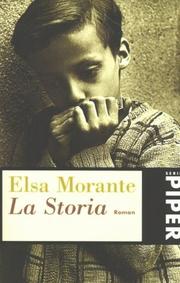
Others: PositiveThe central character in this powerful and unforgiving novel is Ida Mancuso, a schoolteacher whose husband has died and whose feckless teenage son treats the war as his playground. A German soldier on his way to North Africa rapes her, falls in love with her, and leaves her pregnant with a boy whose survival becomes Ida's passion. Around these two other characters come and go, each caught up by the war which is like a river in flood. We catch glimpses of bombing raids, street crimes, a cattle car from which human cries emerge, an Italian soldier succumbing to frostbite on the Russian front, the dumb endurance of peasants who have lived their whole lives with nothing and now must get by with less than nothing.
What made the match, strongest first
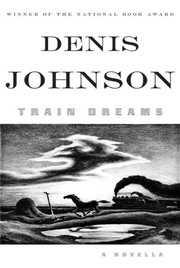
Denis Johnson
2006 · 122 pages · 3 reviews
 Others: Overwhelmingly positive
Denis Johnson’s Train Dreams is an epic in miniature, one of his most evocative and poignant fictions. Robert Grainer is a day laborer in the American West at the start of the twentieth century—an ordinary man in extraordinary times. Buffeted by the loss
What made the match, strongest first
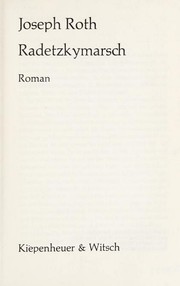
Joseph Roth
1932 · 331 pages · 1 review
Others: PositiveThe preeminent chronicler of the deterioration of the Austro-Hungarian Empire, Joseph Roth is an author drawn to disputed borders whose work brilliantly maps a region once again in turmoil. With the cultural rediscovery of Mitteleuropa, Roth's territory - geographical and spiritual - is sharply back in focus. The Radetzky March, first published in 1932, is Joseph Roth's greatest literary achievement, a novel of world literary rank. Spanning three generations of the Trotta family and set in the waning days of the Hapsburg Empire, the novel unfolds with marvelous subtlety to reveal its splendidly modern ironies. One event sets the novel in motion: as Captain Joseph Trotta, a Slovenian infantryman, saves the Emperor Franz Joseph from a bullet, Trotta's act, with the inexorable power of destiny, determines the lives of the succeeding sons of the Trotta family until, generations later, the Austro-Hungarian Empire and the elder Trotta's heroic act lose their mythical power over those held in their thrall.
What made the match, strongest first
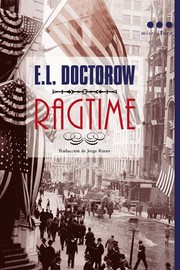
E.L. Doctorow
1974 · 270 pages · 1 review
Others: PositivePublished in 1975, Ragtime changed our very concept of what a novel could be. An extraordinary tapestry, Ragtime captures the spirit of America in the era between the turn of the century & the First World War. The story opens in 1906 in New Rochelle, NY, at the home of an affluent American family. One lazy Sunday afternoon, the famous escape artist Harry Houdini swerves his car into a telephone pole outside their house. Almost magically, the line between fantasy & historical fact, between real & imaginary characters, disappears. Henry Ford, Emma Goldman, J.P. Morgan, Evelyn Nesbit, Sigmund Freud & Emiliano Zapata slip in & out of the tale, crossing paths with Doctorow's imagined family & other fictional characters, including an immigrant peddler & a ragtime musician from Harlem whose insistence on a point of justice drives him to revolutionary violence.
What made the match, strongest first
Loved itit is an incredibly pessimistic noble but it is so in a very beautiful way