
 Loved it
There is very little in life that makes me as happy as The Importance of Being Earnest does.
 Others: Overwhelmingly positive
Set in England during the late Victorian era, the play's humour derives in part from characters maintaining fictitious identities to escape unwelcome social obligations. It is replete with witty dialogue and satirises some of the foibles and hypocrisy of late Victorian society. It has proved Wilde's most enduringly popular play. - Wikipedia
Genres: classics
Lists: …
Elizabeth Gaskell
1855 · 450 pages · 15 reviews
Others: Overwhelmingly positiveWhen her father leaves the Church in a crisis of conscience, Margaret Hale is uprooted from her comfortable home in Hampshire to move with her family to the north of England. Initially repulsed by the ugliness of her new surroundings in the industrial town of Milton, Margaret becomes aware of the poverty and suffering of the local mill workers and develops a passionate sense of social justice. This is intensified by her tempestuous relationship with the mill-owner and self-made man, John Thornton, as their fierce opposition over his treatment of his employees masks a deeper attraction. In North and South, Elizabeth Gaskell skillfully fuses individual feeling with social concern, and in Margaret Hale creates one of the most original heroines of Victorian literature.
What made the match, strongest first
Oscar Wilde
1893 · 94 pages · 2 reviews
Others: PositiveOscar Wilde's audacious drama of social scandal centres around the revelation of Mrs Arbuthnot's long-concealed secret. A house party is in full swing at Lady Hunstanton's country home, when it is announced that Gerald Arbuthnot has been appointed secretary to the sophisticated, witty Lord Illingworth. Gerald's mother stands in the way of his appointment, but fears to tell him why, for who will believe Lord Illingworth to be a man of no importance?
What made the match, strongest first
Thomas Hardy
1707 · 457 pages · 3 reviews
Others: Overwhelmingly positiveAn intimate portrait of a woman, one of literature's most admirable and tragic heroines...Tess Durbeyfield knows what it is to work hard and expect little. But her life is about to veer from the path trod by her mother and grandmother. When her ne'er-do-well father learns that his family is the last of a long noble line, the d'Urbervilles, he sends Tess on a journey to meet her supposed kin—a journey that will see her victimized by lust, poverty, and hypocrisy. Shaped by an acute sense of social injustice and by a vision of human fate cosmic in scope, her story is a singular blending of harsh realism and poignant beauty. Thomas Hardy created in Tess not a standard Victorian heroine but a woman whose intense vitality shines against the bleak backdrop of a dying way of life. The novel shocked contemporary readers with its honesty and remains a timeless commentary on the human condition.
What made the match, strongest first
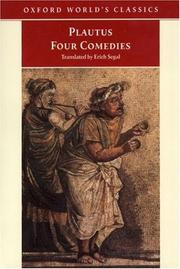
Titus Maccius Plautus
1996 · 242 pages · 1 review
Others: PositiveThe first professional playwright in history, Plautus was the creator of racy, raucous, very funny plays that will make modern audiences laugh as much as the first Romans did. Plautus was the single greatest influence on Western comedy. Shakespeare's Comedy of Errors and Moliere's The Miser are two subsequent classics directly based on Plautine originals. Plautus himself borrowed from the Greeks, but his jokes, rapid dialogue, bawdy humour, and irreverent characterizations are the original work of an undisputed genius. The comedies printed here show him at his best, and Professor Segal's translations keep their fast, rollicking pace intact, making these the most readable and actable versions available. His Introduction considers Plautus' place in ancient comedy, examines his continuing influence, and celebrates his power to entertain.
What made the match, strongest first
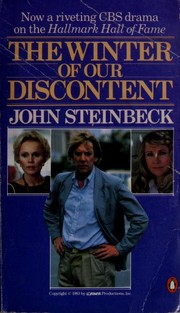
John Steinbeck
1961 · 295 pages · 1 review
Others: PositiveSteinbeck's last great novel focuses on the theme of success and what motivates men towards it. Reflecting back on his New England family's past fortune, and his father's loss of the family wealth, the hero, Ethan Allen Hawley, characterises successin every era and in all its forms as robbery, murder, even a kind of combat, operating under 'the laws of controlled savagery.'
What made the match, strongest first
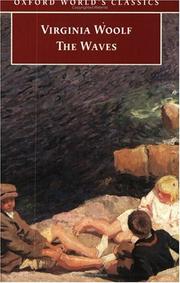
Virginia Woolf
1931 · 255 pages · 2 reviews
Others: Leaning positiveTracing the lives of a group of friends, this novel follows their development from childhood to middle age. Social events, individual achievements and disappointments form the outer structure of the book, but the focus is the inner life of the characters which is conveyed in rich poetic language.
What made the match, strongest first
Loved itThere is very little in life that makes me as happy as The Importance of Being Earnest does.
Loved itI read it because my friend Sonia has been raving about it on and on and on and it's like her favorite novel and so I gave it a try and I loved it because it is so hilarious