
 Liked
I reread this not too long ago and I really appreciated it a lot more on the second time through it's got very witty rap party and dialogue almost banter
Review 1 of 2
 Creators: Liked
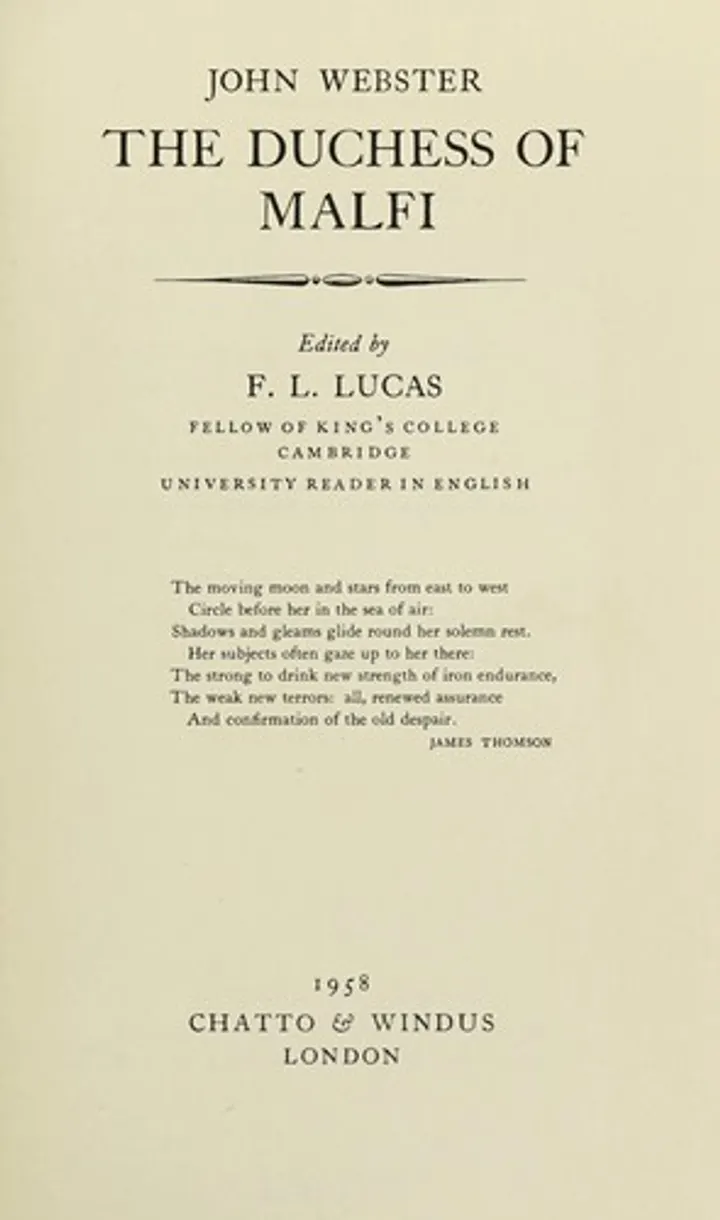
"The Duchess of Malfi" was published in 1623, but the date of writing may have been as early as 1611. It is based on a story in Painter's "Palace of Pleasure," translated from the Italian novelist, Bandello; and it is entirely possible that it has a foundation in fact. In any case, it portrays with a terrible vividness one side of the court life of the Italian Renaissance; and its picture of the fierce quest of pleasure, the recklessness of crime, and the worldliness of the great princes of the Church finds only too ready corroboration in the annals of the time. Of John Webster's life almost nothing is known. The dates 1580-1625 given for his birth and death are conjectural inferences, about which the best that can be said is that no known facts contradict them.The first notice of Webster so far discovered shows that he was collaborating in the production of plays for the theatrical manager, Henslowe, in 1602, and of such collaboration he seems to have done a considerable amount. Four plays exist which he wrote alone, "The White Devil," "The Duchess of Malfi," "The Devil's Law-Case," and "Appius and Virginia." Webster's tragedies come toward the close of the great series of tragedies of blood and revenge, in which "The Spanish Tragedy" and "Hamlet" are landmarks, but before decadence can fairly be said to have set in. He, indeed, loads his scene with horrors almost past the point which modern taste can bear; but the intensity of his dramatic situations, and his superb power of flashing in a single line a light into the recesses of the human heart at the crises of supreme emotion, redeems him from mere sensationalism, and places his best things in the first rank of dramatic writing.
Lists: …
LikedI reread this not too long ago and I really appreciated it a lot more on the second time through it's got very witty rap party and dialogue almost banter
What made the match, strongest first
Liked by creators6 reviews