expect dire poverty expect scheming Bourgeois expect a beautiful sharp insight into the mechanisms of society there is one scene lating to this book set in the Sellar underneath which is as hellish as anything you're going to find in germinal and it's been haunting me all year really
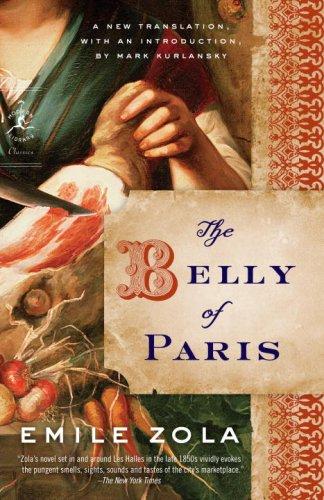
The belly of Paris (1996)
In this novel the author chooses as his locale the newly built food markets of Paris. Into this extravagance of food - which Zola describes in set pieces that wet the tongue, excite the ear, and stir up the belly - he places his young hero, the half-starved Florent, who has just escaped imprisonment in Cayenne. Florent finds himself at odds with a world he now knows is unjust. Gradually he takes up with the local Socialists, who are more at home in bars than on the revolutionary streets.
- ISBN:
- 9780812974225
- Length:
- 324 pages
Genres: historical fiction
Lists: …
Similar books
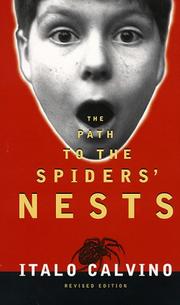
The path to the nest of spiders
Italo Calvino
1947 · 185 pages · 1 review
Others: Positive"Italo Calvino was only twenty-three when he first published this bold and imaginative novel. It tells the story of Pin, a cobbler's apprentice in a town on the Ligurian coast during World War II. He lives with his sister, a prostitute and spends as much time as he can at a seedy bar where he amuses the adult patrons. After a mishap with a Nazi soldier, Pin becomes involved with a band of partisans. Calvino's portrayal of these characters, seen through the eyes of a child, is not only a revealing commentary on the Italian resistance but an insightful coming-of-age story. Updated to include changes from Calvino's definitive Italian edition, previously censored passages, and his newly translated, unabridged preface - in which Calvino brilliantly critiques and places into historical context his own youthful work - The Path to the Spiders' Nests is animated by the formidable imagination that has made Italo Calvino one of the most respected writers of our time."--BOOK JACKET.
Why?
What made the match, strongest first
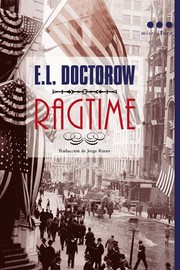
Also historical fiction82%TheBookchemist loved both13%Similar descriptionsPersonalize your recommendations5%Ragtime
E.L. Doctorow
1974 · 270 pages · 1 review

Others: PositivePublished in 1975, Ragtime changed our very concept of what a novel could be. An extraordinary tapestry, Ragtime captures the spirit of America in the era between the turn of the century & the First World War. The story opens in 1906 in New Rochelle, NY, at the home of an affluent American family. One lazy Sunday afternoon, the famous escape artist Harry Houdini swerves his car into a telephone pole outside their house. Almost magically, the line between fantasy & historical fact, between real & imaginary characters, disappears. Henry Ford, Emma Goldman, J.P. Morgan, Evelyn Nesbit, Sigmund Freud & Emiliano Zapata slip in & out of the tale, crossing paths with Doctorow's imagined family & other fictional characters, including an immigrant peddler & a ragtime musician from Harlem whose insistence on a point of justice drives him to revolutionary violence.
Why?
What made the match, strongest first
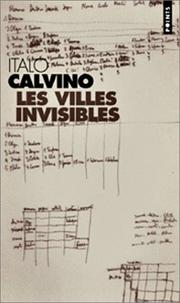
Also historical fiction82%TheBookchemist loved both14%Similar descriptionsPersonalize your recommendations4%Invisible Cities
Italo Calvino
1972 · 165 pages · 1 review
Others: Positive"Kublai Khan does not necessarily believe everything Marco Polo says when he describes the cities visited on his expeditions, but the emperor of the Tartars does continue listening to the young Venetian with greater attention and curiosity than he shows any other messenger or explorer of his." So begins Italo Calvino's compilation of fragmentary urban images. As Marco tells the khan about Armilla, which "has nothing that makes it seem a city, except the water pipes that rise vertically where the houses should be and spread out horizontally where the floors should be," the spider-web city of Octavia, and other marvelous burgs, it may be that he is creating them all out of his imagination, or perhaps he is recreating fine details of his native Venice over and over again, or perhaps he is simply recounting some of the myriad possible forms a city might take.
Why?
What made the match, strongest first
Also historical fiction82%TheBookchemist loved both14%Similar descriptionsPersonalize your recommendations4%The second scroll
A.M. Klein
1951 · 142 pages · 1 review
Others: Positive"The Second Scroll is an ambitious and complex work that interlaces prose, poetry, drama, and commentary. The narrative follows a Canadian Jew to the newly established state of Israel on a double mission - to collect the emerging national literature and to search for his Uncle Melech Davidson, a Holocaust survivor. Klein creates a modern Torah out of the uncle's crises of faith as he attempts to come to terms with the atrocities of the Second World War. The five chapters of The Second Scroll mirror the books of the Pentateuch (the 'first scroll'), and the language is rich with biblical, talmudic, kabbalistic, and literary allusions as both the narrator and his uncle wrestle with the meaning of Jewish identity, messianic faith, and homecoming."--BOOK JACKET.
Why?
What made the match, strongest first
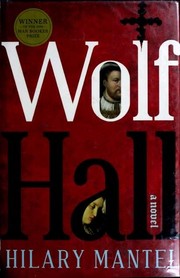
Also historical fiction83%TheBookchemist loved both14%Similar descriptionsPersonalize your recommendations3%Wolf Hall
Hilary Mantel
2009 · 653 pages · 7 reviews
Others: MixedWolf Hall (2009) is a historical novel by English author Hilary Mantel, published by Fourth Estate, named after the Seymour family's seat of Wolfhall, or Wulfhall, in Wiltshire. Set in the period from 1500 to 1535, Wolf Hall is a sympathetic fictionalised biography documenting the rapid rise to power of Thomas Cromwell in the court of Henry VIII through to the death of Sir Thomas More. The novel won both the Man Booker Prize and the National Book Critics Circle Award. In 2012, The Observer named it as one of "The 10 best historical novels". The book is the first in a trilogy; the sequel Bring Up the Bodies was published in 2012. The last book in the trilogy is The Mirror and the Light (2020), which covers the last four years of Cromwell's life.
Why?
What made the match, strongest first
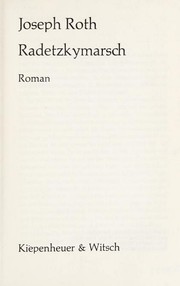
Also historical fiction85%TheBookchemist loved both14%Similar descriptionsPersonalize your recommendations1%The Radetzky march
Joseph Roth
1932 · 331 pages · 1 review
Others: PositiveThe preeminent chronicler of the deterioration of the Austro-Hungarian Empire, Joseph Roth is an author drawn to disputed borders whose work brilliantly maps a region once again in turmoil. With the cultural rediscovery of Mitteleuropa, Roth's territory - geographical and spiritual - is sharply back in focus. The Radetzky March, first published in 1932, is Joseph Roth's greatest literary achievement, a novel of world literary rank. Spanning three generations of the Trotta family and set in the waning days of the Hapsburg Empire, the novel unfolds with marvelous subtlety to reveal its splendidly modern ironies. One event sets the novel in motion: as Captain Joseph Trotta, a Slovenian infantryman, saves the Emperor Franz Joseph from a bullet, Trotta's act, with the inexorable power of destiny, determines the lives of the succeeding sons of the Trotta family until, generations later, the Austro-Hungarian Empire and the elder Trotta's heroic act lose their mythical power over those held in their thrall.
Why?
What made the match, strongest first
Also historical fiction85%TheBookchemist loved both14%Similar descriptionsPersonalize your recommendations1%