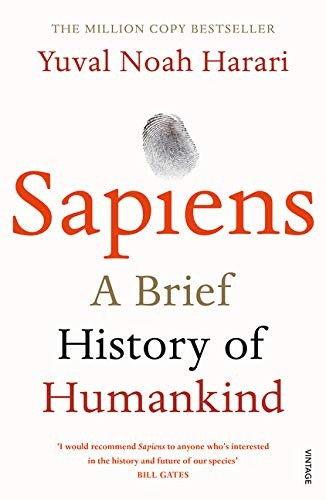
Sapiens: A Brief History of Humankind
Sapiens: A Brief History of HumankindYuval Noah Harari
Buy on Amazon

Sapiens: A Brief History of Humankind (2011)

Yuval Noah Harari

Others: Mostly positive

From a renowned historian comes a groundbreaking narrative of humanity’s creation and evolution—a #1 international bestseller—that explores the ways in which biology and history have defined us and enhanced our understanding of what it means to be “human.” One hundred thousand years ago, at least six different species of humans inhabited Earth. Yet today there is only one—homo sapiens. What happened to the others? And what may happen to us? Most books about the history of humanity pursue either a historical or a biological approach, but Dr. Yuval Noah Harari breaks the mold with this highly original book that begins about 70,000 years ago with the appearance of modern cognition. From examining the role evolving humans have played in the global ecosystem to charting the rise of empires, Sapiens integrates history and science to reconsider accepted narratives, connect past developments with contemporary concerns, and examine specific events within the context of larger ideas. Dr. Harari also compels us to look ahead, because over the last few decades humans have begun to bend laws of natural selection that have governed life for the past four billion years. We are acquiring the ability to design not only the world around us, but also ourselves. Where is this leading us, and what do we want to become? Featuring 27 photographs, 6 maps, and 25 illustrations/diagrams, this provocative and insightful work is sure to spark debate and is essential reading for aficionados of Jared Diamond, James Gleick, Matt Ridley, Robert Wright, and Sharon Moalem.

ISBN:
9780063212220
Length:
450 pages

Genres: nonfiction

Lists: …

Similar books

1 of 6
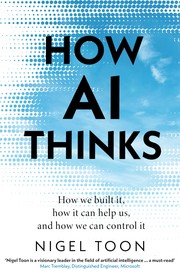
  • How AI Thinks

    Nigel Toon

    2024 · 320 pages · 2 reviews

    Others: Mixed

    THE #2 TIMES BESTSELLER'Artificial intelligence is going to have a massive impact on everyone’s lives... an accessible and sensible read that helps demystify AI' Deborah Meaden, entrepreneur and star of Dragon's Den'Nigel Toon is a visionary leader in the field of artificial intelligence... a must-read' Marc Tremblay, Distinguished Engineer, MicrosoftThose who understand how AI thinks are about to win big.We are used to thinking of computers as being a step up from calculators - very good at storing information, and maybe even at playing a logical game like chess. But up to now they haven't been able to think in ways that are intuitive, or respond to questions as a human might. All that has changed, dramatically, in the past few years.Our search engines are becoming answer engines. Artificial intelligence is already revolutionising sectors from education to healthcare to the creative arts. But how does an AI understand sentiment or context? How does it play and win games that have an almost infinite number of moves? And how can we work with AI to produce insights and innovations that are beyond human capacity, from writing code in an instant to unfolding the elaborate 3D puzzles of proteins?We stand at the brink of a historic change that will disrupt society and at the same time create enormous opportunities for those who understand how AI thinks. Nigel Toon shows how we train AI to train itself, so that it can paint images that have never existed before or converse in any language. In doing so he reveals the strange and fascinating ways that humans think, too, as we learn how to live in a world shared by machine intelligences of our own creation.

    Why?

    What made the match, strongest first

    Also nonfiction
    80%
    A creator reacted alike
    14%
    Similar descriptions
    6%
    Personalize your recommendations
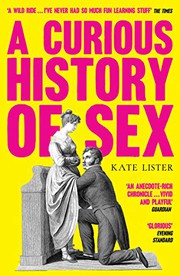
  • Curious History of Sex

    Kate Lister

    2020 · 384 pages · 3 reviews

    Others: Leaning positive

    An eye-opening exploration of the weird and wonderful things human beings have done in pursuit (and denial) of the mighty orgasm, based on the hit Twitter account @WhoresofYore. This is not a comprehensive study of every sexual quirk, kink and ritual across all cultures throughout time, as that would entail writing an encyclopaedia. Rather, this is a drop in the ocean, a paddle in the shallow end of sex history, but I hope you will get pleasantly wet nonetheless. The act of sex has not changed since people first worked out what went where, but the ways in which society dictates how sex is culturally understood and performed have varied significantly through the ages. Humans are the only creatures that stigmatise particular sexual practices, and sex remains a deeply divisive issue around the world. Attitudes will change and grow - hopefully for the better - but sex will never be free of stigma or shame unless we acknowledge where it has come from. Drawing upon extensive research from Dr Kate Lister's Whores of Yore website and written with her distinctive humour and wit, A Curious History of Sex covers topics ranging from twentieth- century testicle thefts to Victorian doctors massaging the pelvises of their female patients, from smutty bread innuendos dating back to AD 79, to the new and controversial sex doll brothels. It is peppered with surprising and informative historical slang and illustrated by eye-opening, toe- curling and hilarious images. In this fascinating book, Lister deftly debunks myths and stereotypes and gives unusual sexual practices an historical framework, as she provides valuable context for issues facing people today, including gender, sexual shame, beauty and language.

    Why?

    What made the match, strongest first

    Also nonfiction
    82%
    A creator reacted alike
    14%
    Similar descriptions
    4%
    Personalize your recommendations
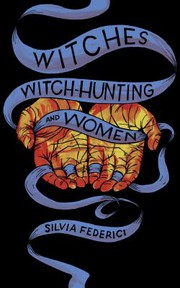
  • Witches, Witch-Hunting, and Women

    Silvia Federici

    2018 · 120 pages · 1 review

    Others: Mixed

    The world is witnessing a new surge of interpersonal and institutional violence against women, including new witch hunts. This surge of violence has occurred alongside an expansion of capitalist social relation. In this new work, Silvia Federici examines the root causes of these developments and outlines the consequences for the women affected and their communities. She argues, that this new war on women, a mirror of witch hunts in 16th- and 17th-century Europe and the “New World,” is a structural element of the new forms of capitalist accumulation. These processes are founded on the destruction of people’s most basic means of reproduction. Like at the dawn of capitalism, the factors behind today’s violence against women are processes of enclosure, land dispossession, and the remolding of women’s reproductive activities and subjectivity.

    Why?

    What made the match, strongest first

    Also nonfiction
    83%
    A creator reacted alike
    14%
    Similar descriptions
    3%
    Personalize your recommendations
  • Evicted

    Matthew Desmond

    2016 · 442 pages · 5 reviews

    Others: Overwhelmingly positive
    Evicted: Poverty and Profit in the American City is a 2016 non-fiction book by American author Matthew Desmond. Set in the poorest areas of Milwaukee, Wisconsin, the book follows eight families struggling to pay rent to their landlords during the financial crisis of 2007–2008. Through a year of ethnographic fieldwork, Desmond's goal in the book is to highlight the issues of extreme poverty, affordable housing, and economic exploitation in the United States. Evicted was well-received and won multiple book awards such as the 2017 Pulitzer Prize for General Nonfiction and the Robert F. Kennedy Book Award. The Pulitzer committee selected the book "for a deeply researched exposé that showed how mass evictions after the 2008 economic crash were less a consequence than a cause of poverty."

    Why?

    What made the match, strongest first

    Also nonfiction
    84%
    WhatKamilReads loved both
    14%
    Similar descriptions
    2%
    Personalize your recommendations
  • Glitch Feminism

    Legacy Russell

    2020 · 192 pages · 1 review

    Others: Mixed

    A new manifesto in cyberfeminism: finding liberation in the glitch between body, gender and technology. The divide between the digital and the real world no longer exists: we are connected all the time. How do we find out who we are within this digital era? Where do we create the space to explore our identity? How can we come together and create solidarity? The glitch is often dismissed as an error, a faulty overlaying, but, as Legacy Russell shows, liberation can be found within the fissures between gender, technology and the body that it creates. The glitch offers the opportunity for us to perform and transform ourselves in an infinite variety of identities. In Glitch Feminism, Russell makes a series of radical demands through memoir, art and critical theory, and the work of contemporary artists who have travelled through the glitch in their work. Timely and provocative, Glitch Feminism shows how the error can be a revolution.

    Why?

    What made the match, strongest first

    Also nonfiction
    84%
    A creator reacted alike
    14%
    Similar descriptions
    2%
    Personalize your recommendations
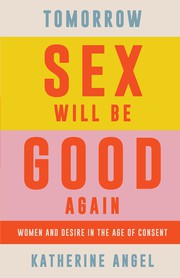
  • Tomorrow Sex Will Be Good Again

    Katherine Angel

    2021 · 144 pages · 2 reviews

    Others: Leaning positive

    A provocative, elegantly written analysis of female desire, consent, and sexuality in the age of MeToo Women are in a bind. In the name of consent and empowerment, they must proclaim their desires clearly and confidently. Yet sex researchers suggest that women’s desire is often slow to emerge. And men are keen to insist that they know what women—and their bodies—want. Meanwhile, sexual violence abounds. How can women, in this environment, possibly know what they want? And why do we expect them to? In this elegant, searching book—spanning science and popular culture; pornography and literature; debates on Me-Too, consent and feminism—Katherine Angel challenges our assumptions about women’s desire. Why, she asks, should they be expected to know their desires? And how do we take sexual violence seriously, when not knowing what we want is key to both eroticism and personhood? In today’s crucial moment of renewed attention to violence and power, Angel urges that we remake our thinking about sex, pleasure, and autonomy without any illusions about perfect self-knowledge. Only then will we fulfil Michel Foucault’s teasing promise, in 1976, that “tomorrow sex will be good again.”

    Why?

    What made the match, strongest first

    Also nonfiction
    84%
    A creator reacted alike
    14%
    Similar descriptions
    2%
    Personalize your recommendations

Reviews3

The Book Leo
Mixed

one of the first books that really got me into non-fiction but that has been criticized a lot is sapiens ... the author of sapiens is a historian but what this book is basically a work of anthropological sociological theories and the author is a historian so not an expert on anthropology and sociology and so predictably he got criticized pretty harshly by actual anthropologists for having very weak theories

Review 1 of 2